TECHNOLOGY PLATFORM
Engineering the Future of Continuous Subsurface Power
Astero Energy converts subsurface pressure, thermal, and chemical energy into continuous, infrastructure-grade power through integrated surface and subsurface system architecture.
A patented architecture for simultaneous multi-domain energy extraction
Astero Energy converts geopressured and hydrothermal reservoirs into continuous, closed-loop baseload power systems. Our patented platform extracts thermal, kinetic, chemical, and molecular energy from produced subsurface fluids and converts that multi-resource stream into firm power, resource value, and long-duration infrastructure revenue.
Unlike single-resource energy systems, Astero is engineered to recover multiple energy domains from one produced-fluid architecture.
The Multi-Resource Energy System
Beyond Single-Source Extraction
Conventional subsurface energy systems are typically designed around one dominant pathway: hydrocarbons, geothermal heat, or hydraulic flow. Astero operates differently.
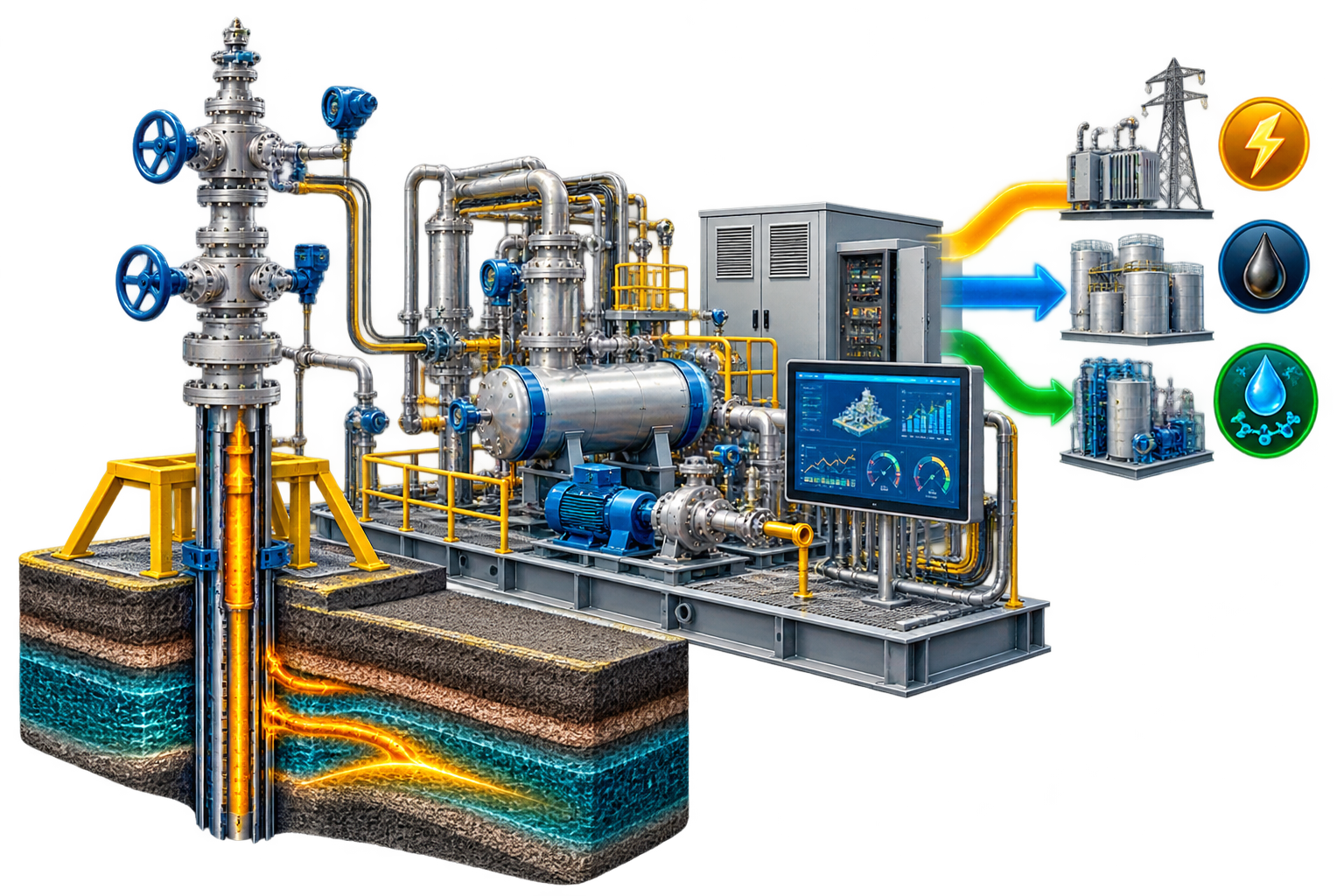
The Astero platform treats the reservoir as a continuous, multi-domain energy system. A single produced-fluid stream can carry heat, pressure, mass flow, dissolved gas, molecular energy, salinity value, and recoverable resource potential from the subsurface to surface infrastructure.
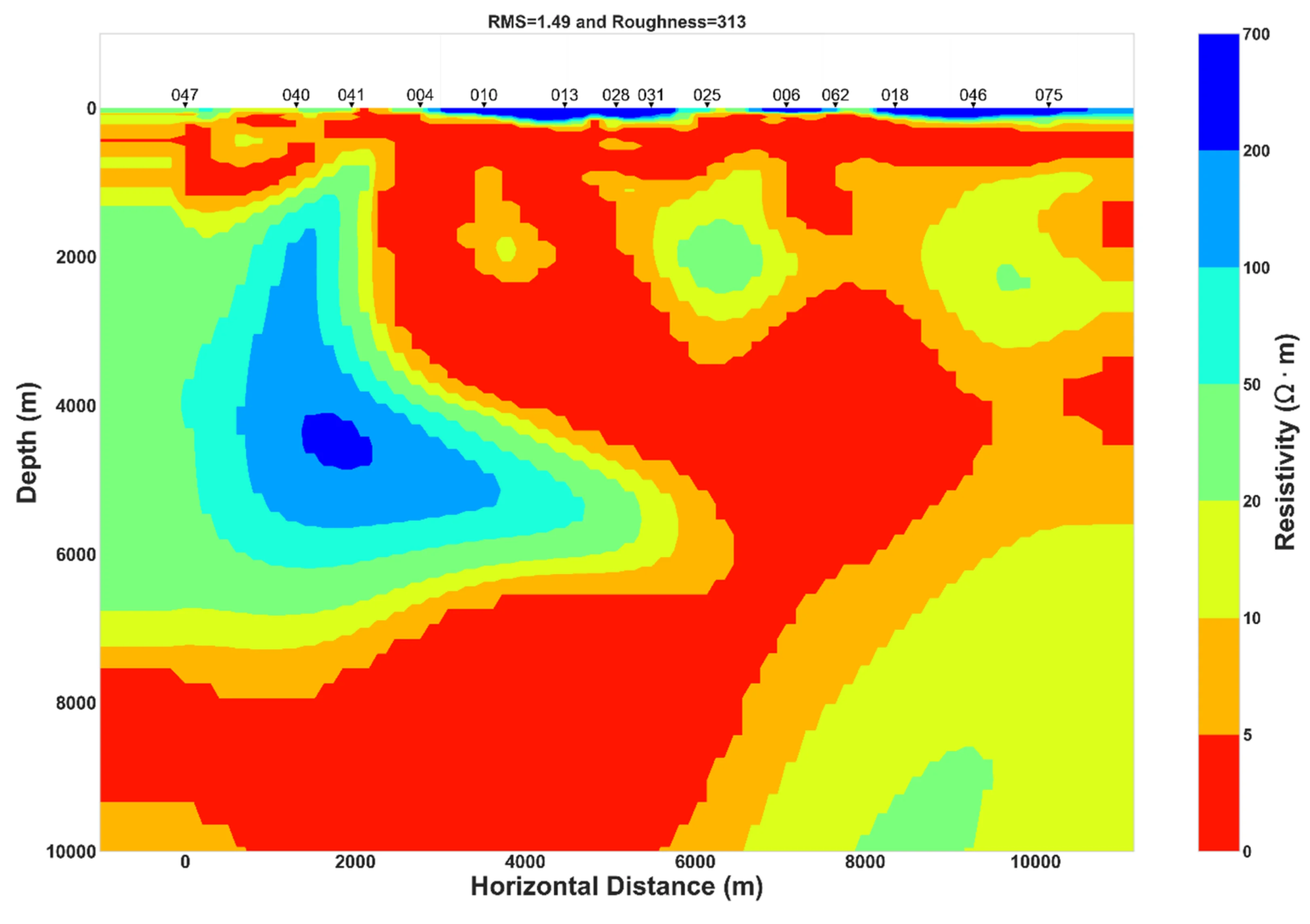
Thermal Potential (Heat)
Subsurface heat is distributed throughout the reservoir rock and pore-fluid system. Astero preserves this thermal value through engineered production and converts it through modular thermal power systems.
Kinetic Potential (Pressure)
Geopressured fluids contain pressure head and high-rate flow potential. Astero’s architecture preserves this hydraulic energy and converts it into additional power through pressure and flow recovery modules.
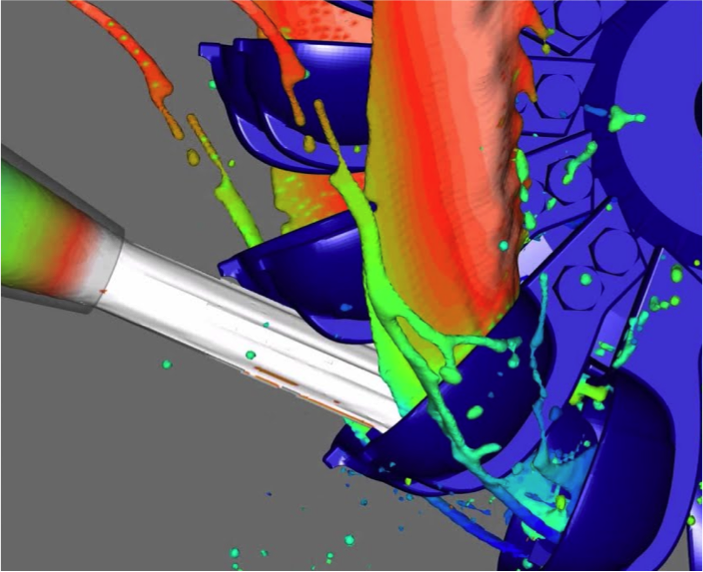

Chemical Potential (Molecules)
Produced fluids may contain dissolved gases, hydrogen, and recoverable minerals that support additional energy generation and resource recovery pathways.
The Multi-Resource Advantage
When these three energy streams—Thermal, Kinetic, and Chemical—are harvested collectively, Astero achieves Total Resource Utilization.
Conventional resource recovery drilling is binary: you either hit the target molecule or you lose your investment. Astero’s "Triple-Threat" architecture fundamentally de-risks the subsurface. Even if a wellbore deviates from "peak heat" targets, the presence of high-velocity fluid flow resulting from geopressure (Kinetic) or energy-producing molecules (Chemical) ensures the asset remains commercially viable.
We don't just drill for resources; we install a permanent, multi-revenue energy engine that reduces single-resource dependency by designing around multiple recoverable energy domains rather than relying on one target resource.
TECHNOLOGY FOUNDATION
Established capabilities integrated through a patented architecture.
Astero brings established subsurface-development, fluid-management and power-generation capabilities together within one coordinated architecture. The technology platform does not depend on reinventing the individual equipment used to drill wells, manage produced fluids, convert heat, recover pressure energy, process gas, generate electricity or reinject fluids.
Integration, Not Reinvention
Established Capabilities
Directional and horizontal drilling, well construction, production and injection systems, fluid handling, geothermal conversion, hydraulic energy recovery, gas processing, electrical generation and industrial controls have established applications across the energy industry.
Protected Architecture
Astero’s patented architecture coordinates subsurface production, thermal recovery, pressure-energy conversion, molecular recovery, chemical-energy conversion and reinjection around a common resource stream.
Astero is applying site evaluation, engineering analysis, system modeling and development planning to identify qualified opportunities and advance the architecture toward field deployment.
DEVELOPMENT PROGRAM
Advancing a patented architecture toward field deployment.
A Disciplined Path from Qualification to Scale
Astero Energy has defined and patented an integrated subsurface power architecture that combines established drilling, well-construction, fluid-handling, thermal-conversion, pressure-energy-recovery, gas-processing, generation and reinjection technologies.
Astero is advancing site qualification, system engineering, performance modeling and development partnerships for a staged field program. The program will integrate the principal energy-recovery pathways under representative operating conditions and generate the engineering data required for commercial deployment.
Qualified opportunities will progress through resource evaluation, project engineering, field demonstration and phased scale-up.
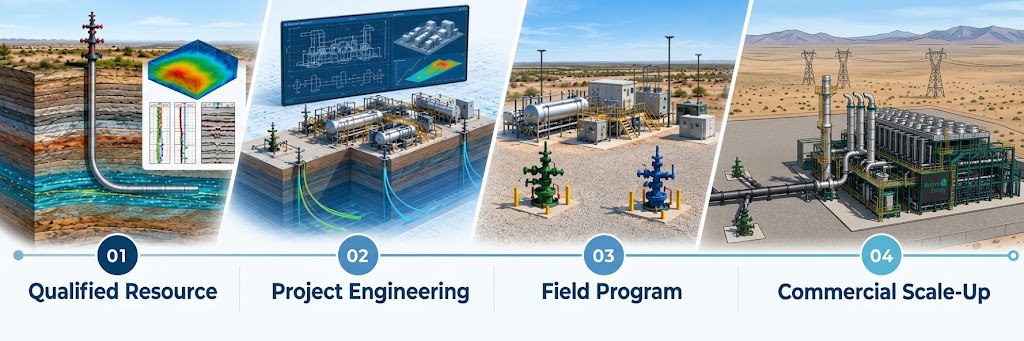
Established technologies. Patented integration. Disciplined execution toward commercial deployment.
RESOURCE AVAILABILITY
A Broader Pathway to Baseload Power
Astero’s technology is designed for deep sedimentary basins worldwide where thermal gradients, geopressure, fluid continuity, and existing subsurface datasets can support multi-domain energy evaluation. This expands the addressable opportunity beyond rare volcanic geothermal anomalies and enables deployment planning near industrial demand centers, grid-constrained regions, and existing energy infrastructure corridors.
Global Resource Availability
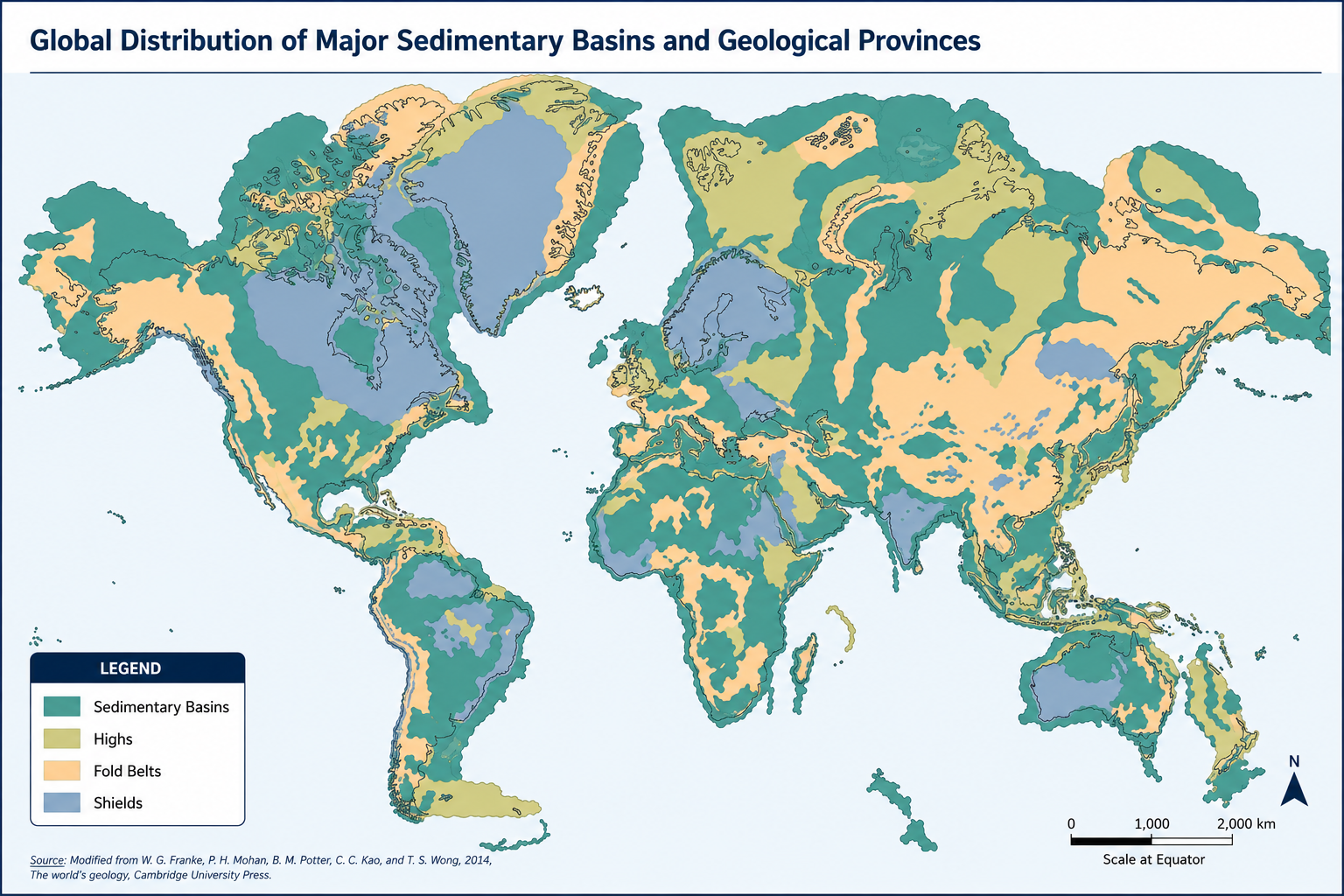
Infrastructure-Grade Baseload Power from Sedimentary Basins
Astero Energy’s platform decouples low-carbon baseload power from rare volcanic anomalies. By targeting the 90°C – 250°C (190°F – 480°F) thermal envelope together with high-rate geopressured fluid flow available within deep sedimentary basins, Astero establishes a proprietary pathway to continuous, infrastructure-grade energy production.
Unlike deep-rock geothermal systems that often require extreme drilling depths and frontier stimulation techniques, Astero operates within an Optimized Commercial Window, utilizing established drilling, completion, and power generation technologies already proven across the hydrocarbon and geothermal industries.
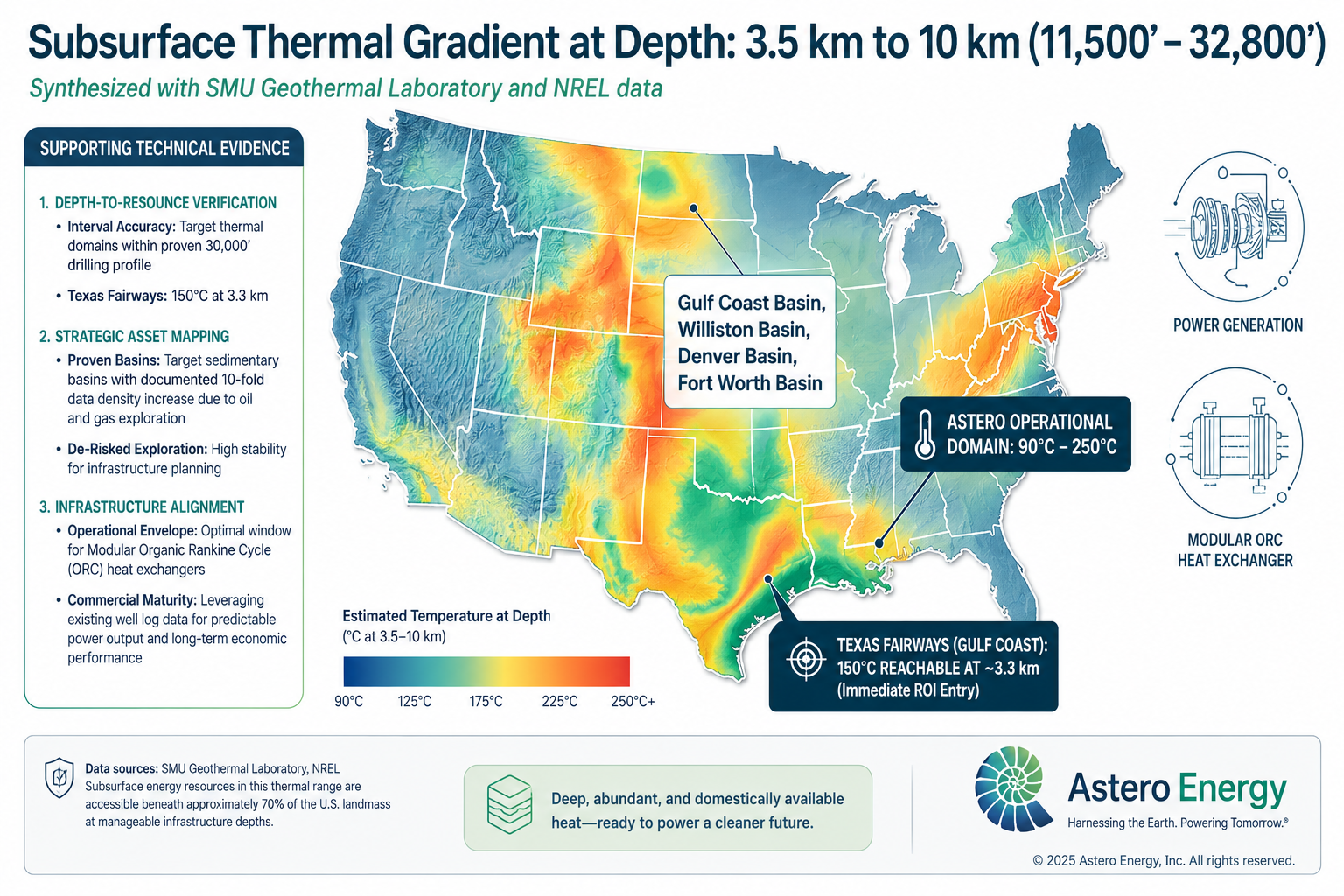
Oil and gas datasets, well logs, pressure records, temperature data, produced-fluid chemistry, and field histories can help accelerate screening and reduce early-stage uncertainty.
Existing Subsurface Intelligence
The Astero Advantage: De-Risked Infrastructure Scalability
Astero Energy’s platform decouples energy security from rare volcanic anomalies. By targeting the high-enthalpy thermal and geopressured envelopes found within deep sedimentary basins, we provide a proprietary, de-risked path to infrastructure-grade power.
Depth-to-Value Optimization
The Commercial Window
While Astero possesses a proven 30,000' (9,144 m) drilling envelope, our strategy prioritizes the high-margin 8,000' – 20,000' interval. This "Optimized Commercial Window" allows us to capture the ideal convergence of thermal, kinetic, and molecular resources while significantly accelerating Rate of Return (ROR).
Infrastructure Readiness
We utilize a mature, multi-billion dollar oilfield services (OFS) supply chain. We don’t wait for "frontier" drilling tech; we utilize bankable, high-tier assets like Rotary Steerable Systems (RSS) and advanced completion hardware to deliver power at scale today.
Capital Performance
Accessing documented sedimentary basins allows Astero to utilize decades of existing subsurface data. By leveraging high-density well-log, pressure, production, and seismic records, Astero identifies the pressure, temperature, fluid continuity, and reservoir conditions required for multi-domain energy production, significantly reducing exploration uncertainty and improving capital deployment confidence.
Proximity to Load
Because these optimized sedimentary basin systems exist beneath a substantial portion of the U.S. landmass, Astero can deploy firm, infrastructure-grade power directly near industrial hubs, utilities, manufacturing corridors, and hyperscale data centers.
By accessing multiple stacked reservoir intervals from a single surface platform, Astero increases energy density per development site while reducing dependence on long-haul transmission expansion and the bottlenecks of the legacy grid.
The global transition to low carbon baseload energy is increasingly constrained by land intensity, transmission expansion, and prolonged regulatory timelines. Conventional renewable systems often require expansive surface development, large-scale transmission buildouts, and multi-year permitting cycles before meaningful power delivery can occur.
Astero Energy breaks this bottleneck.
By utilizing advanced directional and horizontal drilling technologies refined through more than a century of industrial deployment, Astero decouples surface infrastructure from subsurface resource access. This enables compact, high-density energy development capable of delivering infrastructure-scale power with significantly reduced land use, accelerated deployment timelines, and modular scalability.
High-Density Infrastructure — The Scalable Surface Advantage
Engineering for Operational Velocity
Minimized Land Use
Directional drilling allows Astero to access expansive multi-resource reservoirs from a single compact surface pad. Production and injection wells can be deployed from a highly centralized footprint significantly smaller than traditional geothermal, solar, or wind developments, minimizing land disturbance while maximizing subsurface reach.
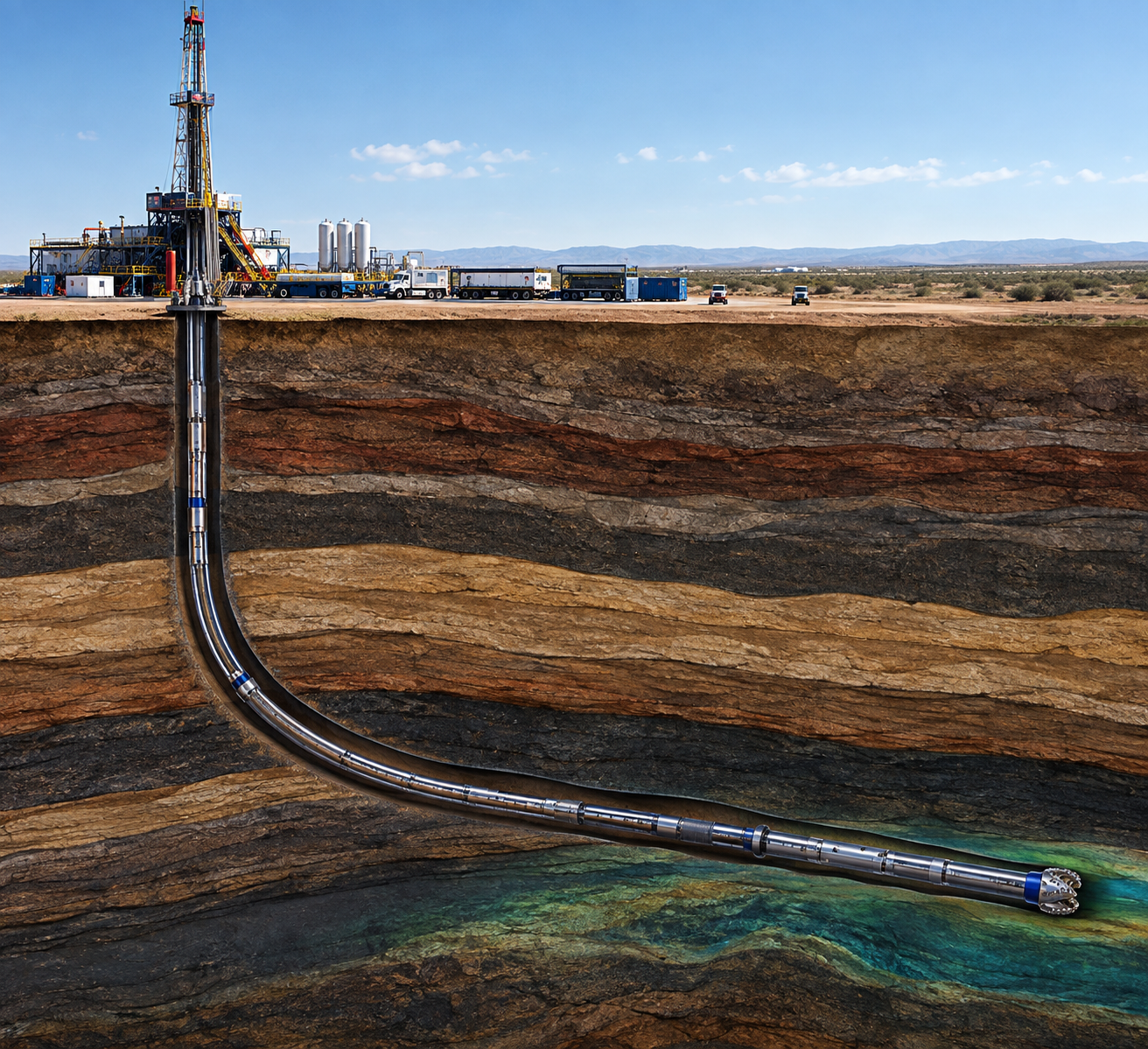
Well-Based Output
Power generation is determined at the well level. Thermal, kinetic, and molecular energy production per well allows site-specific infrastructure design with total output scaled through additional wells rather than large surface expansion. This creates a “Right-Sized” deployment model aligned with actual power demand requirements.
Project Velocity & Regulatory Advantage
Because Astero utilizes compact surface infrastructure together with established drilling technologies, environmental impact and permitting complexity are significantly reduced relative to conventional large-scale energy projects. This localized development profile supports faster regulatory review, improved community acceptance, and accelerated deployment timelines while avoiding many of the delays associated with large land-intensive infrastructure expansion.
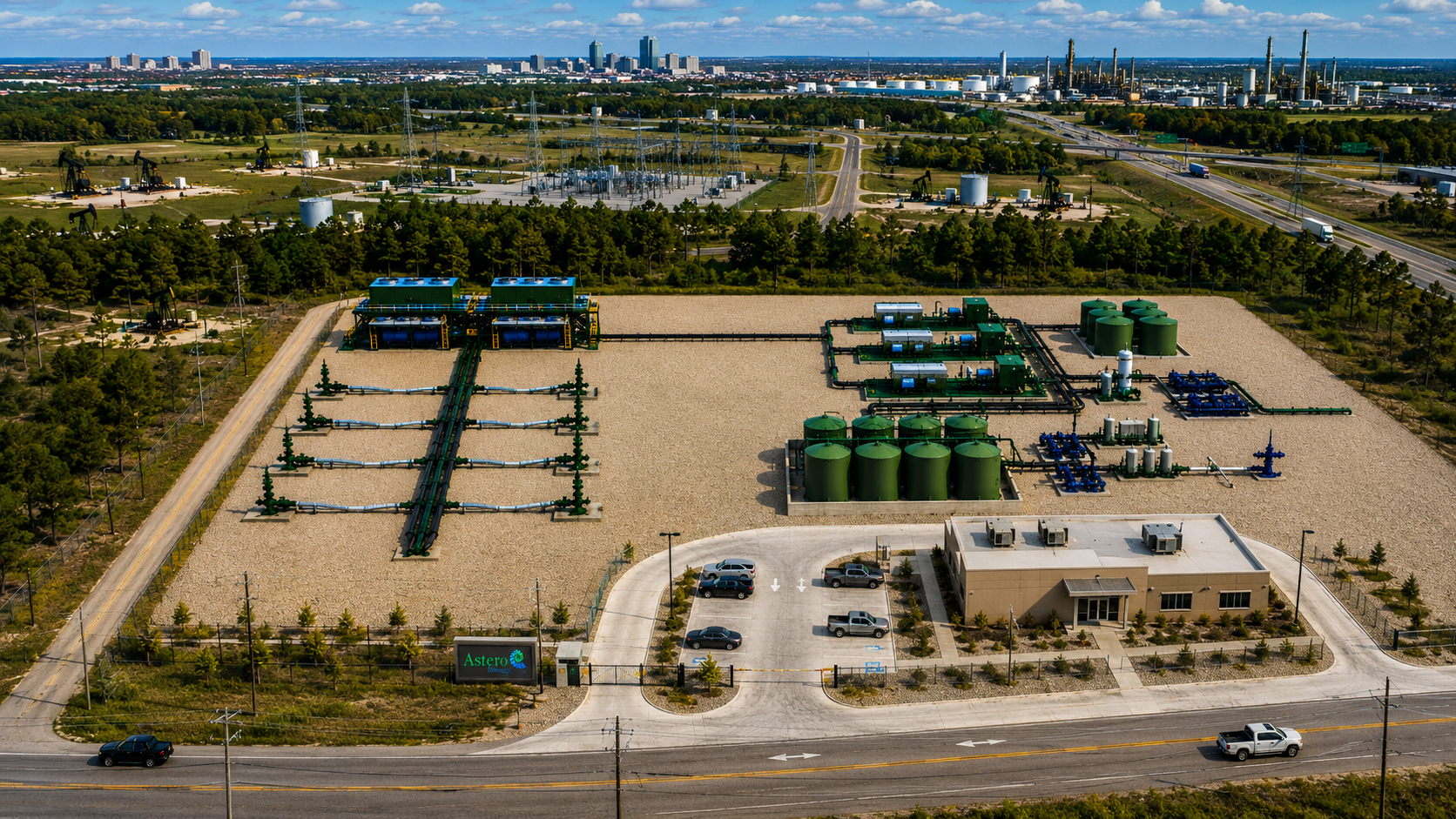
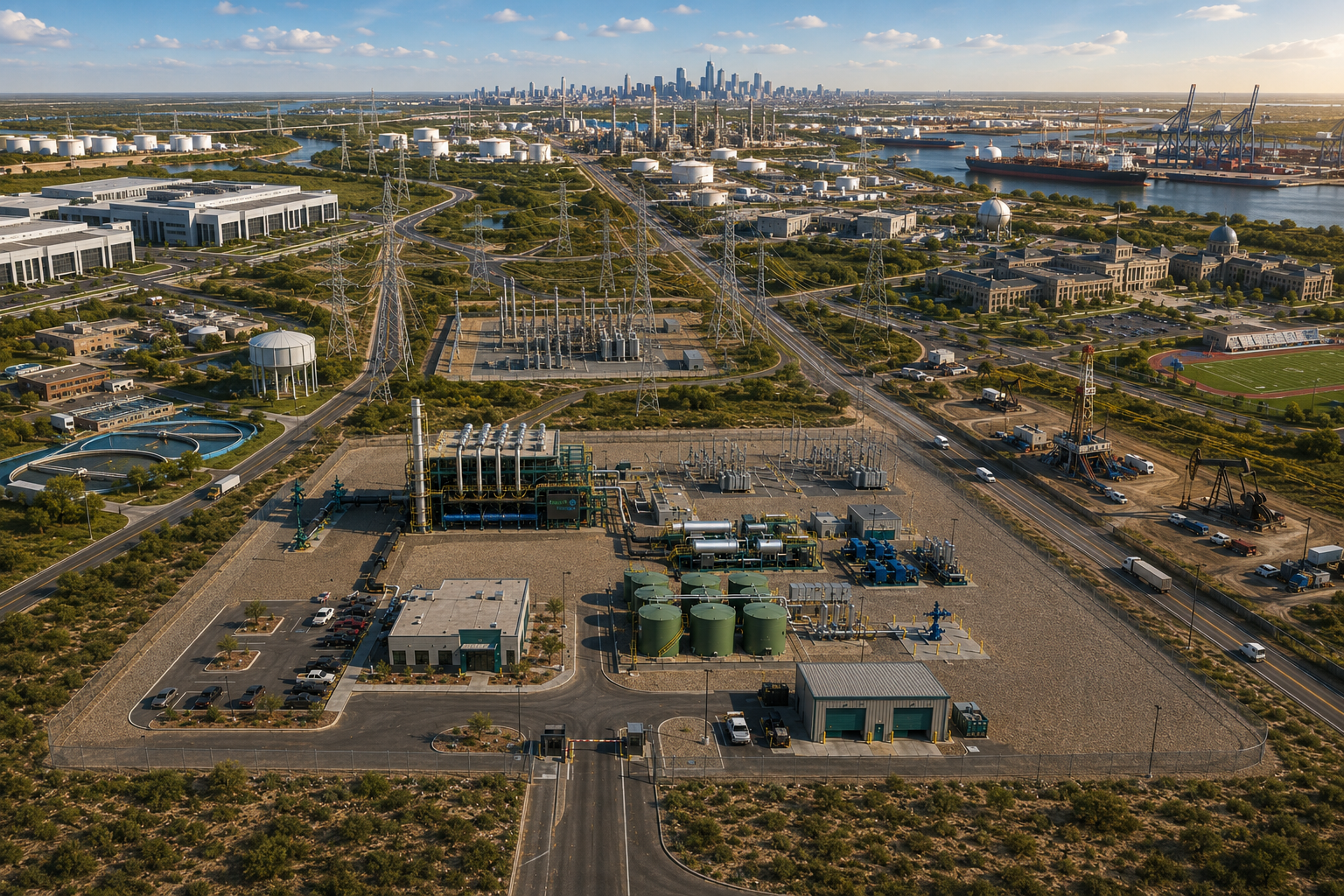
Proximity to Demand
The compact footprint allows Astero systems to be deployed directly within brownfield industrial corridors or near high-density load centers, reducing dependence on costly long-haul transmission expansion and enabling power delivery closer to demand.
Modular Scalability
Astero deploys factory-built, engineered power modules designed specifically for site conditions and required output profiles. From hydraulic turbines and molecular separation systems to ORC heat exchangers and generation equipment, infrastructure is “right-sized” to maximize energy density while minimizing installation time, capital intensity, and surface footprint.
Evaluate the Resource Potential Beneath Your Site
Astero evaluates deep sedimentary basin environments where thermal gradients, geopressure, fluid continuity, and existing subsurface data may support continuous multi-domain baseload power development.
Start with a site evaluation or review the Astero Process to understand how reservoir conditions are converted into power-grade infrastructure.
The Blue Economy – Unlocking Offshore Multi-Resource Basins
The Marine Infrastructure Evolution
The global offshore energy industry faces a dual crisis: the multi-billion dollar liability of decommissioning aging platforms and the urgent need for firm, low carbon power to electrify subsea operations. Astero Energy transforms these offshore "liabilities" into Continuous Energy Hubs by harvesting the hydrothermal and geopressured reservoirs that extend far beneath the continental shelf.
- Phased Offshore Deployment: Our strategy begins with rapid implementation on the Gulf of America shelf, utilizing existing shallow-water infrastructure to achieve immediate production
. As operational benchmarks are met, we expand into deepwater basins, where thermal gradients are most intense .
- Infrastructure Synergy & Asset Rebirth: Instead of executing costly Plug and Abandonment (P&A) operations, Astero repurposes existing offshore jackets and subsea infrastructure. We transition "Boomerang Wells" into productive green assets, extending the economic life of the field by decades.
- Firm Power vs. Intermittent Wind: Unlike offshore wind, which requires massive surface acreage and is subject to weather-dependent intermittency, an Astero Offshore Hub provides firm, 24/7 baseload power from a localized, high-density footprint.
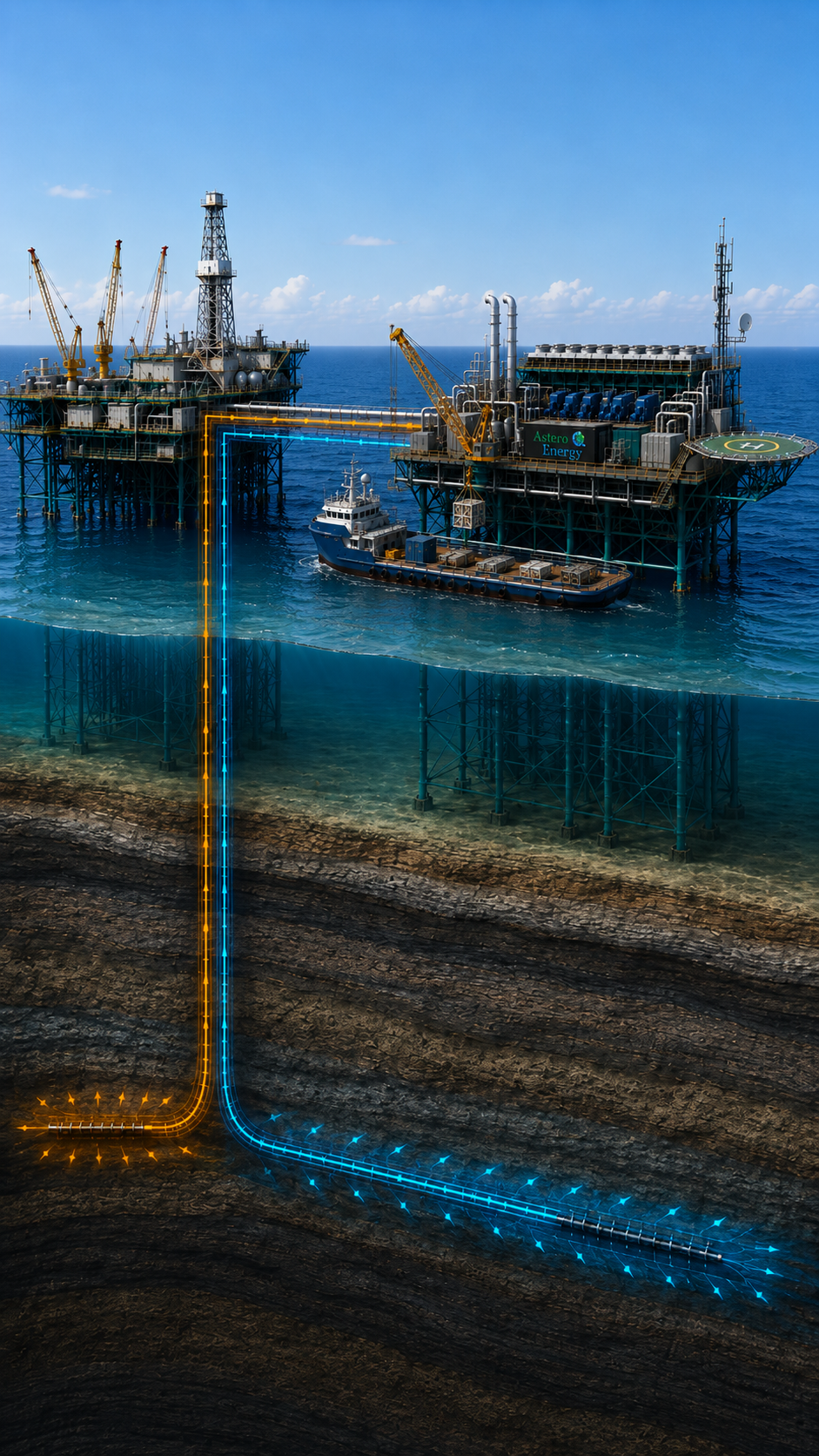
- Marine Platform Integration: Astero’s modular power generation units are engineered for high-density deployment on both offshore fixed platforms and dynamically positioned (DP) submersible vessels
.
The Astero Advantage: Marine Scalability
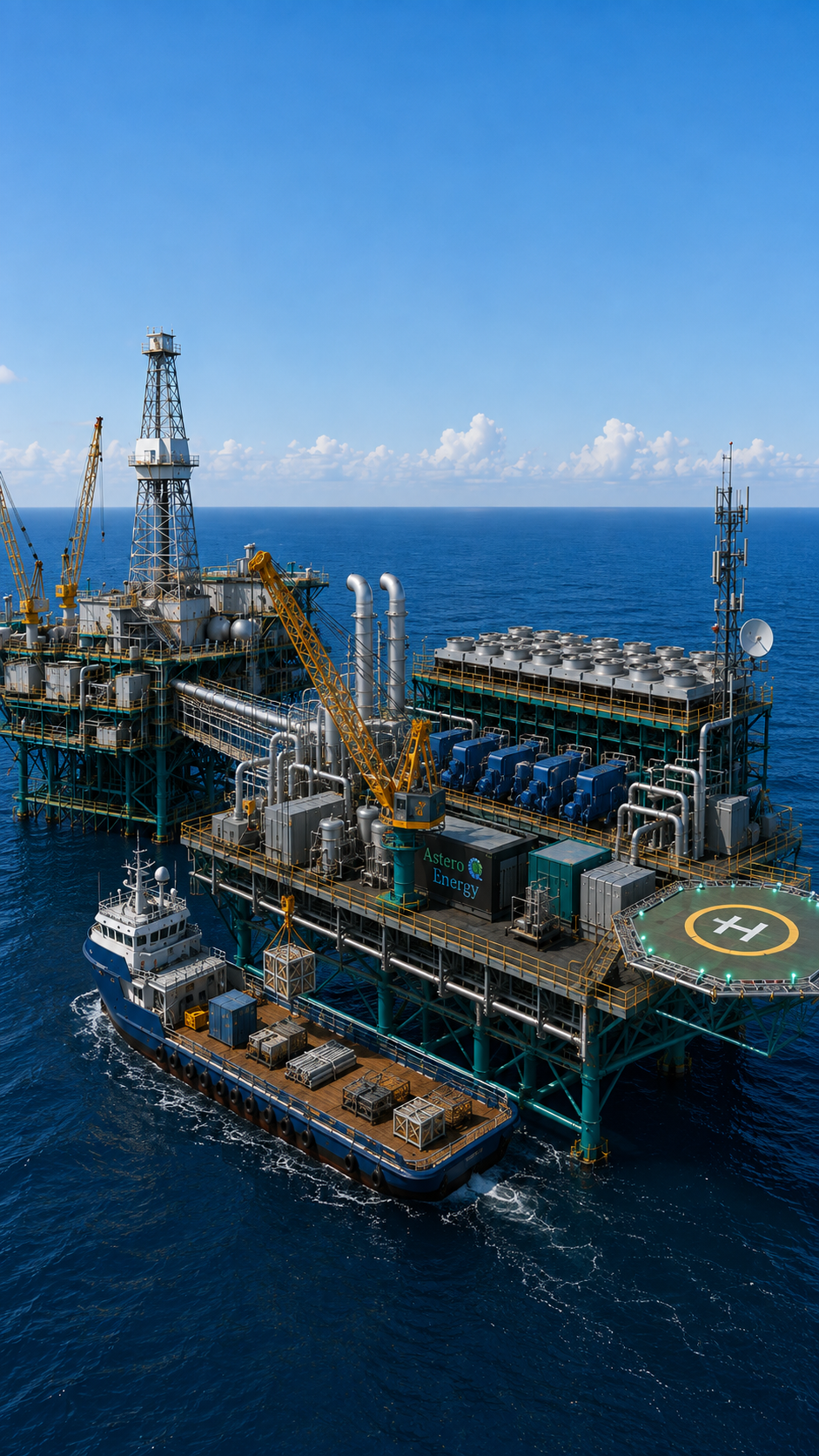
- Vast Subsurface Geographic Reach: We leverage over a century of offshore engineering
. Advanced directional drilling allows a single offshore hub to access multiple thermal targets from a single platform.
- The Molecular Ocean Economy: Where project economics, water chemistry, treatment requirements, and power output support deployment, Astero offshore hubs may serve as nodes for hydrogen production by using treated produced brine and onsite power to support electrolysis and future maritime fuel infrastructure.
- Global Portability: Because these sedimentary basins are found across nearly every maritime border, Astero’s technology is a "plug-and-play" solution for global energy security, capable of powering coastal industrial hubs and subsea "Blue Economy" assets.
Infrastructure Rejuvenation - Redefining the Economic Limit
-
The Water Burden: Operators are forced to handle 10 to 20 barrels of water for every 1 barrel of oil, leading to massive expenses in lifting and disposal.
- Energy Intensity: Powering high-volume lift equipment with grid power or diesel is a primary driver of escalating OpEx.
- The Decommissioning Shadow: When profitability ceases, operators face immediate Plug and Abandonment (P&A) expenses that negatively impact net revenue.
Across both terrestrial and maritime environments, the energy industry is facing a multi-billion dollar financial cliff. As reservoirs age, they reach a critical Economic Limit where the cost of managing subsurface fluids exceeds the value of the produced hydrocarbons. Legacy infrastructure, originally engineered for low-volume oil and gas extraction, now acts as a physical bottleneck—transforming what should be an energy asset into a "Boomerang" liability that threatens the corporate balance sheet.
- Water-to-Revenue Conversion: We don't just "manage" water; we harvest it. By utilizing high-volume brine to drive our Kinetic and Thermal modules, we turn a disposal cost into a primary revenue stream
.
- Designed for Maximum Profitability: Unlike legacy small-diameter tubing that can restrict flow, Astero implements high-velocity infrastructure using purpose-built, large-diameter wells engineered for 30,000+ BPD per well, maximizing energy generation potential and revenue opportunity per wellhead.
- Strategic Decommissioning Deferral: By creating new revenue from water, you move the "Economic Limit," allowing you to defer multi-million dollar P&A expenses for 30 to 50+ years
.
The Astero Solution: Turn Water into Wealth

The Astero Solution - A Terminal Pivot from Expense to Income
Astero Energy fundamentally changes the mathematics of a mature field by implementing High-Velocity Infrastructure designed for Maximum Profitability. We don't just "manage" water; we harvest it as a high-value feedstock to generate 24/7 firm power. By engineering wells for high-rate production (30,000+ BPD per well), we achieve peak electricity generation that provides onsite power autonomy and a new, stable revenue stream.
This transition allows operators to move the Economic Limit, deferring decommissioning costs for 30 to 50+ years while turning a former cost-center into a primary profit-center.
The Onshore Crisis: The Economic Limit of Mature Assets
For land-based operators, mature fields eventually reach a critical "Economic Limit" where the cost of lifting and managing water exceeds the value of the hydrocarbons produced
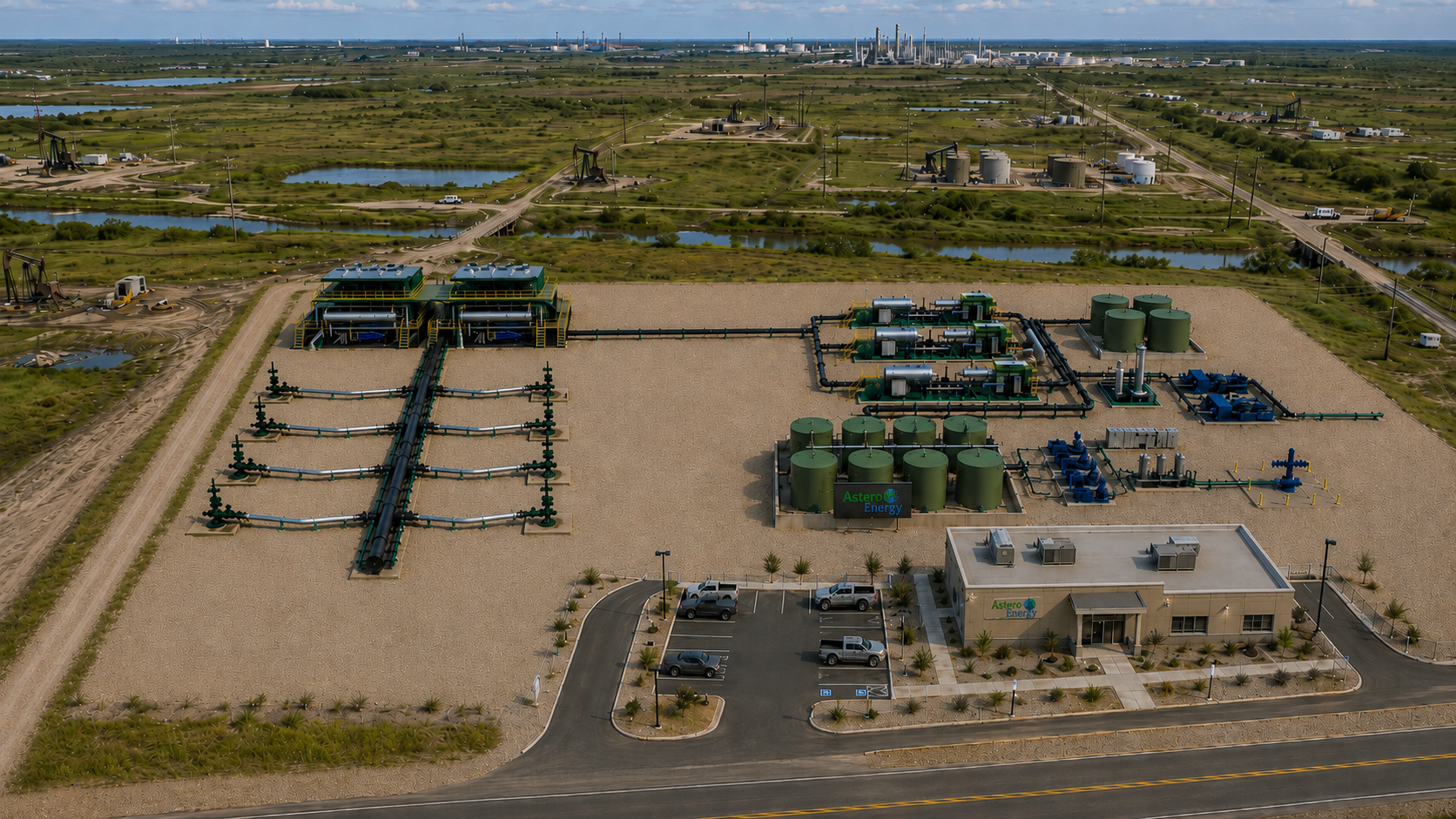
- The Water Burden: As land-based reservoirs age, water cuts rise to 10:1 or 20:1 ratios, leading to massive expenses in power, lifting, and salt-water disposal (SWD)
.
- Energy Intensity & OPEX: Powering high-volume lift equipment is expensive; operators are often dependent on costly local grid power or carbon-intensive diesel generators
.
- The Decommissioning Shadow: When a well becomes "water-logged" and unprofitable, it creates an immediate Plug and Abandonment (P&A) liability that negatively impacts the balance sheet
.
OFFSHORE REJUVENATION
Unlocking the Blue Economy
Transforming existing offshore infrastructure from end-of-life liability into productive long-term value.
The Offshore Challenge
Aging assets. Rising costs. Declining reservoir energy.
Mature offshore assets can remain technically capable while declining production, increasing fluid volumes, remote operating requirements and future retirement obligations progressively weaken the original development model.
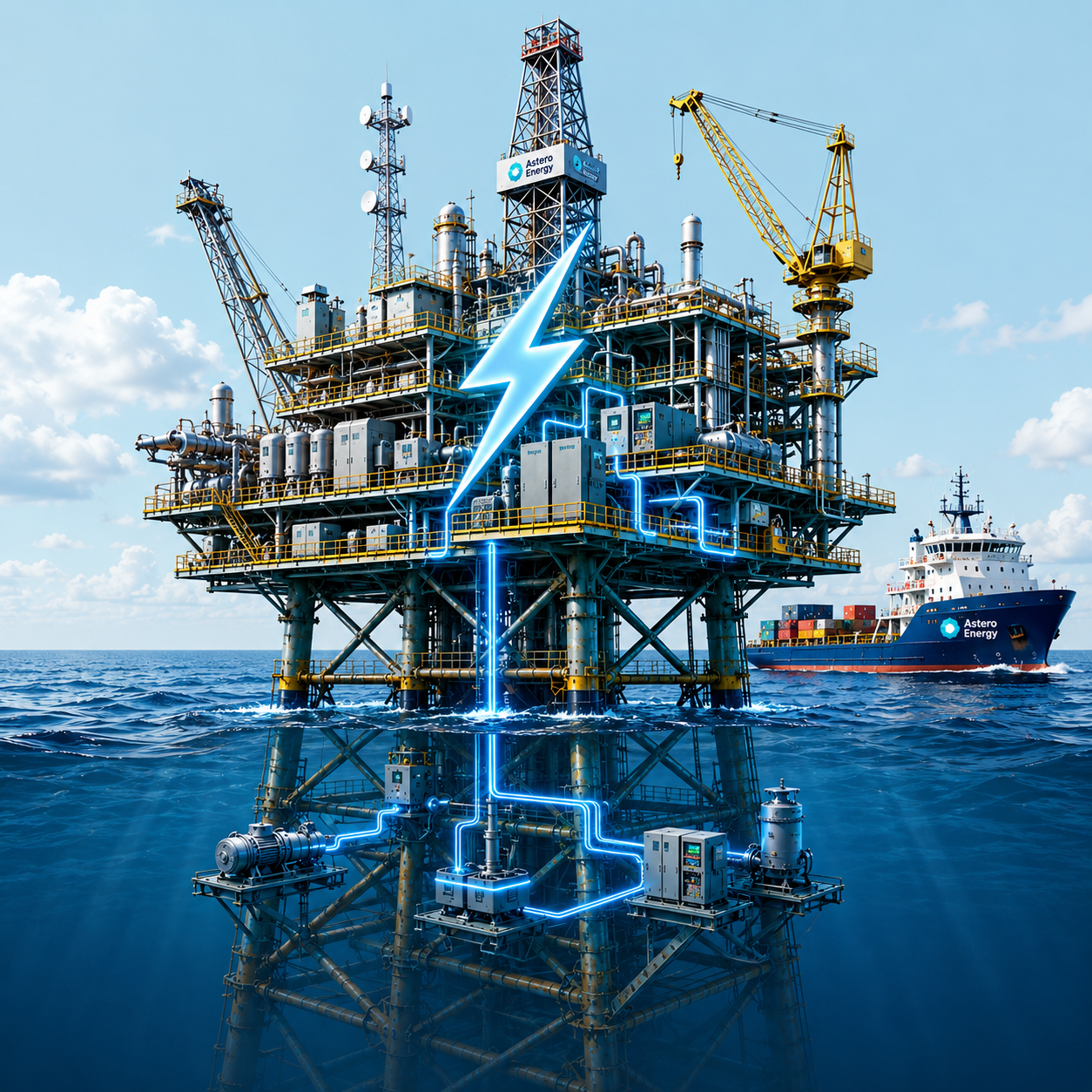
Offshore Power Burden
Remote offshore facilities require continuous power even as mature-field production declines.
- Fuel and Generation Cost
- Produced Gas Opportunity Cost
- Emissions and Fuel Handling
Explore This Challenge →
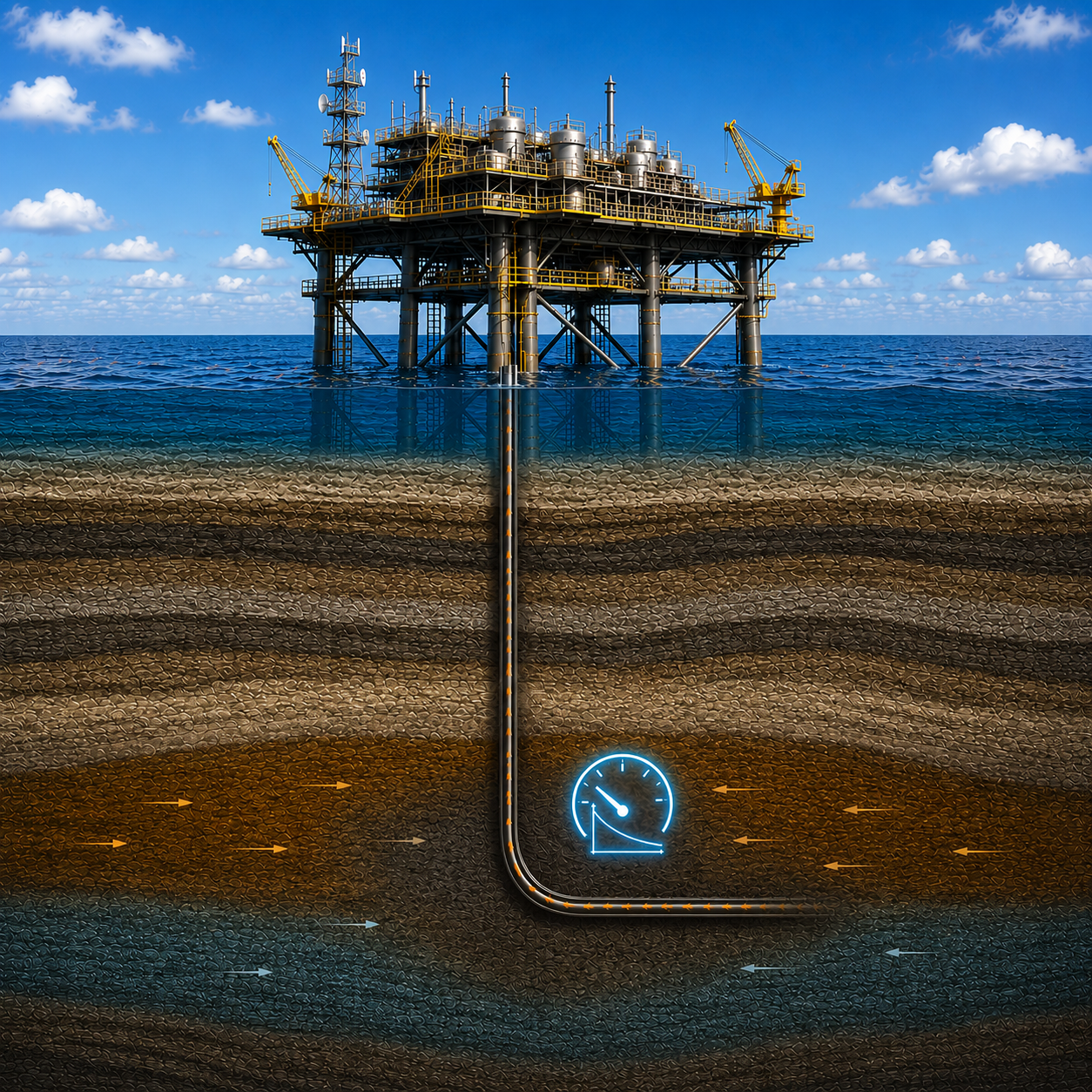
Declining Reservoir Energy
Pressure decline reduces deliverability and reserve recovery.
- Lower reserve recovery
- Reduced Deliverability
- Production and Revenue Decline
Explore This Challenge →
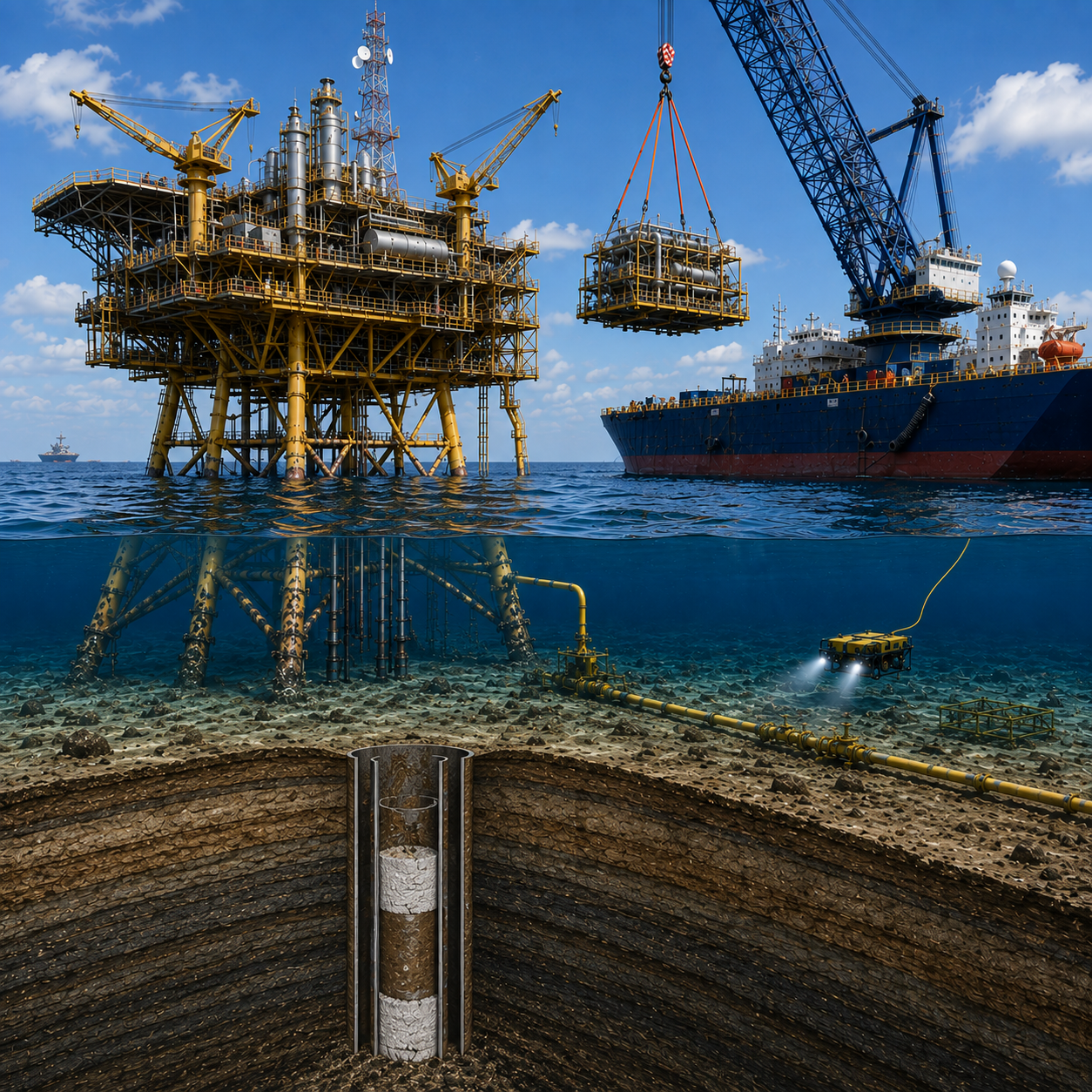
Decommissioning Exposure
Installed offshore assets can create substantial future retirement obligations.
- P&A and removal cost
- Liabilities and Timing Risk
- Regulatory and Compliance
Explore This Challenge →
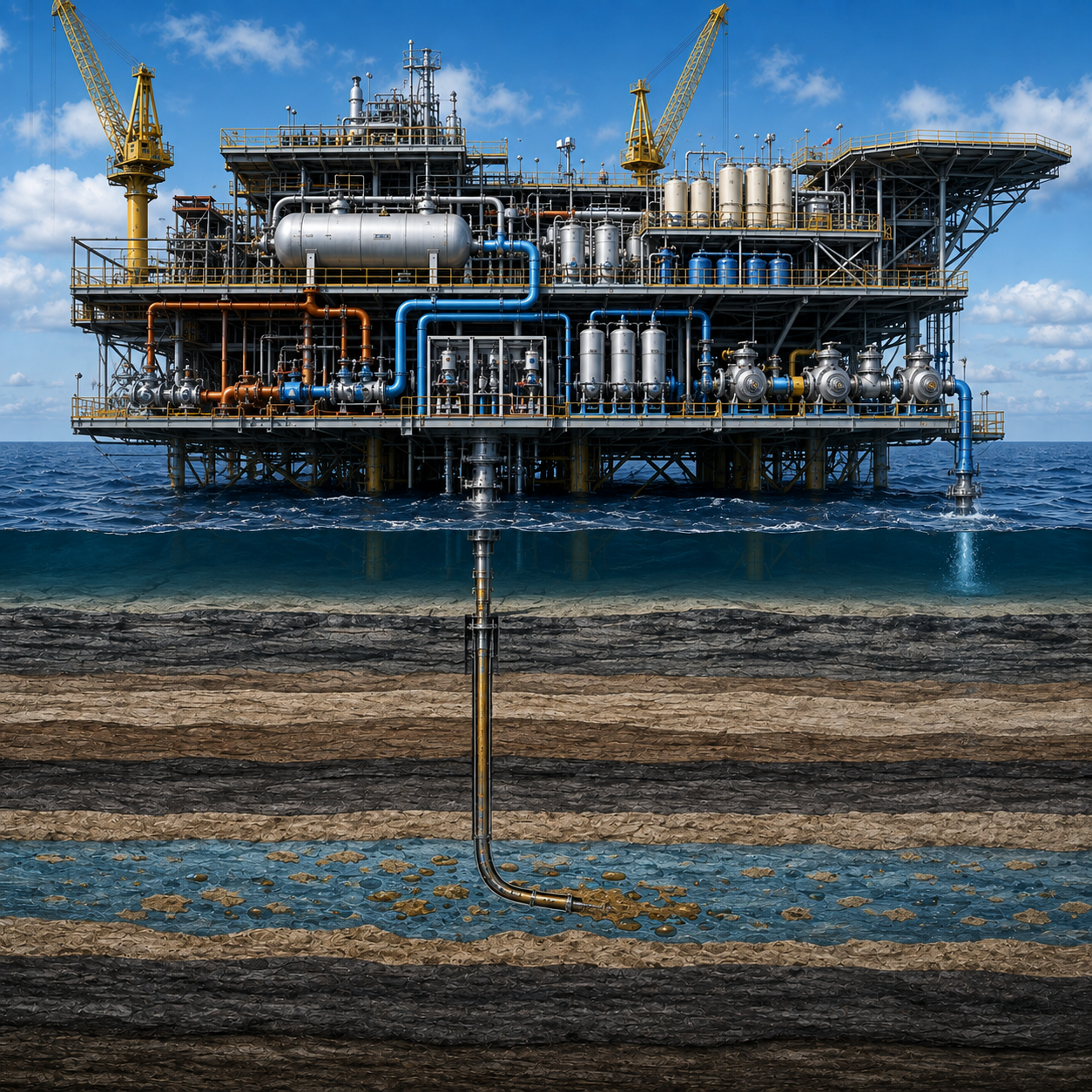
Produced-Water Burden
Increasing water volumes require progressively more handling, treatment and reinjection.
- Greater Fluid Volume
- Treatment / Pumping Cost
- Reinjection or Disposal
Explore This Challenge →
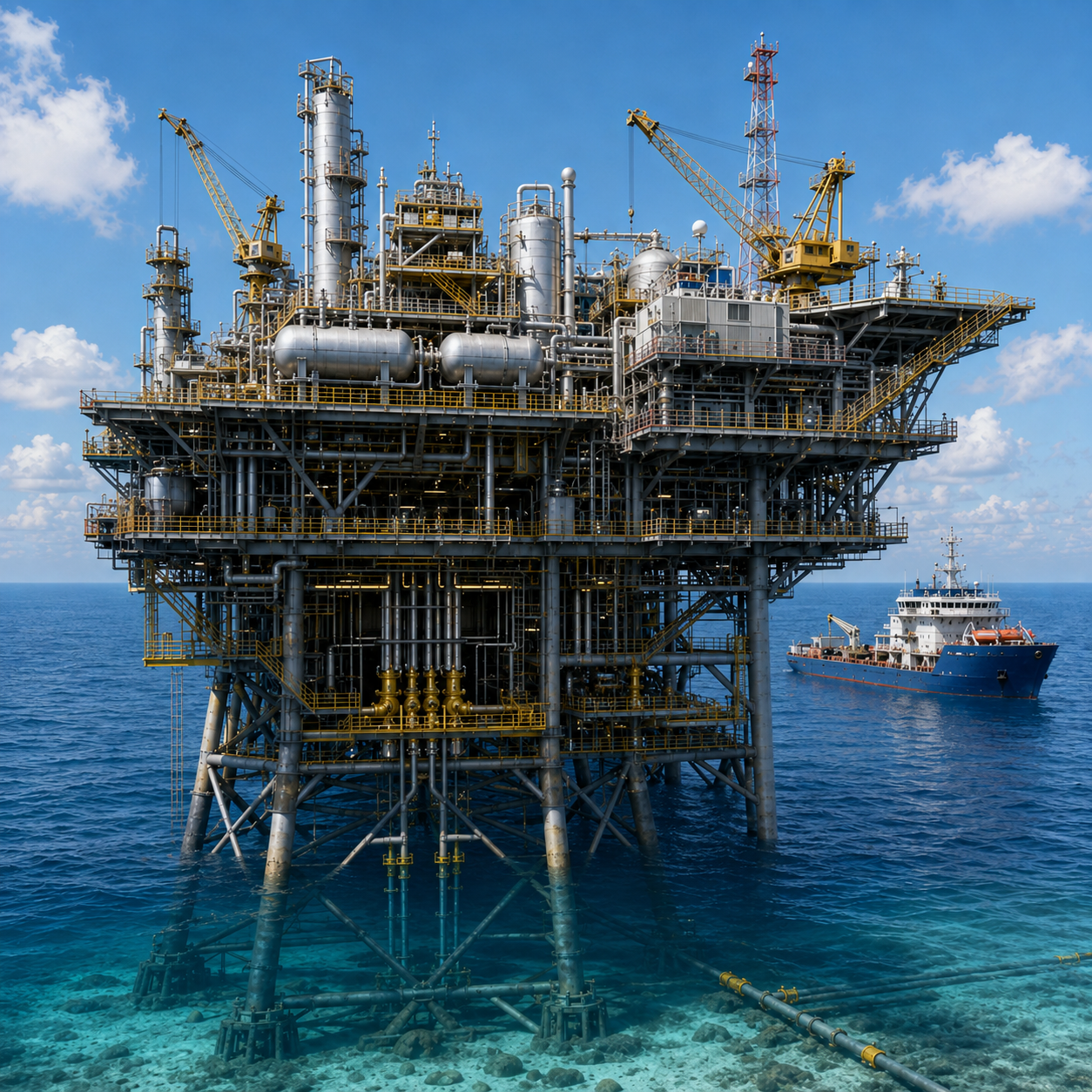
Mature Field Economics
Large operating systems persist while productive hydrocarbon throughput declines.
- Fixed Operating Burden
- Lower Productive Output
- Weakening Unit Economics
Explore This Challenge →
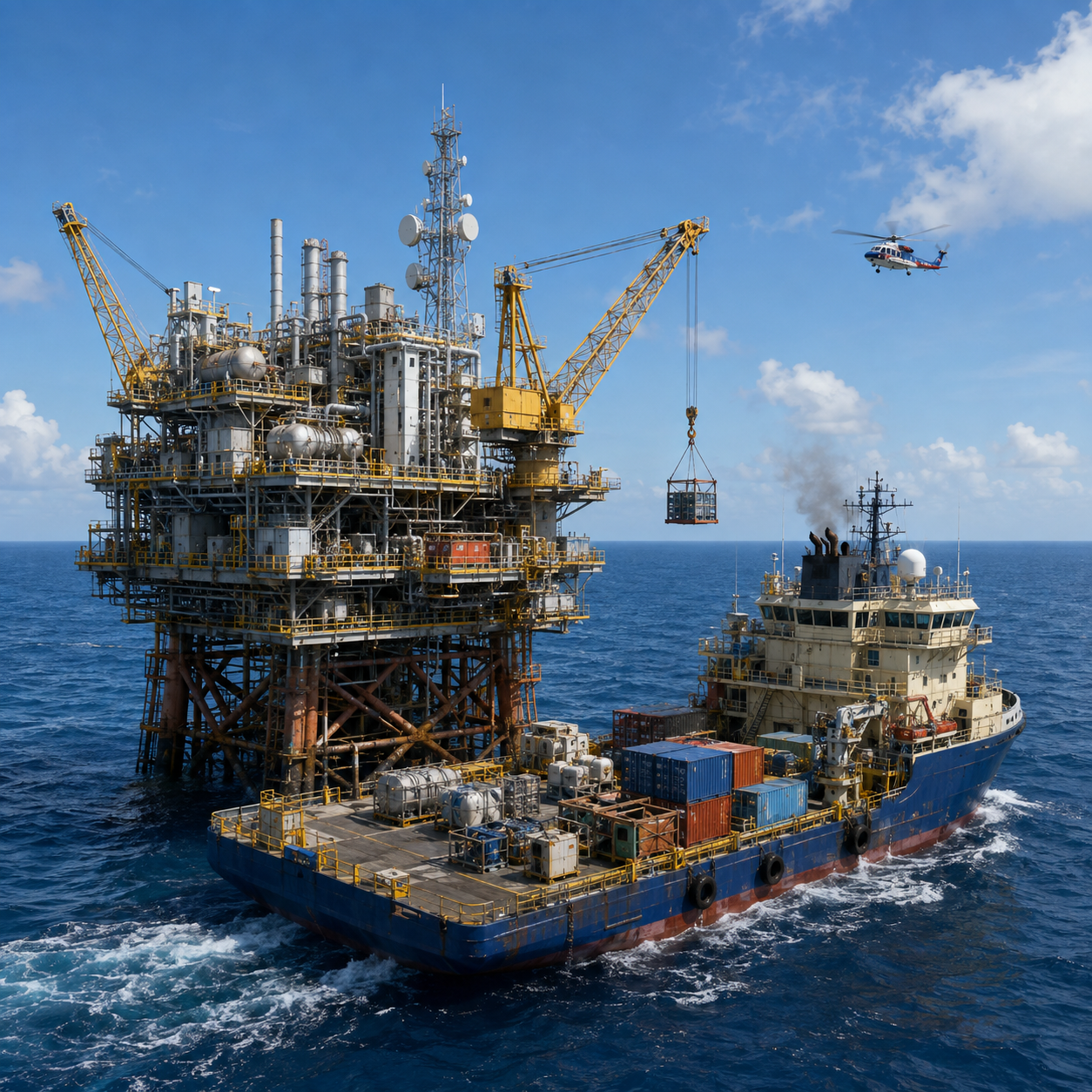
Remote Logistics & Emissions
Remote facilities require recurring vessel, material, fuel and personnel support.
- Marine Logistics
- Fuel-Intensive Support
- Transport & Operation Emissions
Explore This Challenge →
EVALUATE WHETHER SUBSURFACE ENERGY COULD OFFSET OFFSHORE POWER DEMAND
Offshore Power Burden
Remote offshore facilities require continuous power even as mature-field production declines and the economics supporting that power requirement weaken.
The Challenge
Remote offshore facilities require continuous electricity for pumping, compression, processing, produced-water handling, controls, communications and other critical loads. As production declines, those power requirements can remain substantial relative to the productive output of the asset.
Astero Pathway
Astero evaluates whether existing wells, produced fluids, reservoir conditions, temperature, pressure and fluid chemistry can support an integrated subsurface-energy pathway capable of producing useful power closer to the offshore load.
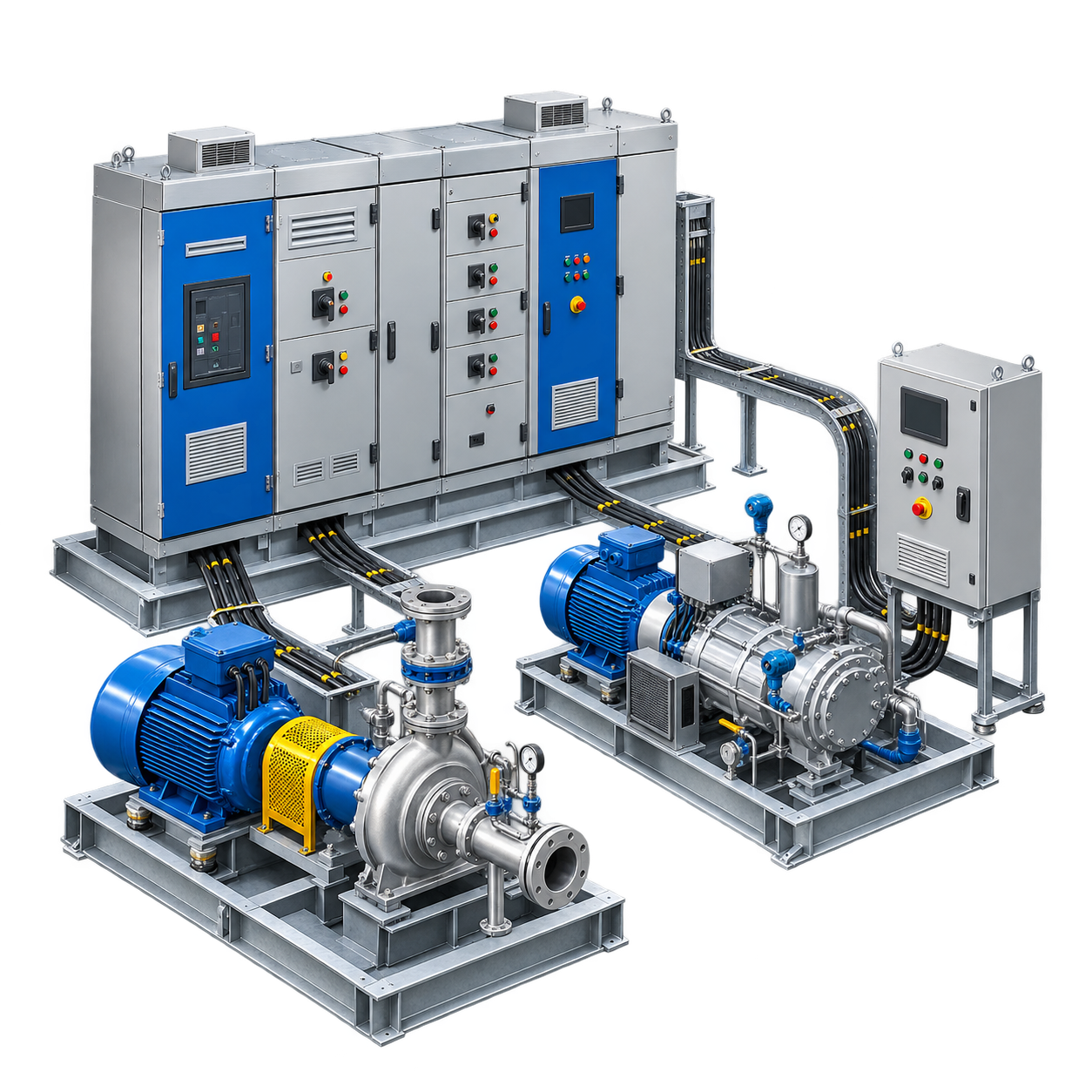
Persistent Offshore Power Demand
Critical operating loads remain necessary throughout the asset's operating life even as hydrocarbon production and productive throughput decline.
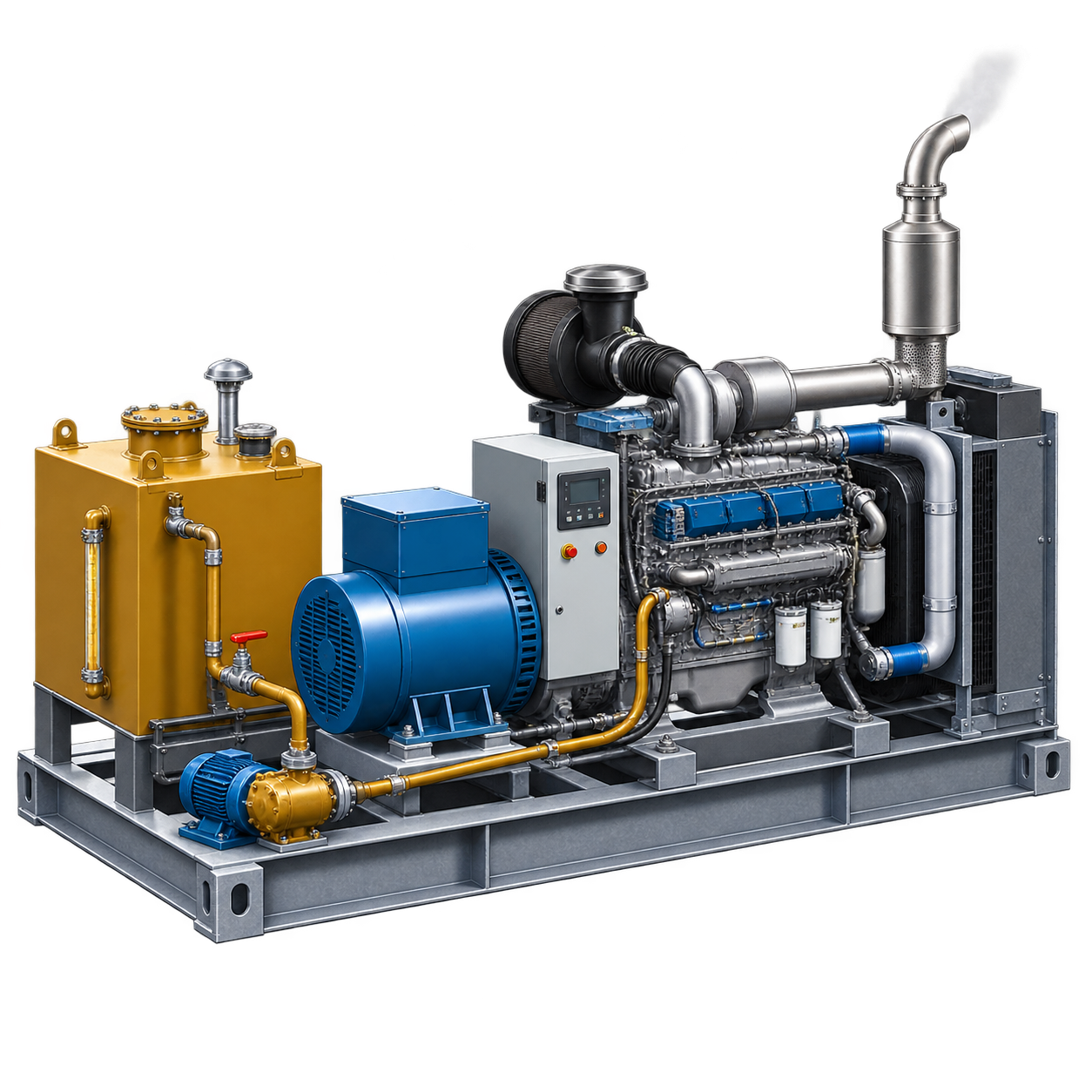
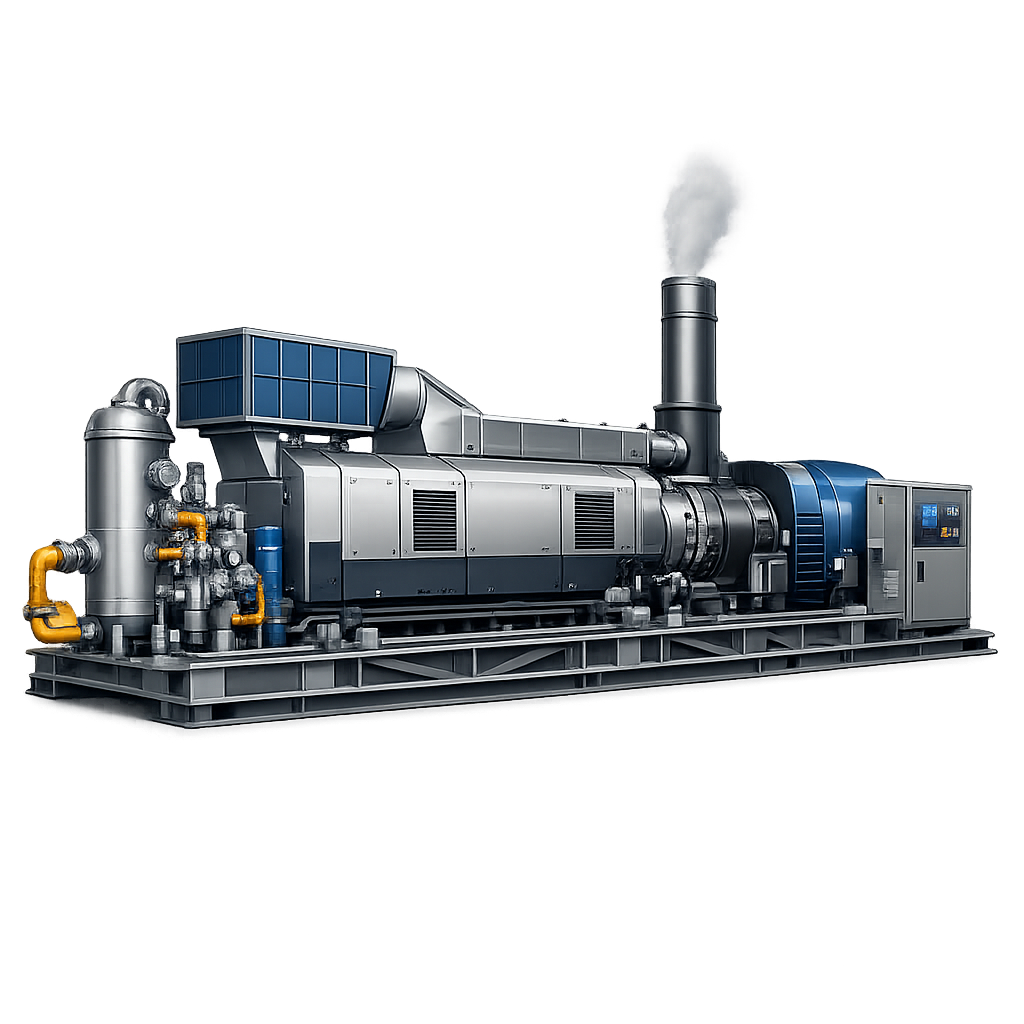
Diesel-Generated Power
Diesel power carries recurring fuel-purchase and marine-delivery requirements, combustion emissions, storage and handling requirements, and potential environmental exposure associated with transporting and managing diesel offshore.
Produced-Gas Generation
Produced gas can reduce dependence on delivered liquid fuel, but gas consumed for platform power is no longer available for sale or another productive use. Gas-fired generation also retains combustion emissions and associated equipment requirements.
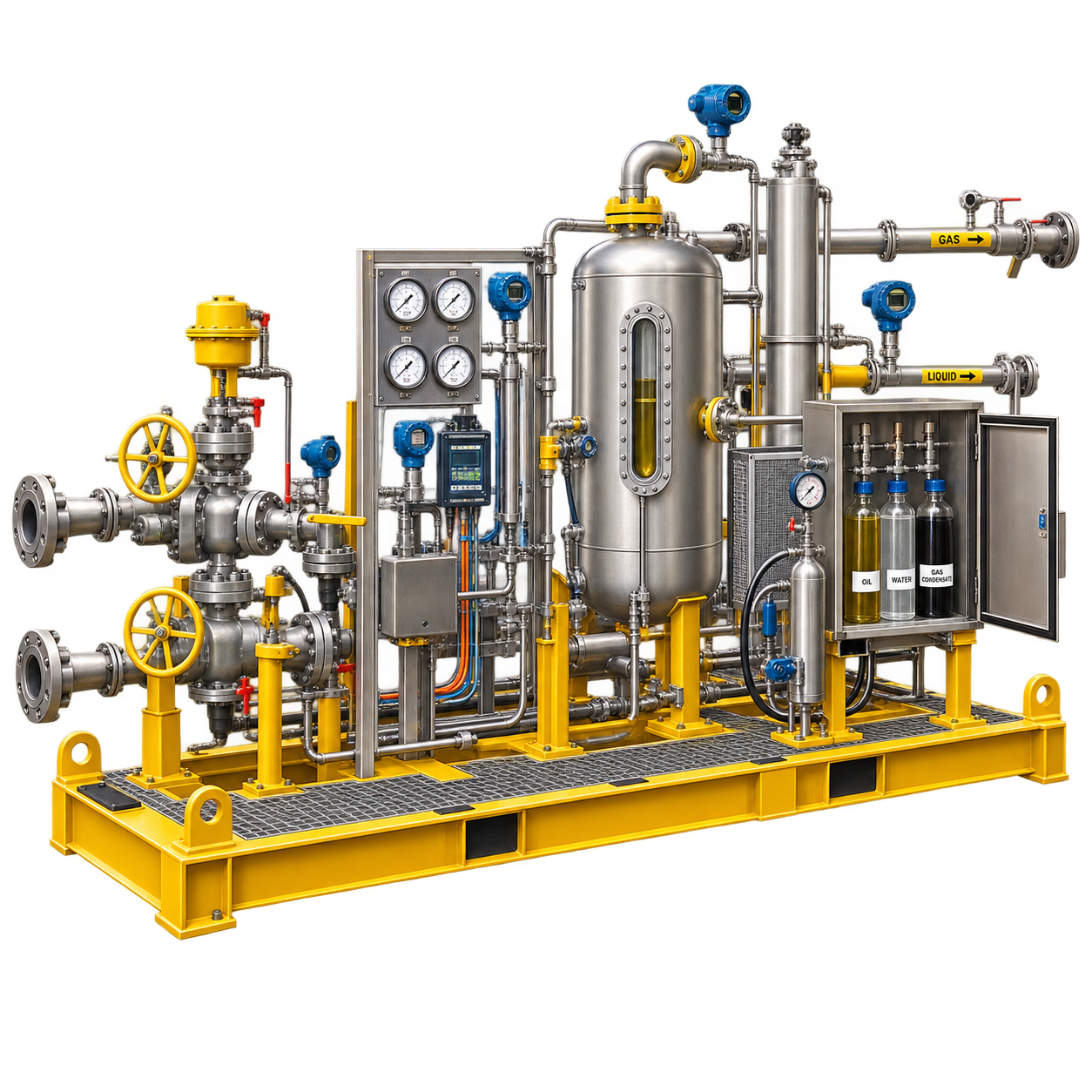
Existing Fluid and Well Potential
Assess fluid quality, flow potential and well connectivity to determine whether the existing subsurface system warrants further energy-recovery evaluation.
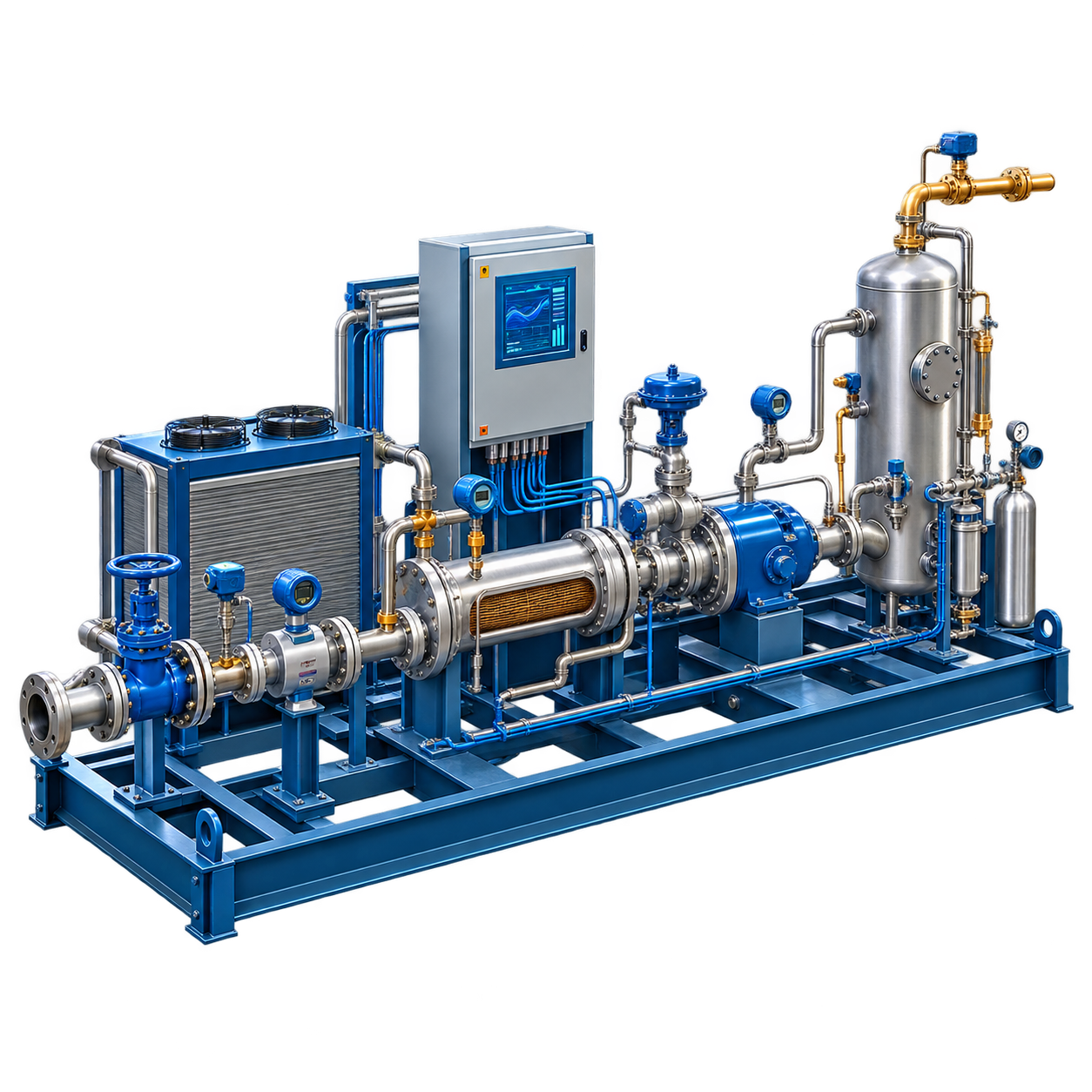
Recoverable Thermal, Kinetic and Chemical Energy
Evaluate usable energy contained in temperature, pressure drop and fluid properties under existing operating conditions.
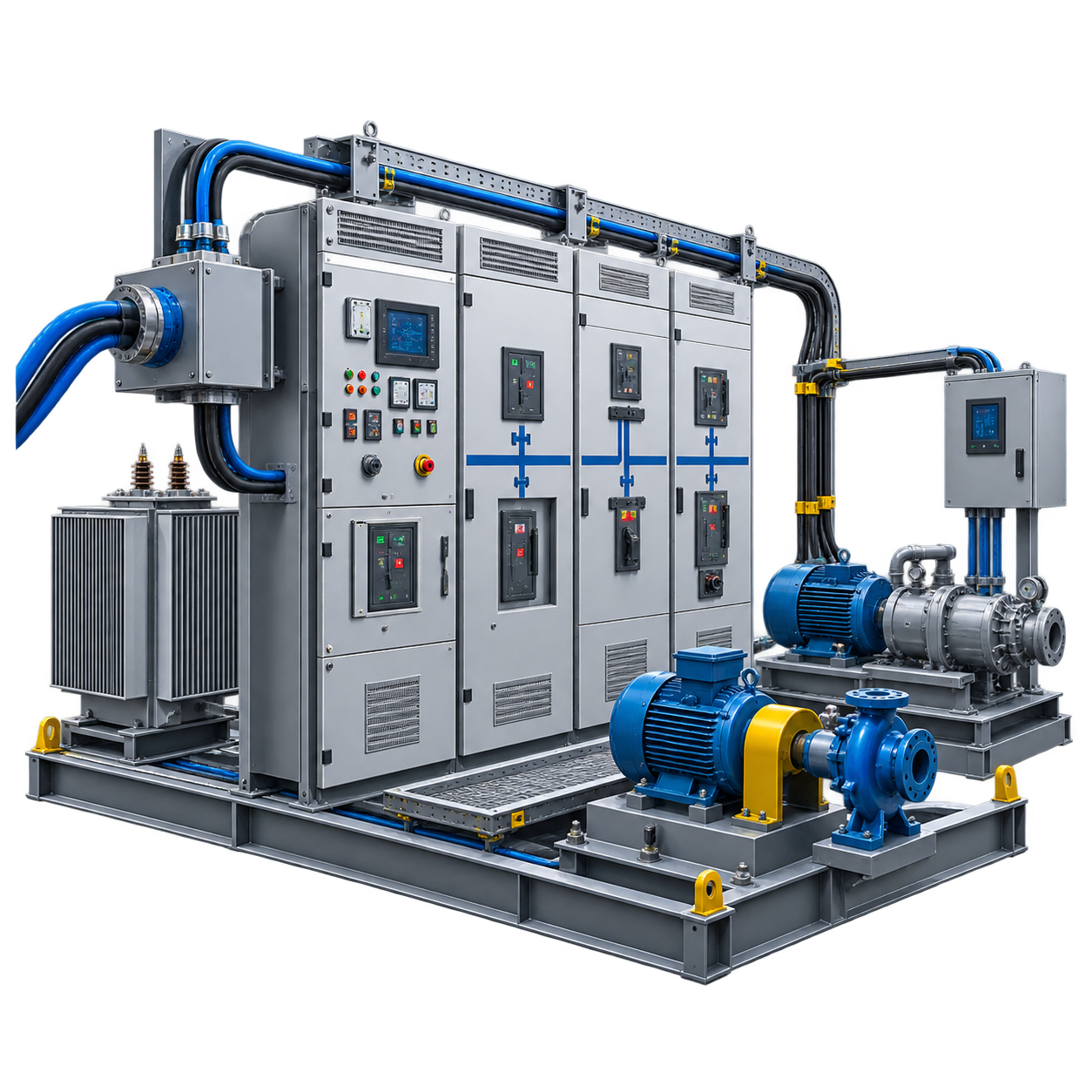
Integration with existing Offshore Power Demand
Evaluate whether recovered energy could technically support or offset a portion of existing offshore electrical loads.
Could part of the energy already moving through the offshore subsurface system be evaluated for productive use closer to the offshore load?
The objective is not to assume that an offshore asset can become self-powered, but to determine whether existing subsurface and surface conditions justify a more detailed engineering and commercial evaluation.
Could your existing offshore fluid system offset part of the power burden?
EVALUATE WHAT PRODUCTIVE ENERGY POTENTIAL MAY REMAIN IN THE RESERVOIR SYSTEM
Declining Reservoir Energy
As fields mature, declining pressure and weakening natural reservoir drive can progressively reduce fluid deliverability even when recoverable resource remains.
The Challenge
Reservoir pressure typically declines as fluids are produced and reservoir energy is depleted. Wells that once flowed at attractive rates may require increasing drawdown, artificial lift, compression, pressure support or other operating intervention to maintain production. The result can be progressively lower deliverability from wells and infrastructure that remain physically capable of operating.
Astero Pathway
Astero evaluates the mature reservoir as an integrated fluid and energy system rather than considering hydrocarbon production alone. The evaluation examines whether existing pressure conditions, fluid deliverability, well connectivity and thermal or chemical characteristics provide sufficient technical potential for a second-life energy pathway.
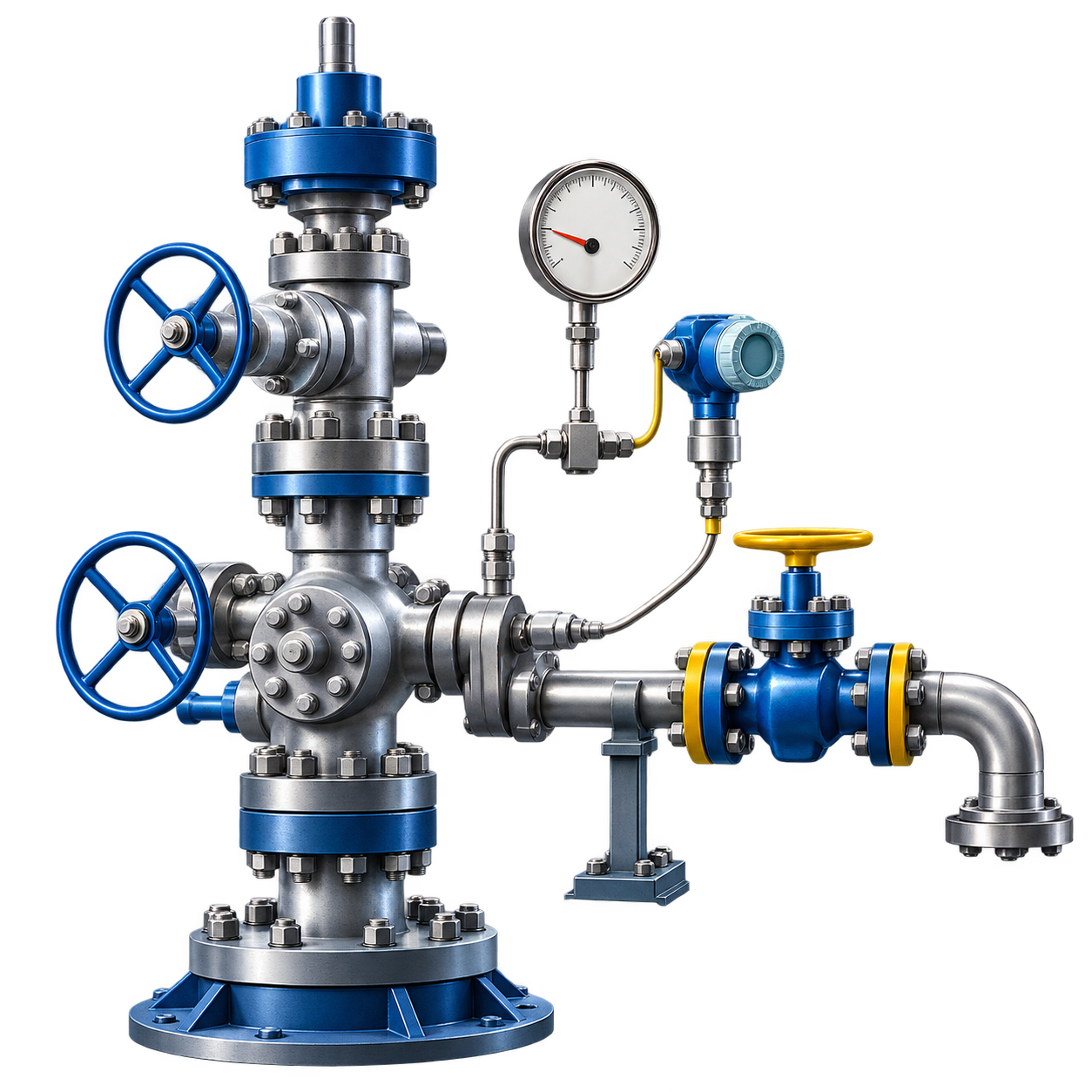
Lower Reservoir Pressure
Declining reservoir pressure reduces the natural energy available to move fluids through the formation and toward existing producing wells.
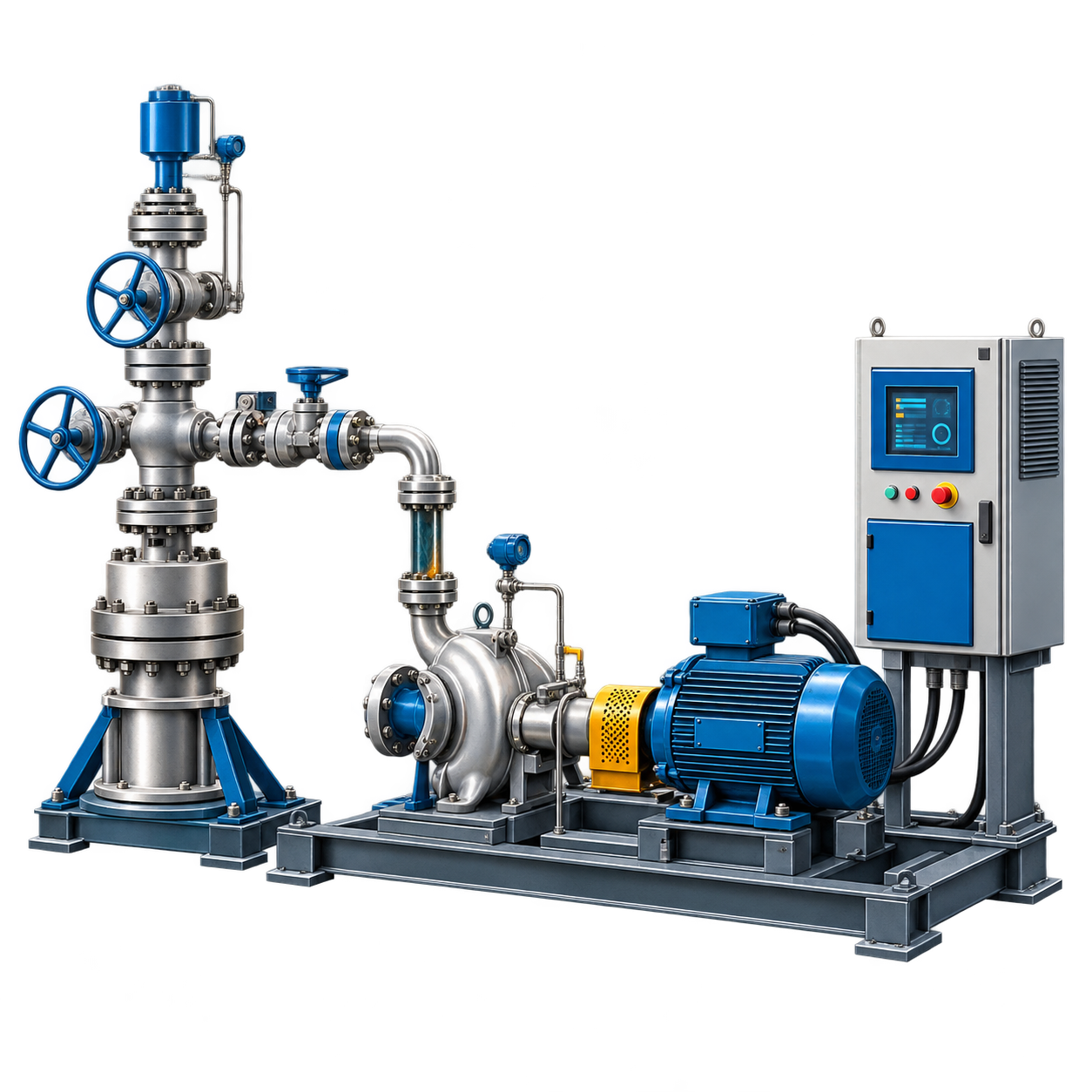
Reduced Flow and Well Deliverability
As pressure and productive capacity decline, maintaining useful flow rates can require greater drawdown and additional surface or downhole operating support.
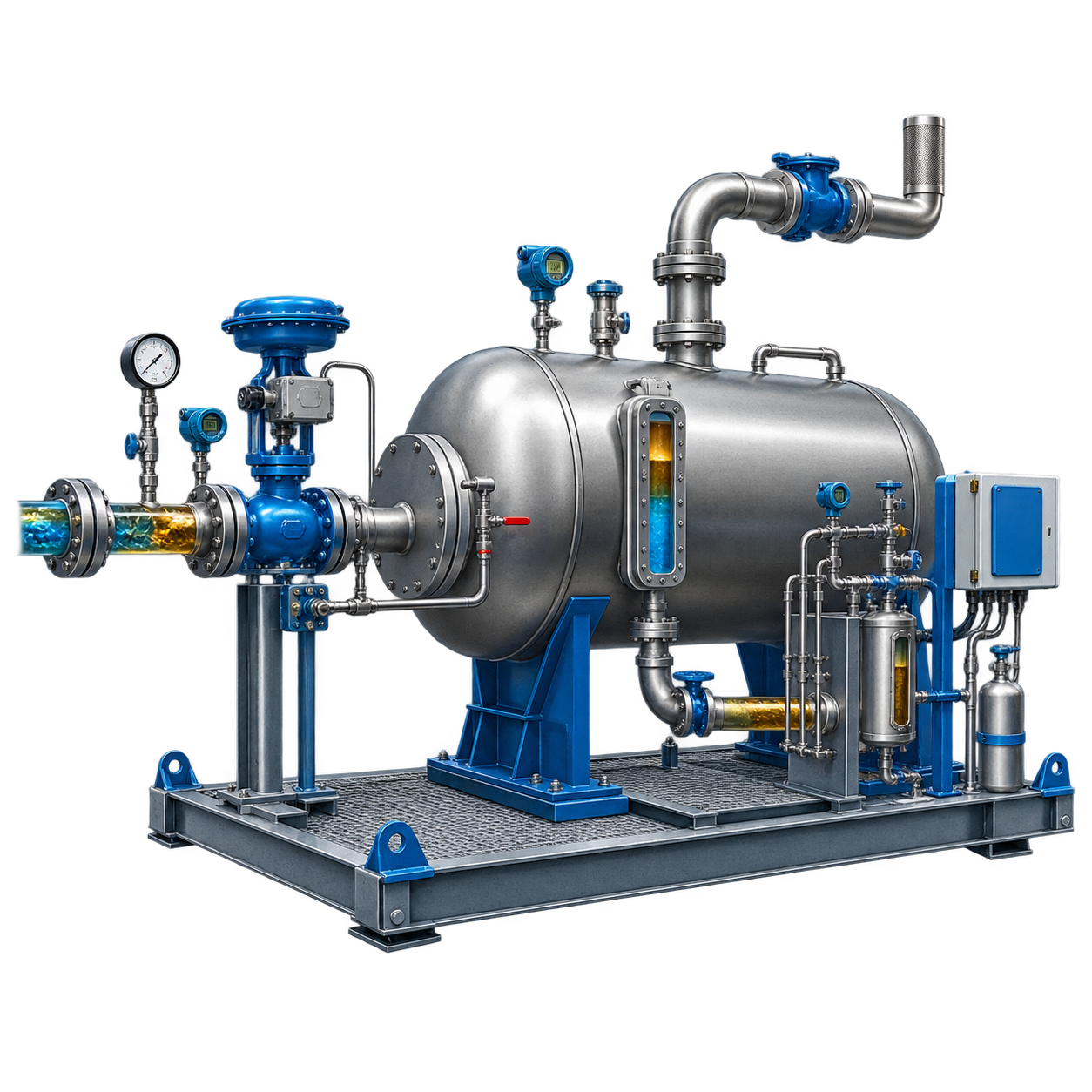
Resources May Remain
Mature reservoir conditions do not necessarily mean the subsurface system has lost all productive value. Fluids, heat, pressure differentials, existing reservoir access and remaining hydrocarbons may still warrant evaluation.
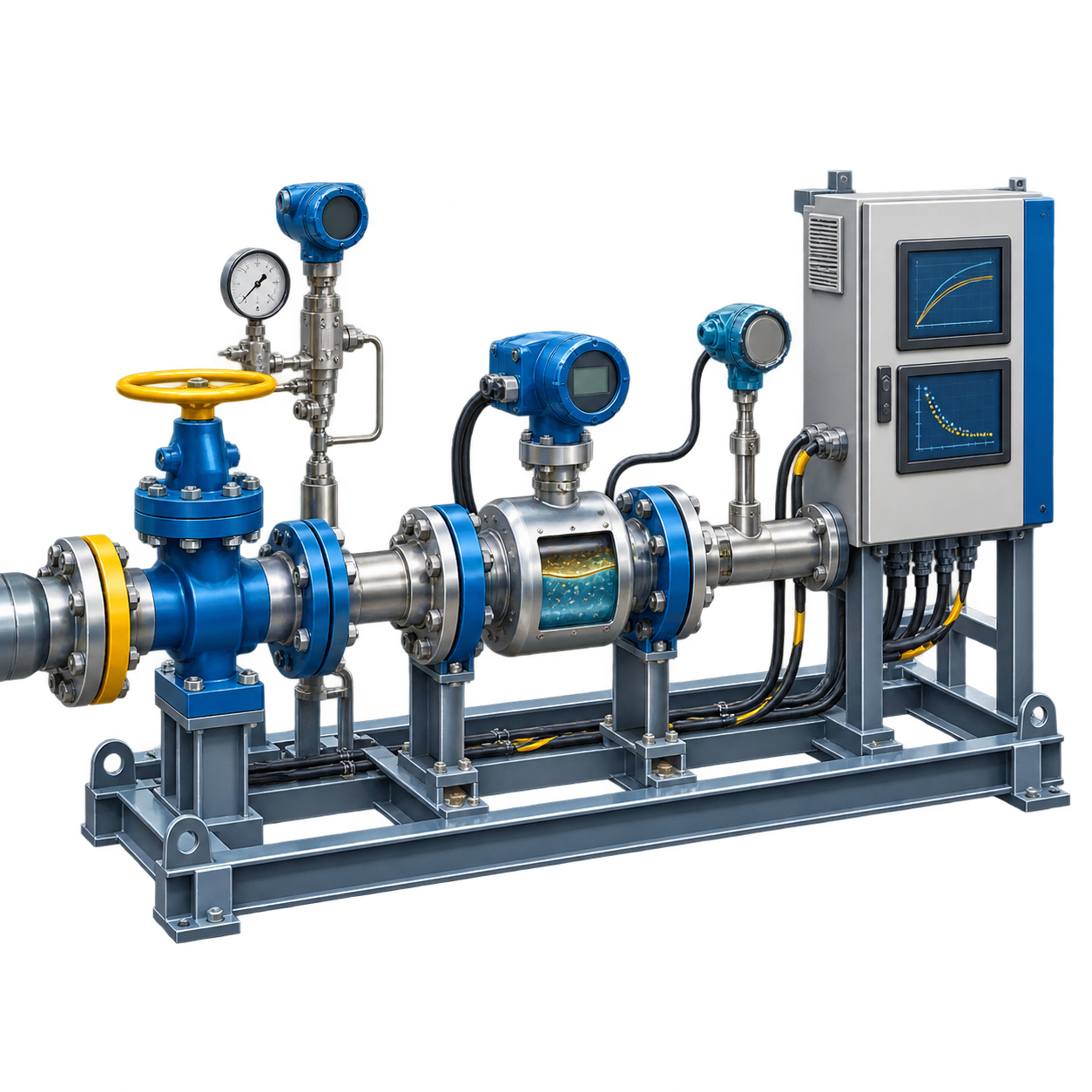
Reservoir Pressure and Deliverability
Characterize existing pressure conditions, producing capability, fluid volumes and the response of the reservoir to continued withdrawal.
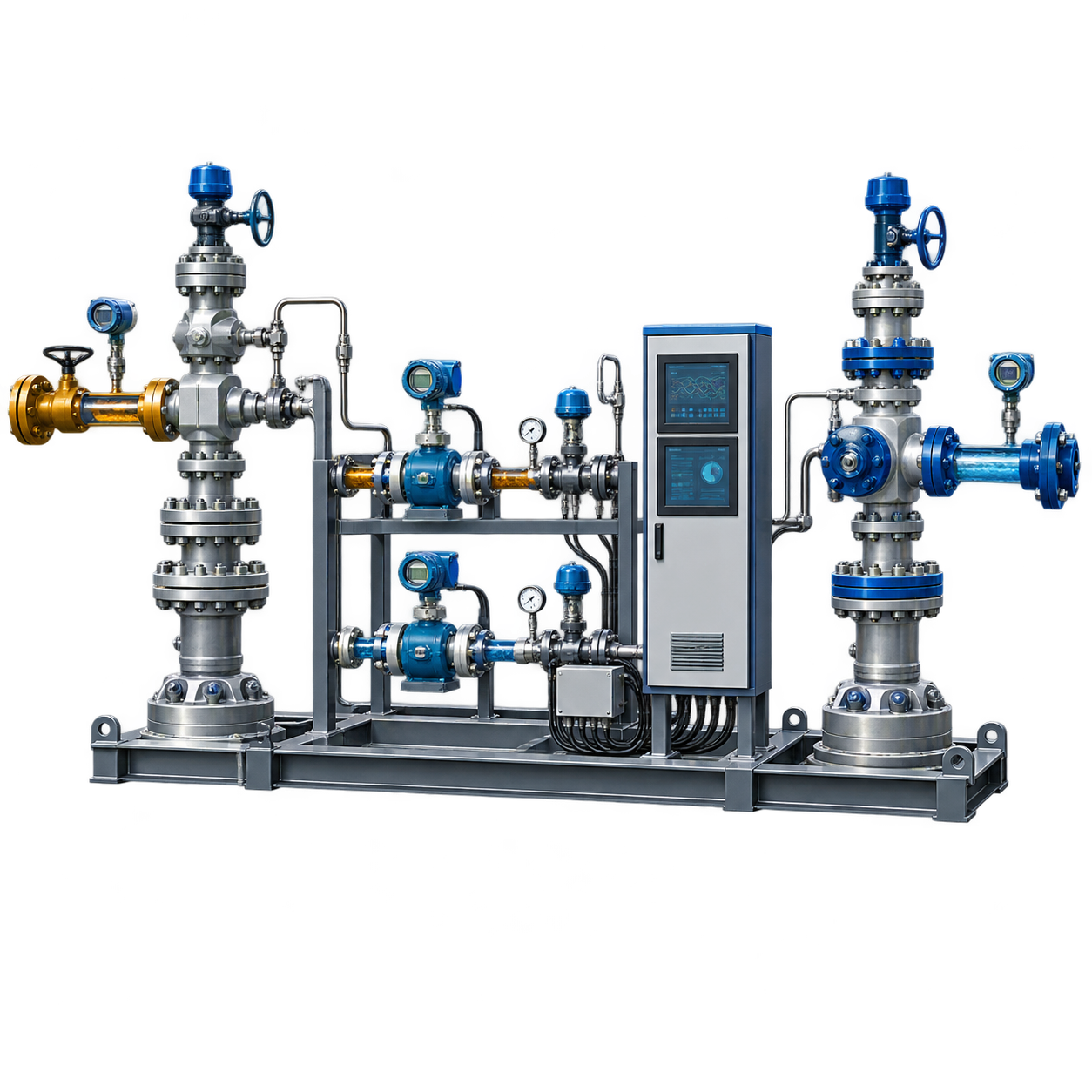
Well Connectivity and Circulation Potential
Evaluate whether existing production and injection wells—or technically suitable well configurations—could support controlled fluid movement through the reservoir system.
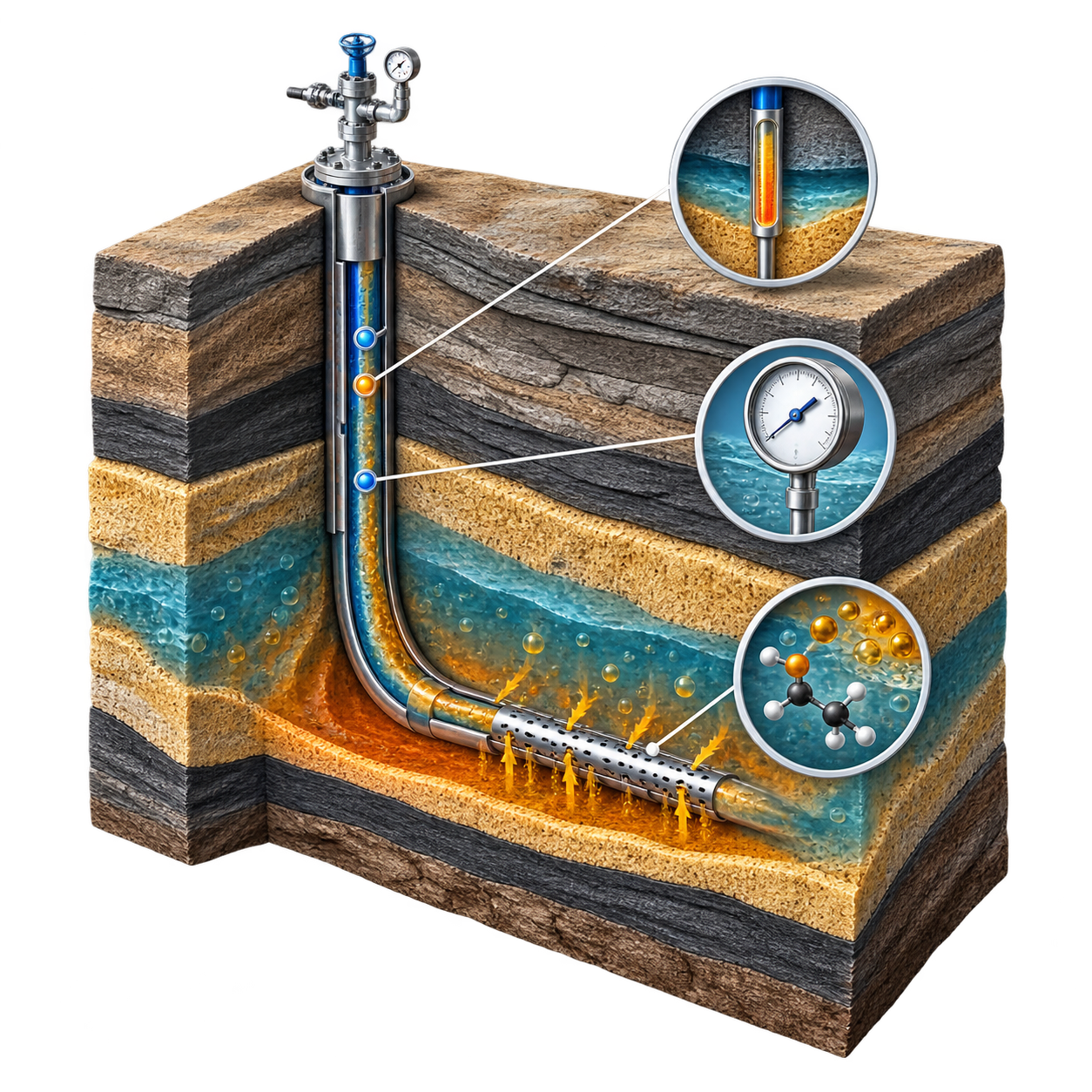
Recoverable Energy Potential
Assess the usable thermal, pressure and fluid-property energy available under current reservoir conditions and how that potential may change during operation.
Could the remaining pressure, temperature, fluids and existing well access be evaluated as part of a different productive energy pathway?
The objective is not to assume that declining reservoir energy can be reversed, but to determine whether the remaining reservoir system contains sufficient fluid, connectivity and usable energy to justify further engineering evaluation.
Could a mature reservoir that no longer supports its original production model still support another productive use?
EVALUATE PRODUCTIVE REUSE BEFORE RETIREMENT BECOMES THE ONLY PATH
Decommissioning Exposure
Mature offshore assets can carry substantial future well-abandonment, facility-removal, marine-logistics and regulatory obligations even while significant installed infrastructure remains technically serviceable.
The Challenge
When the original production model no longer supports continued operation, operators eventually face the cost and complexity of retiring wells and offshore infrastructure. Plugging and abandonment, topsides and jacket removal, subsea work, marine support, site clearance and regulatory requirements can create significant future obligations.
Astero Pathway
Astero evaluates whether wells, subsurface access, produced fluids and existing surface infrastructure may have a technically credible productive use beyond the asset's original hydrocarbon-production model.
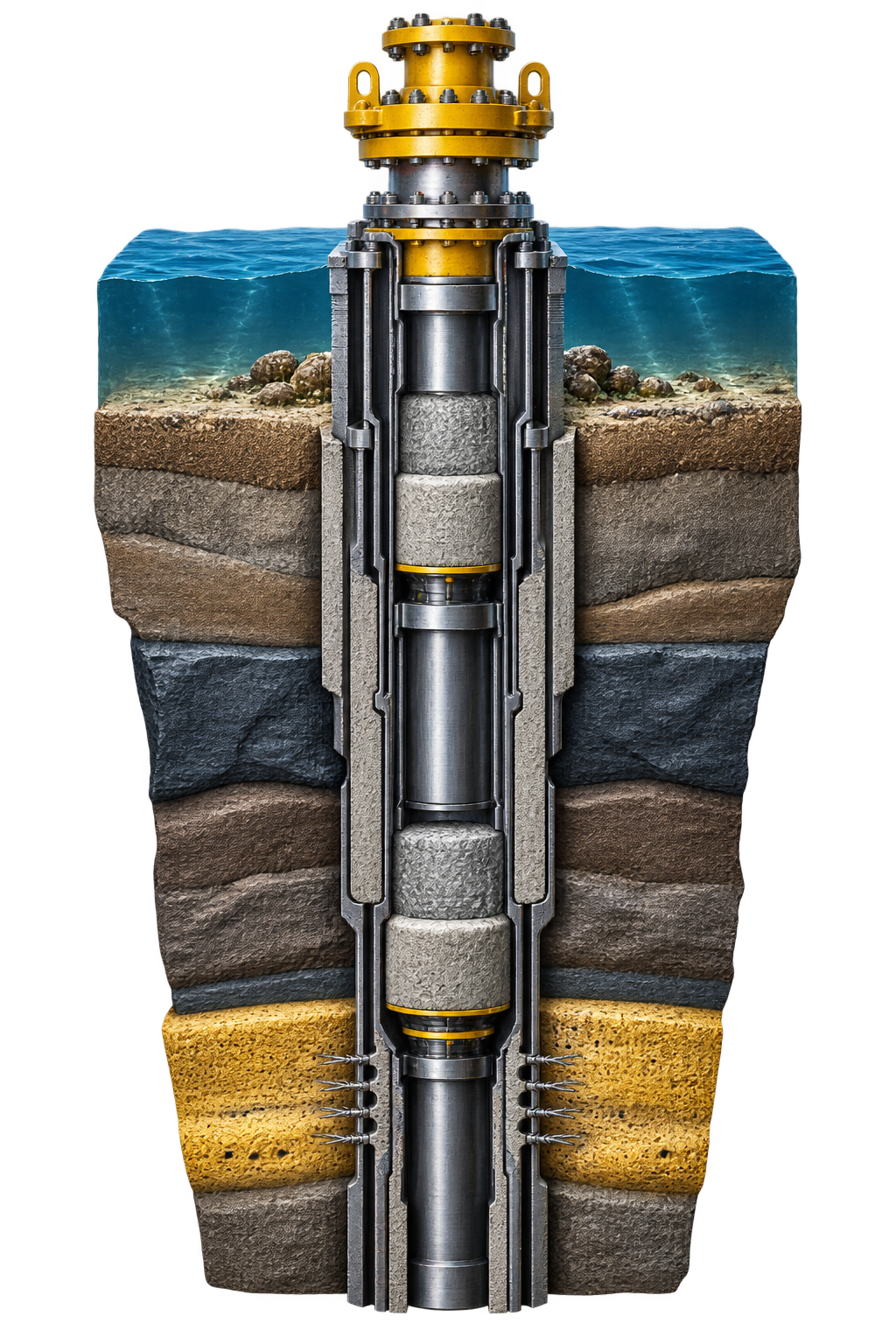
Well Plugging and Abandonment
Existing offshore wells eventually require technically compliant isolation, abandonment and long-term integrity management.
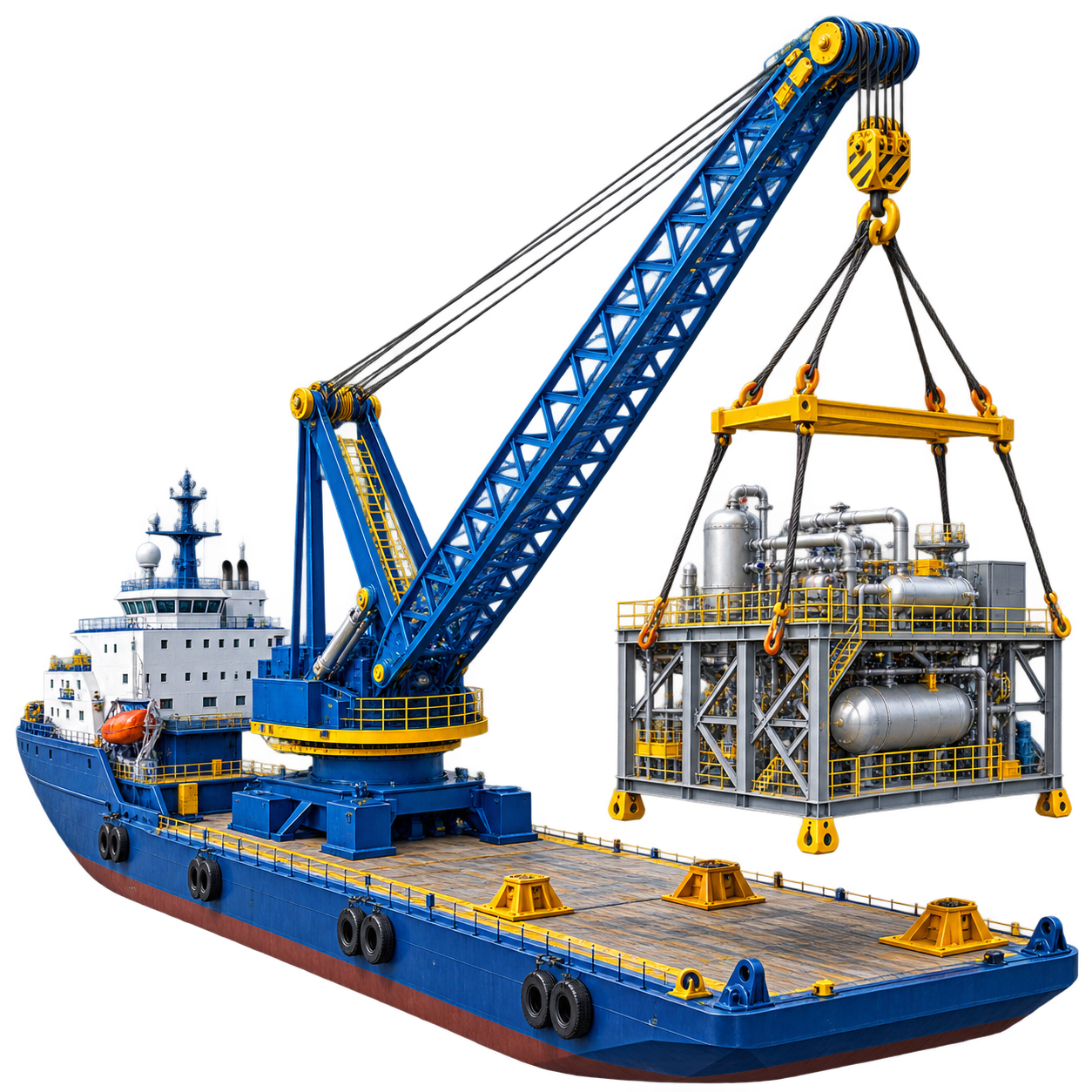
Facility and Marine Removal
Offshore structures, equipment and associated infrastructure can require specialized vessels, lifting operations, dismantling and transportation.
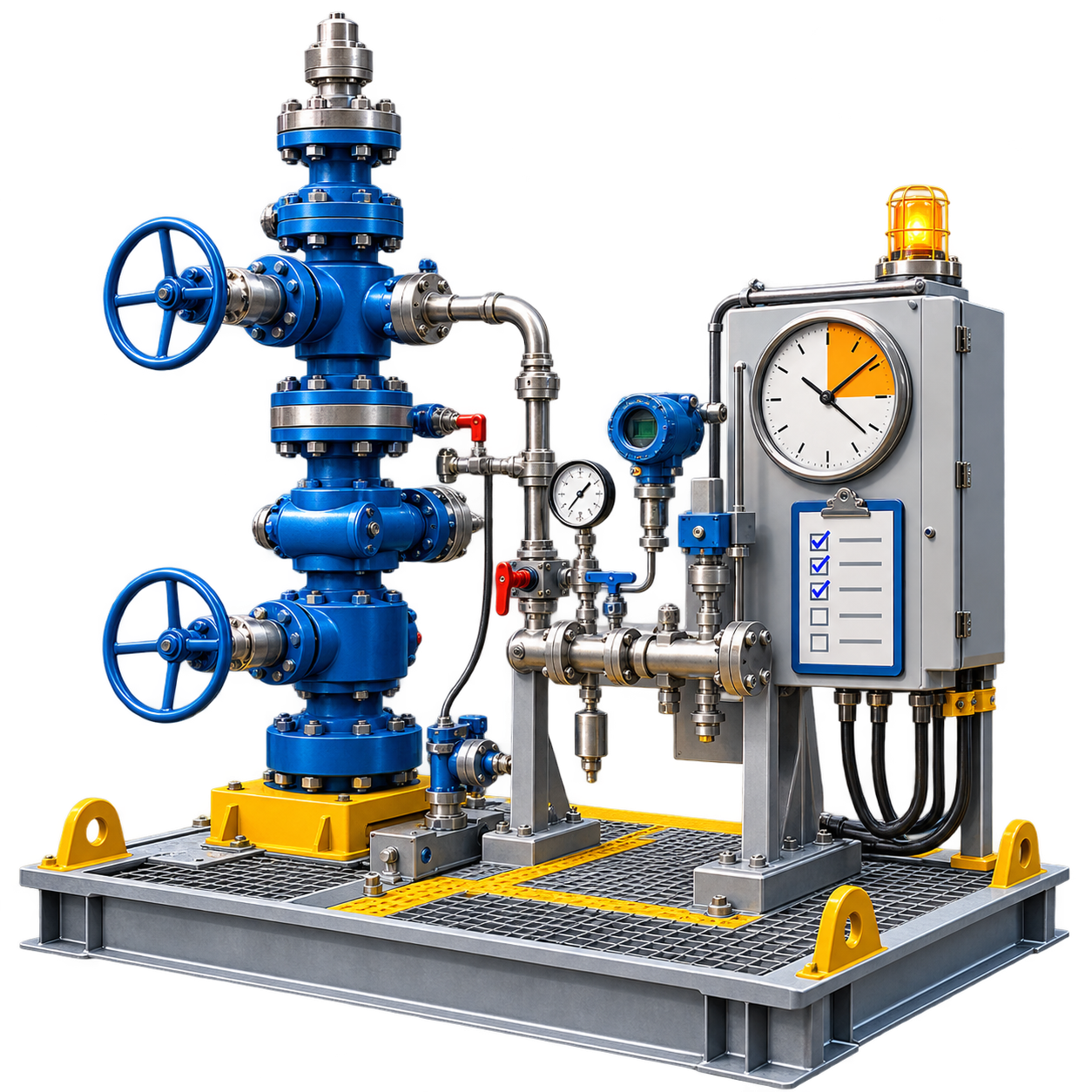
Timing and Regulatory Exposure
Decommissioning obligations can become increasingly important as mature-field economics weaken and the productive purpose of the original asset approaches its end.
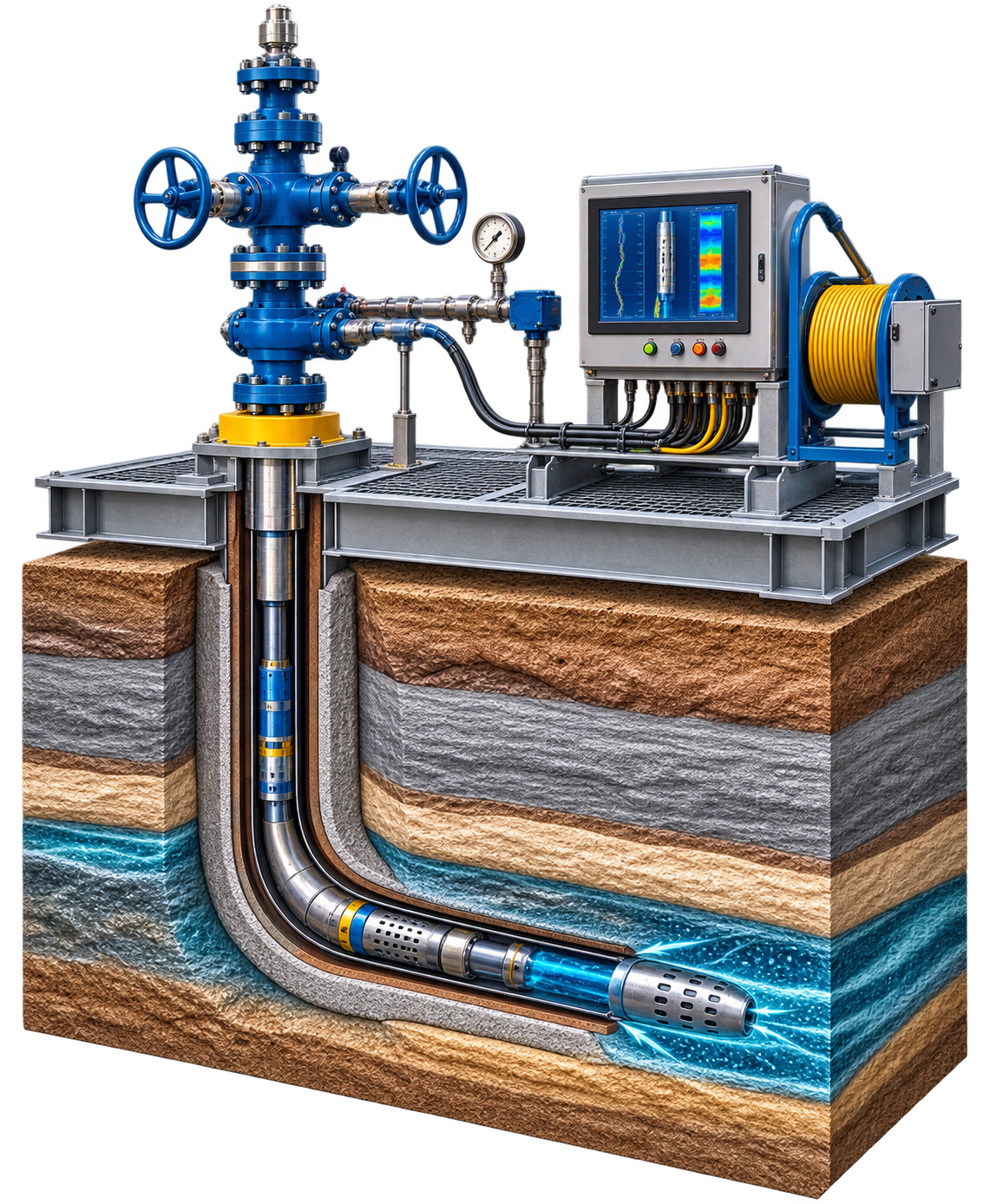
Well and Subsurface Reuse Potential
Evaluate existing well architecture, access, reservoir conditions and available data to determine whether selected wells warrant further reuse assessment.
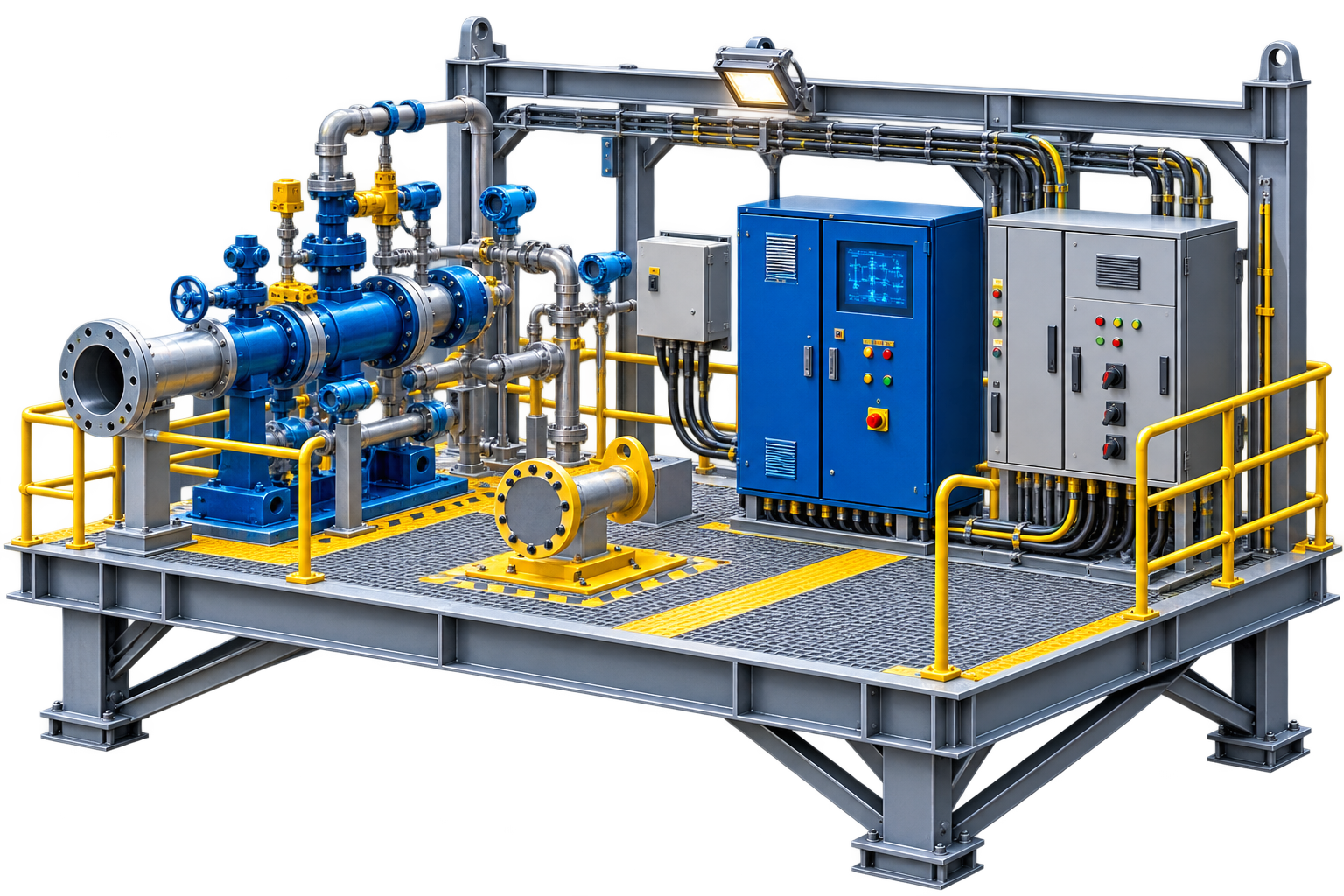
Surface Infrastructure Integration
Assess whether existing decks, utilities, electrical systems, fluid-handling equipment and other infrastructure could support an integrated second-life configuration.
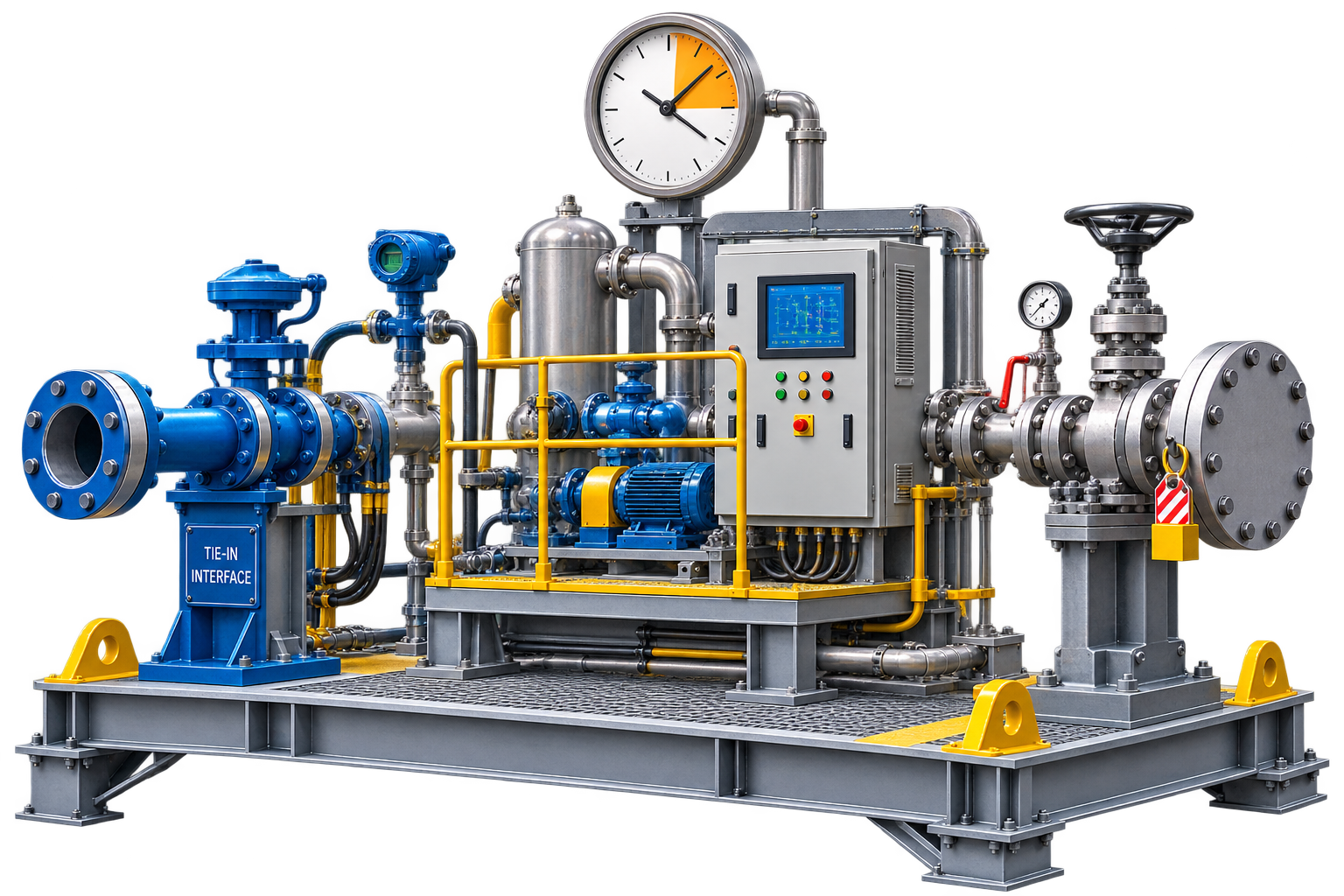
Rejuvenation Versus Retirement Timing
Evaluate whether recovered energy could support or offset existing offshore loads.
Before valuable offshore infrastructure becomes only a retirement obligation, should its potential for productive reuse be evaluated?
Astero does not assume that productive reuse eliminates decommissioning obligations. The purpose is to determine whether technically and commercially credible value should be evaluated before an asset transitions fully into retirement.
What productive value should be evaluated before this infrastructure becomes only a decommissioning obligation?
EVALUATE WHETHER THE WATER-HANDLING BURDEN ALSO CONTAINS RECOVERABLE ENERGY
Produced-Water Burden
As offshore fields mature, increasing water volumes can require progressively more separation, treatment, pumping, conditioning and reinjection for every unit of hydrocarbon production.
The Challenge
Mature offshore wells can continue producing substantial total fluid volumes even as the hydrocarbon fraction declines. Increasing produced-water volumes place additional demands on separators, treatment systems, pumps, piping, chemicals, injection systems and operating personnel.
Astero Pathway
Astero evaluates produced water as both an operating burden and a potential energy-bearing fluid. The assessment considers flow rate, temperature, pressure, fluid chemistry and the existing water-handling configuration to determine whether recoverable energy could be integrated into the fluid pathway.
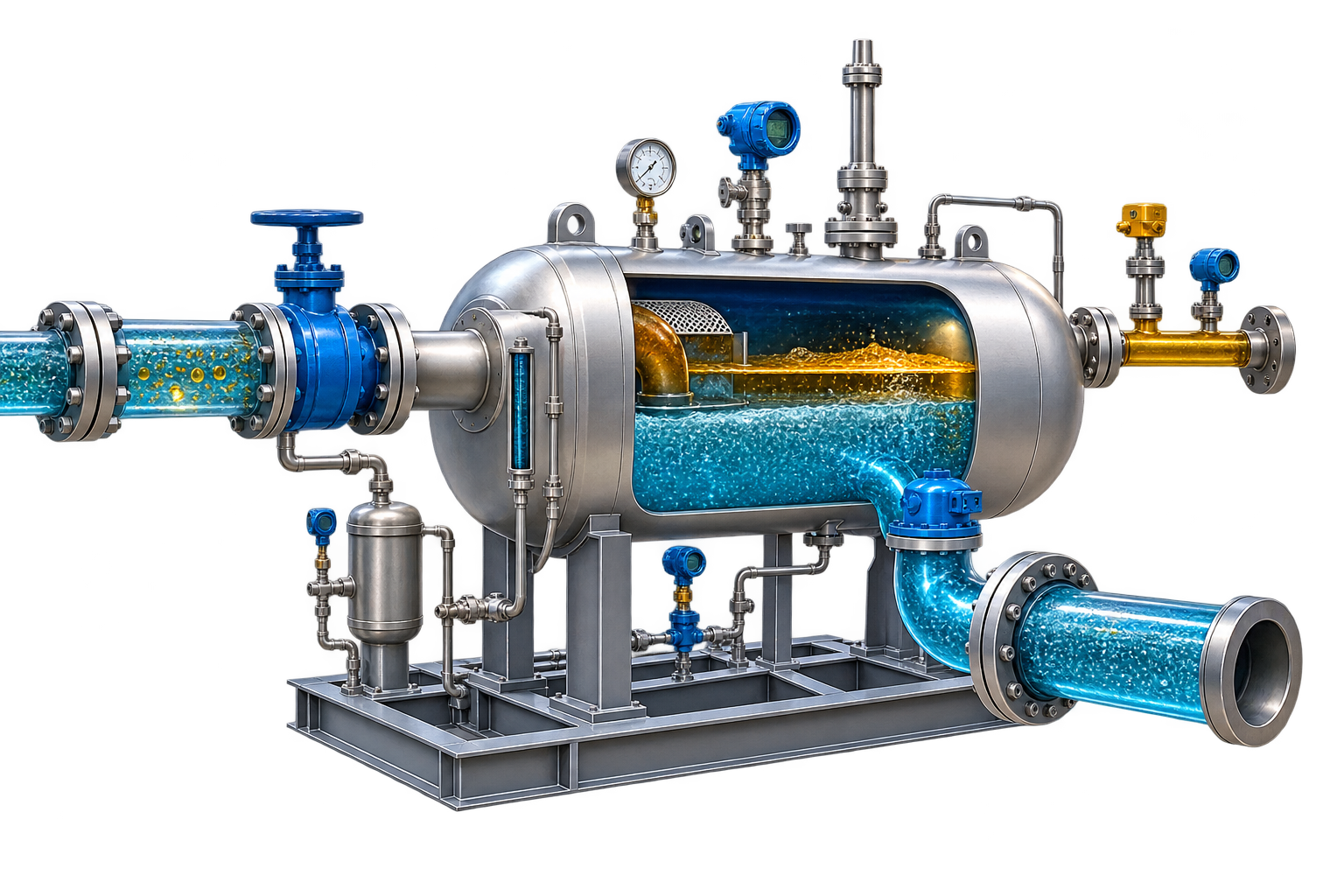
Increasing Fluid Volume
High-watercut production means the facility may handle large total fluid volumes while generating progressively less hydrocarbon value.
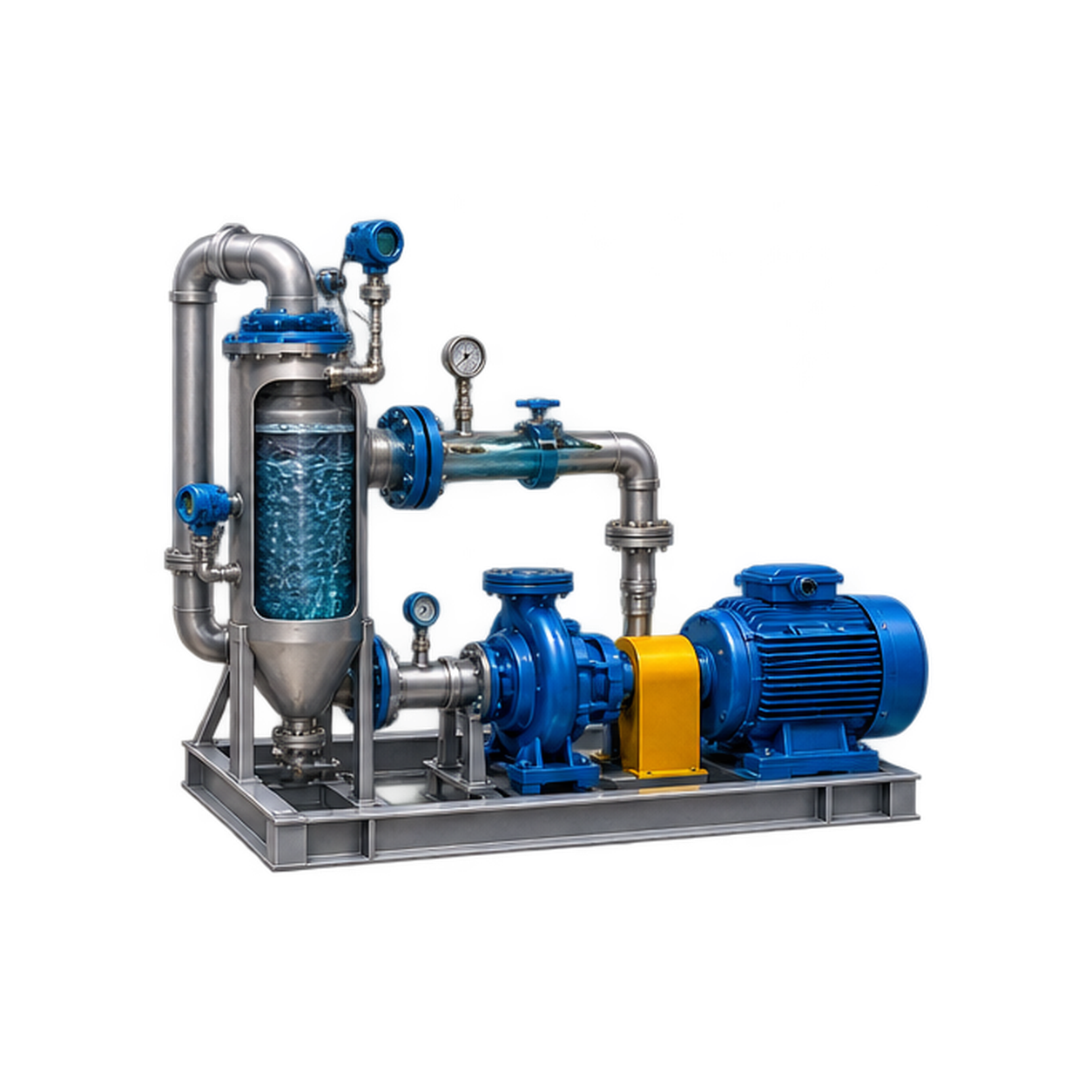
Treatment and Pumping Burden
Produced water must be separated, conditioned and moved through existing treatment and pumping systems before reinjection, disposal or other management.
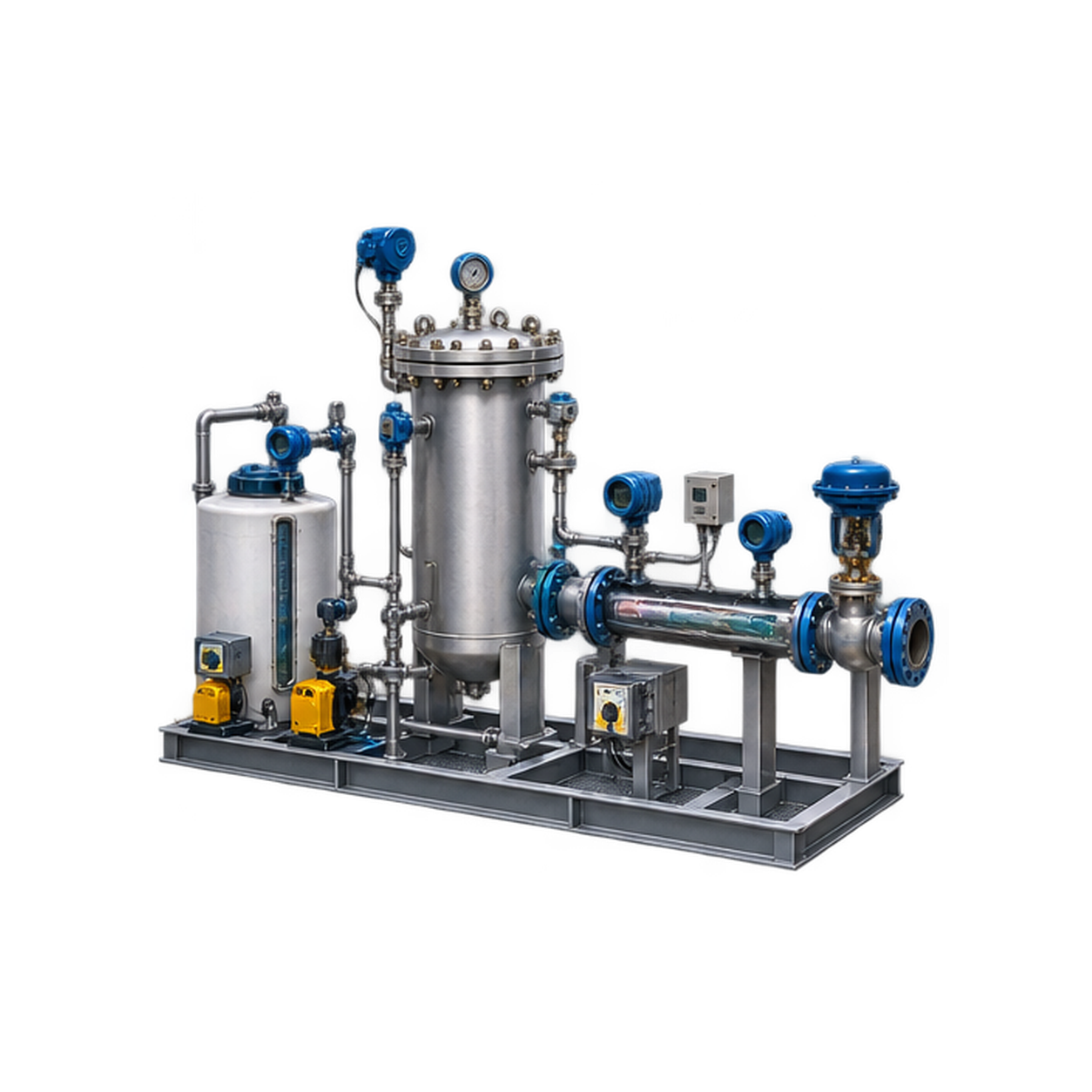
Continuing Water Management
Corrosion, scaling, chemistry, injection requirements and equipment capacity can become increasingly important operating considerations as water volumes rise.
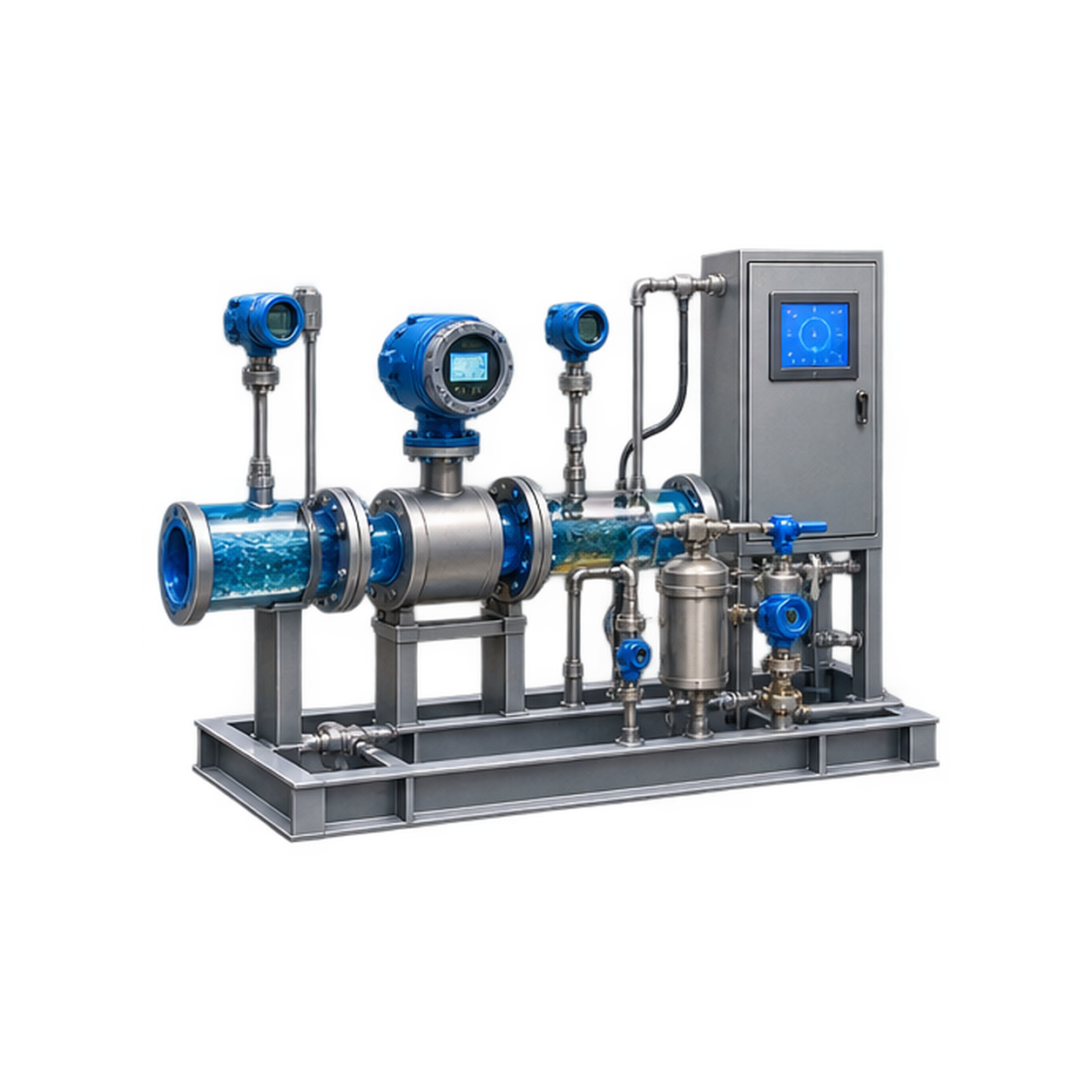
Fluid Quality and Flow Potential
Characterize produced-fluid volume, temperature, pressure, chemistry and consistency under actual operating conditions.
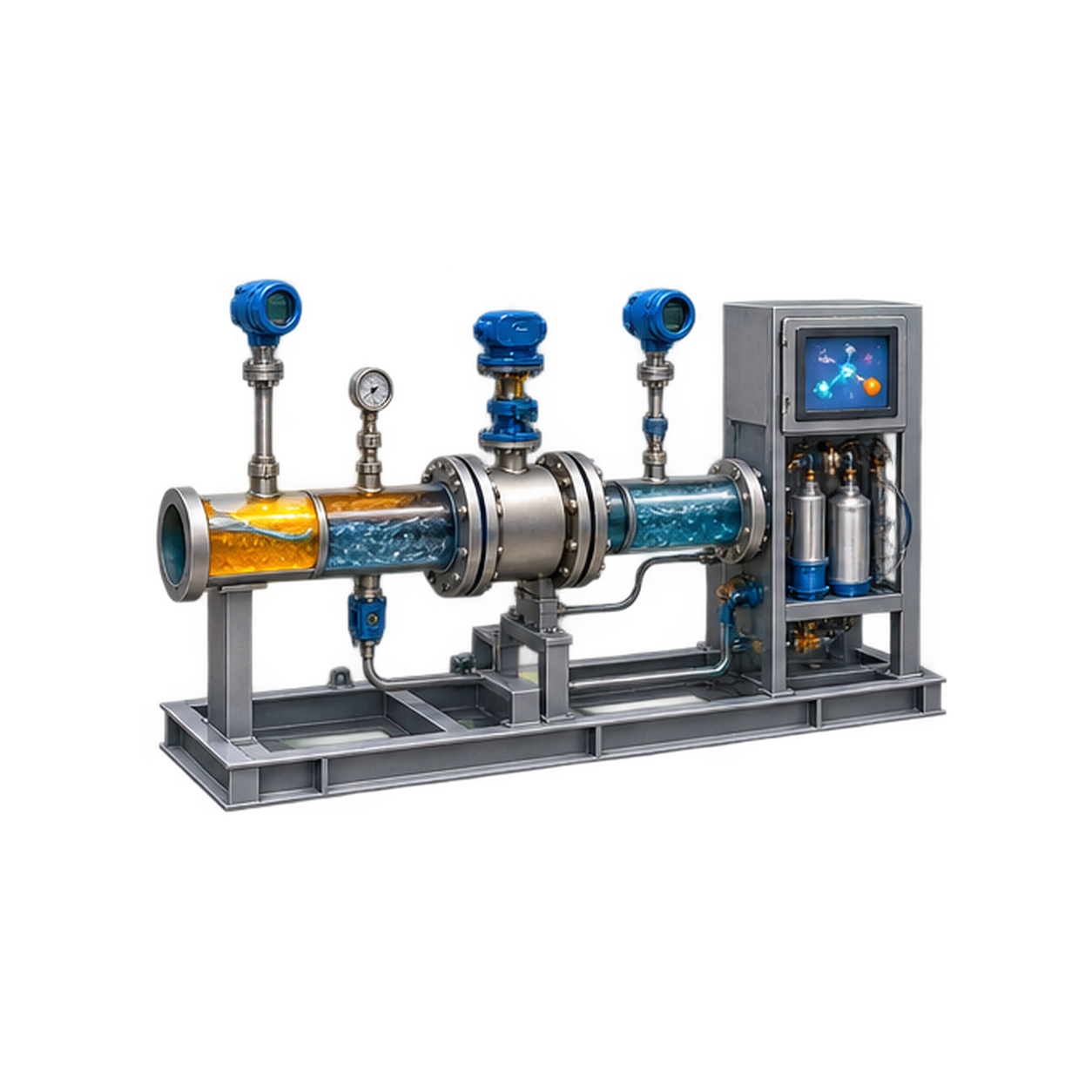
Recoverable Energy
Evaluate usable thermal energy, pressure drop and potentially useful chemical constituents contained within the produced-fluid stream.
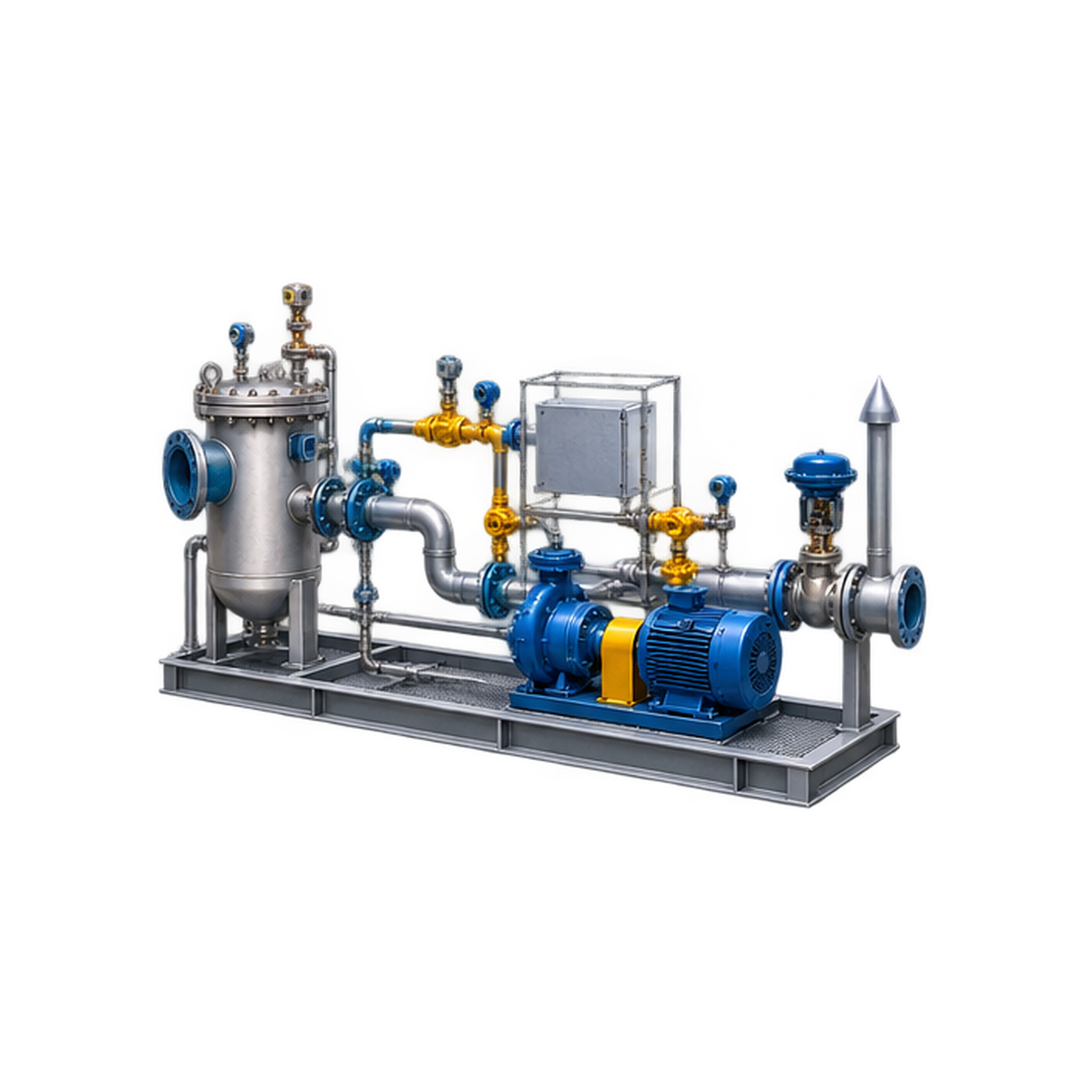
Water-System Integration
Determine whether an energy-recovery step could be technically integrated with existing separation, treatment, pumping or reinjection requirements.
Could part of the energy already moving through the offshore subsurface system be evaluated for productive use closer to the offshore load?
The objective is not to assume that all produced water represents an economic energy resource, but to determine whether the fluid already being handled has sufficient characteristics to justify a more detailed recovery and integration study.
Could the fluid your asset already handles carry usable energy before treatment or reinjection?
EVALUATE WHETHER EXISTING ASSETS COULD SUPPORT A SECOND SOURCE OF PRODUCTIVE VALUE
Mature Field Economics
Offshore infrastructure and operating requirements do not necessarily decline at the same rate as productive hydrocarbon output.
The Challenge
Mature offshore fields may continue to require substantial power, processing, fluid handling, maintenance, personnel, inspection and marine support while hydrocarbon production progressively declines. As productive throughput falls, the existing operating system can represent an increasing burden relative to the value generated by the original production model.
Astero Pathway
Astero evaluates the offshore asset as an integrated technical and commercial system. Rather than considering only declining hydrocarbon output, the assessment examines wells, fluids, reservoir energy, installed infrastructure and existing operating requirements to determine whether a credible second-life pathway warrants further development.
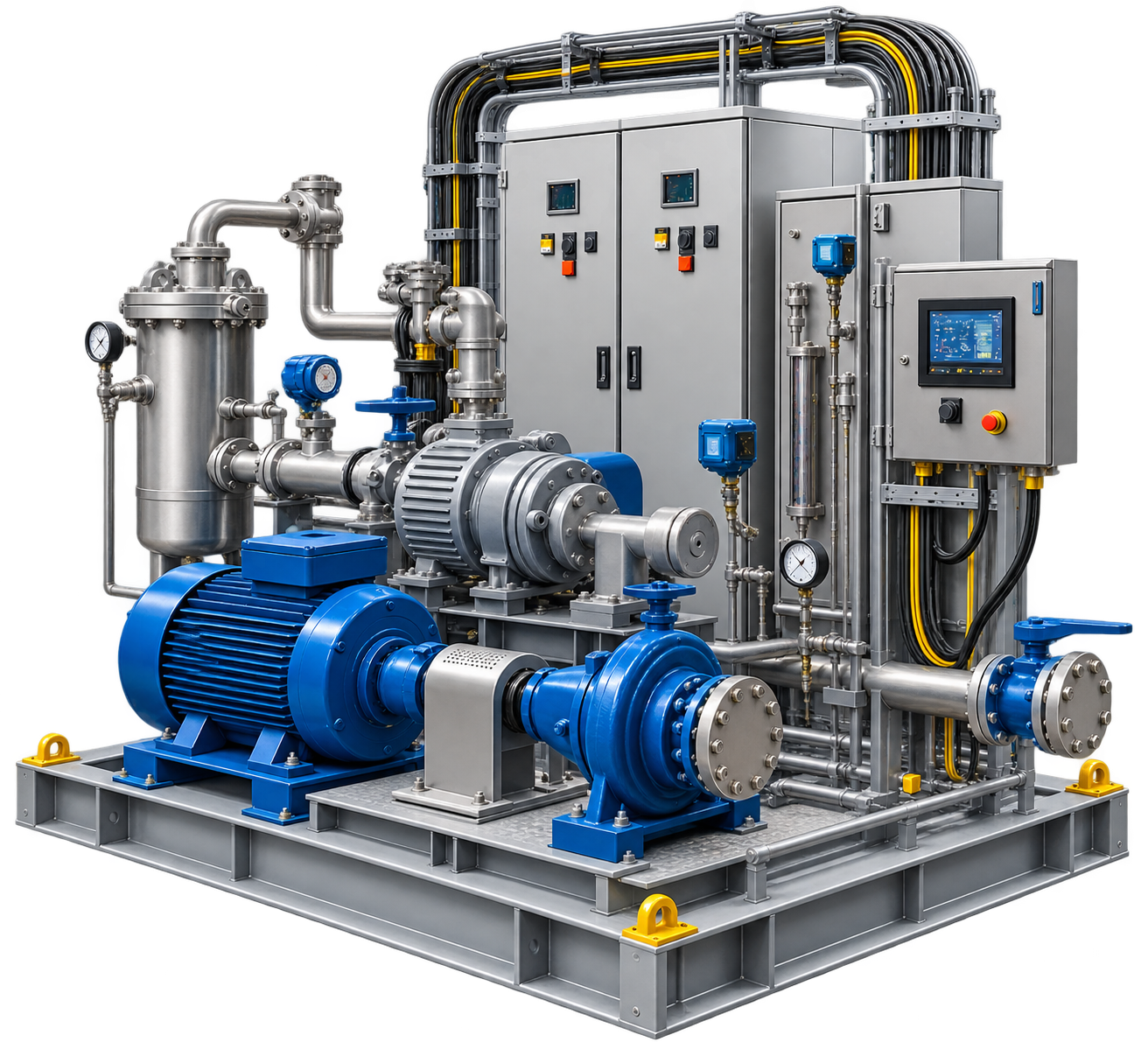
Persistent Operating Requirements
Pumps, processing systems, utilities, controls, maintenance and offshore staffing remain necessary while the facility continues operating.
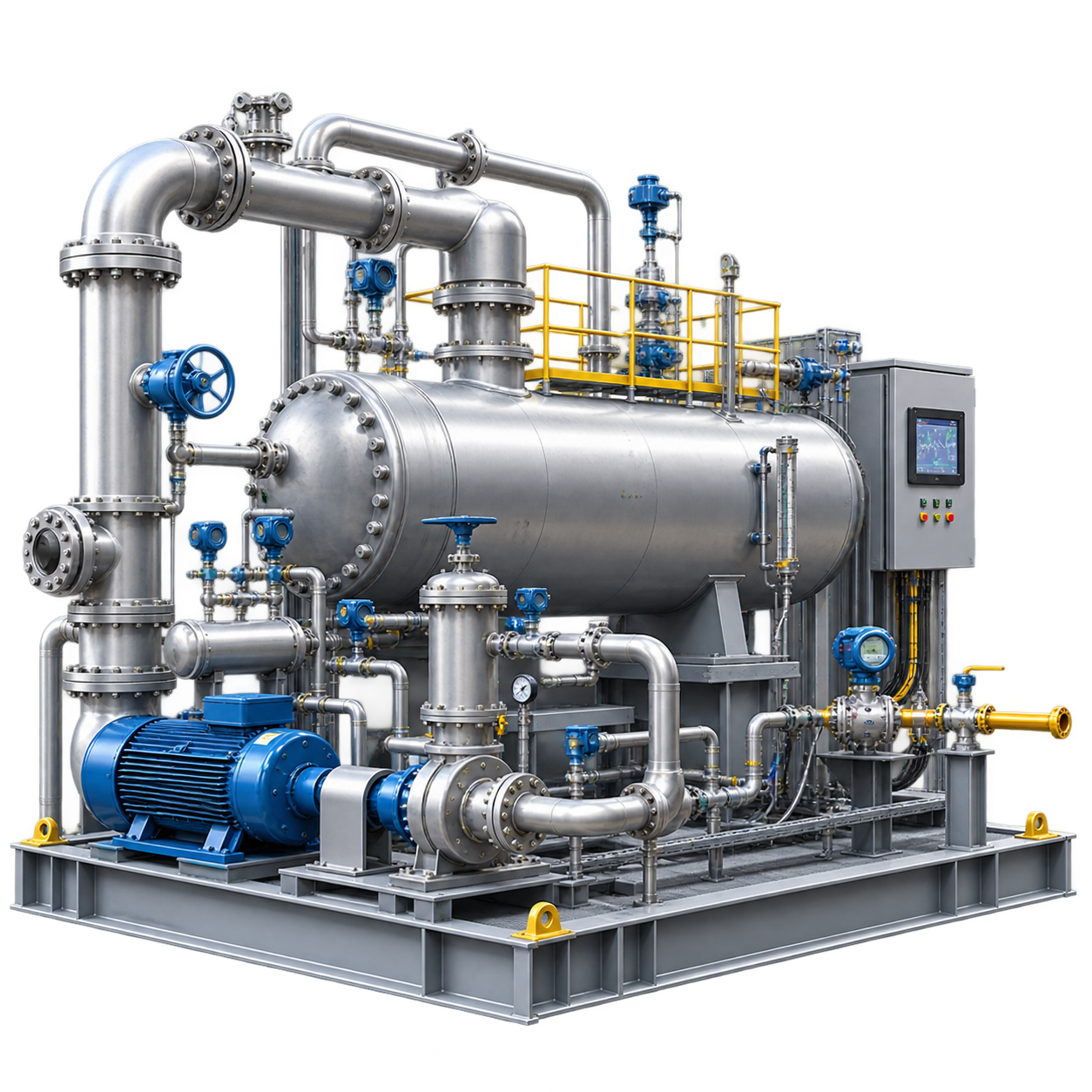
Lower Productive Output
Declining hydrocarbon production can leave substantial installed infrastructure supporting progressively less productive throughput.
Weakening Unit Economics
Power, maintenance, water handling, logistics and other continuing requirements can become increasingly significant relative to each productive barrel or unit of hydrocarbon output.
Remaining Asset Capability
Evaluate the continuing technical capability of wells, fluid systems, surface infrastructure and supporting utilities.
Underutilized Infrastructure
Evaluate usable energy contained in temperature, pressure drop and fluid properties.
Extended-Life Commercial Potential
Screen whether recoverable subsurface energy and reuse of installed infrastructure could create sufficient value to justify detailed engineering and economic analysis.
If the economics of the original production model are weakening, could the infrastructure and subsurface access already paid for support another source of productive value?
The objective is not to assume that rejuvenation will make every mature asset economic. It is to determine whether the value remaining in the wells, fluids, reservoir and infrastructure merits evaluation before the original operating model is abandoned.
Could an asset with weakening production economics still contain infrastructure and subsurface value worth developing?
EVALUATE WHETHER LOCAL ENERGY COULD REDUCE EXTERNAL FUEL AND OPERATING DEPENDENCIES
Remote Logistics & Emissions
Remote offshore operations depend on recurring transportation of fuel, personnel, equipment, consumables and replacement materials across the marine environment.
The Challenge
Offshore assets operate far from conventional supply infrastructure. Keeping them productive can require recurring vessel movements, personnel transportation, maintenance mobilizations, fuel delivery and materials handling. These requirements contribute to operating cost, logistical complexity and fuel-related emissions throughout the asset's operating life.
Astero Pathway
Astero evaluates whether energy already present in the offshore subsurface and fluid system could support power production closer to the load, potentially reducing part of the external energy and logistics dependency associated with remote operations.
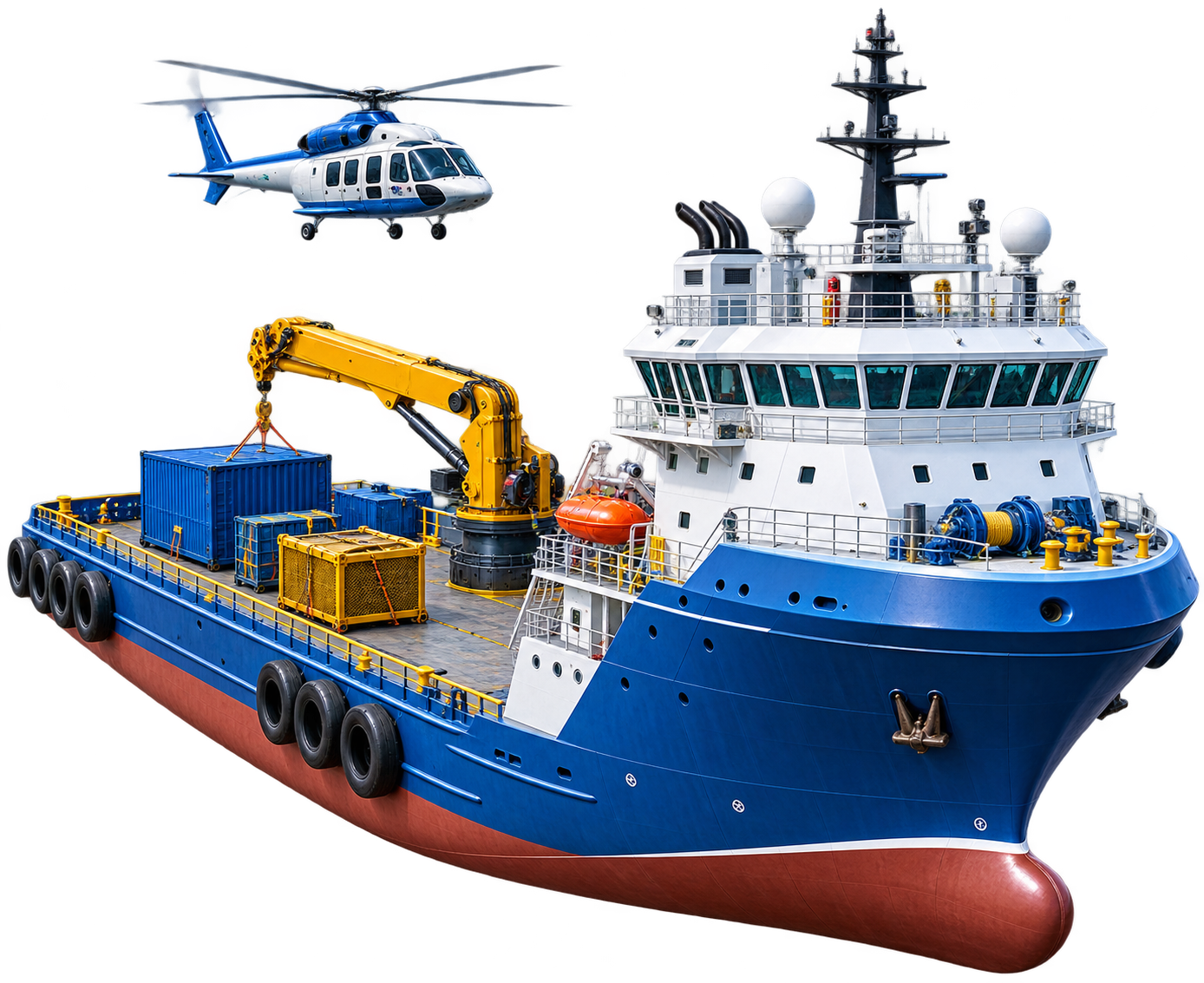
Marine and Personnel Logistics
Supply vessels, crew transportation and specialized offshore support remain recurring requirements for remote operations.
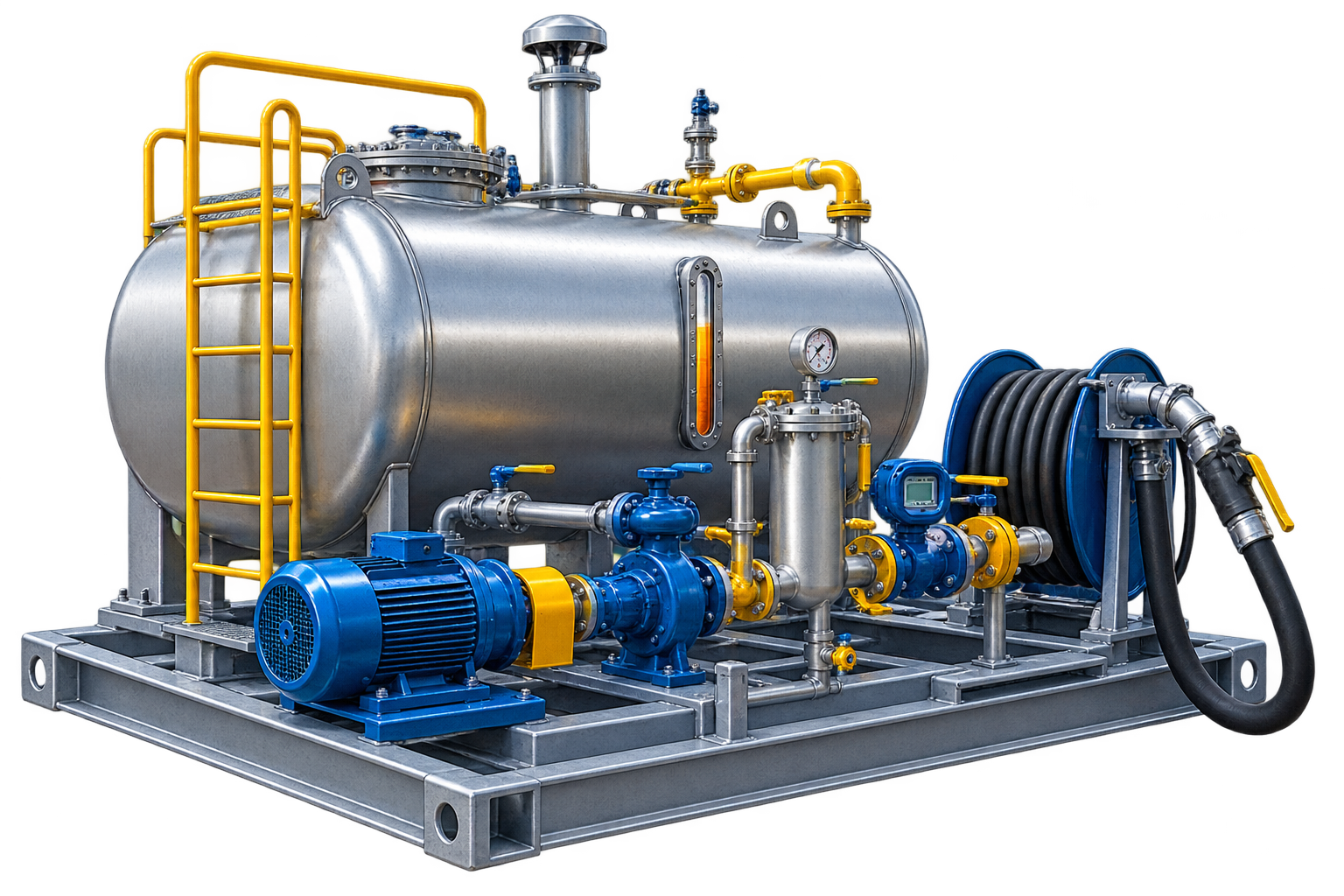
Fuel-Intensive Support
Transportation, offshore generation and equipment operation consume fuel that must either be delivered to the facility or drawn from produced hydrocarbons.
Operational Emissions
Marine transport, aviation, conventional power generation and other fuel-consuming activities contribute to the continuing emissions profile of offshore operations.
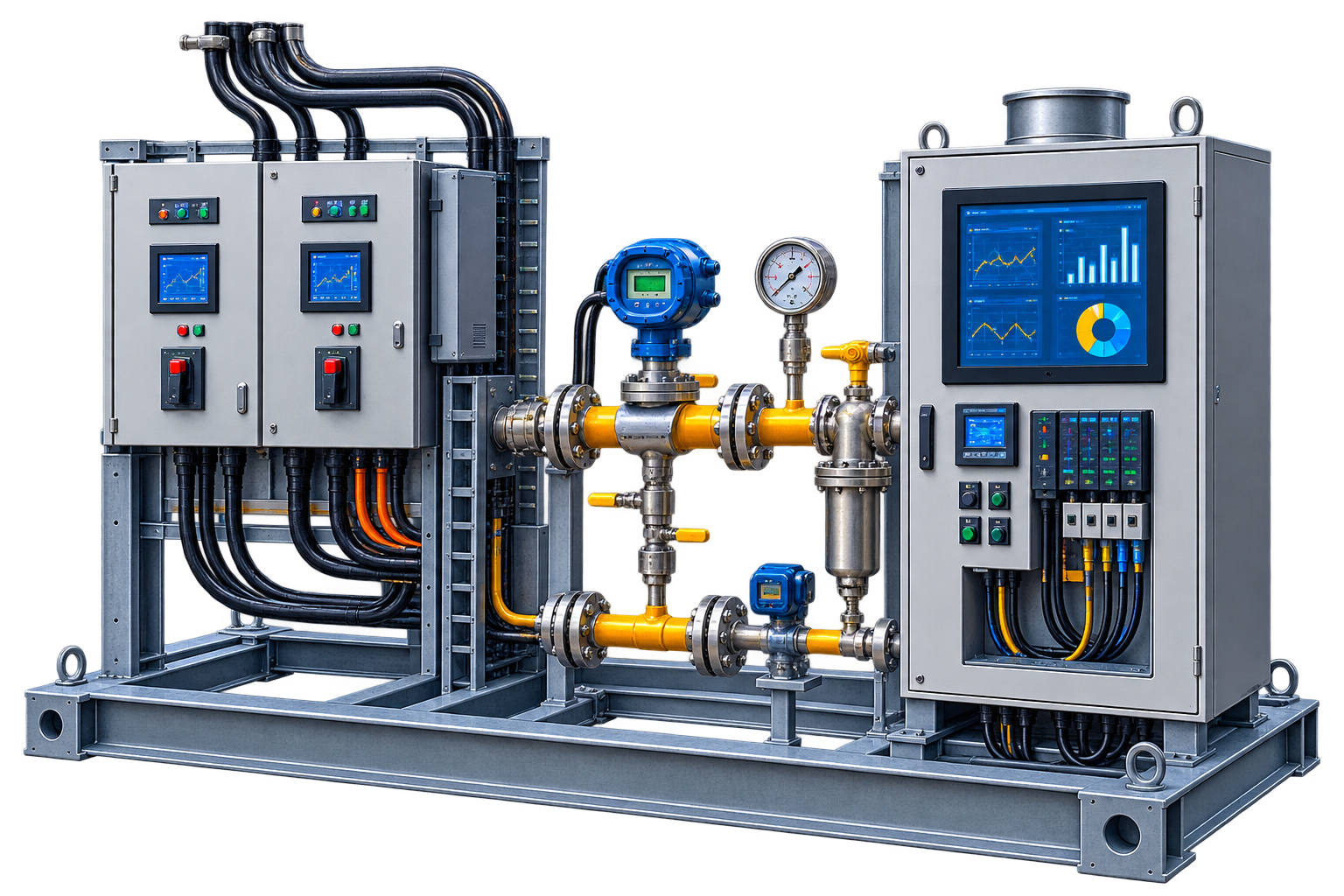
Existing Logistics and Energy Demand
Establish the current power demand, fuel requirements, recurring marine support and other operating dependencies that create the baseline burden.
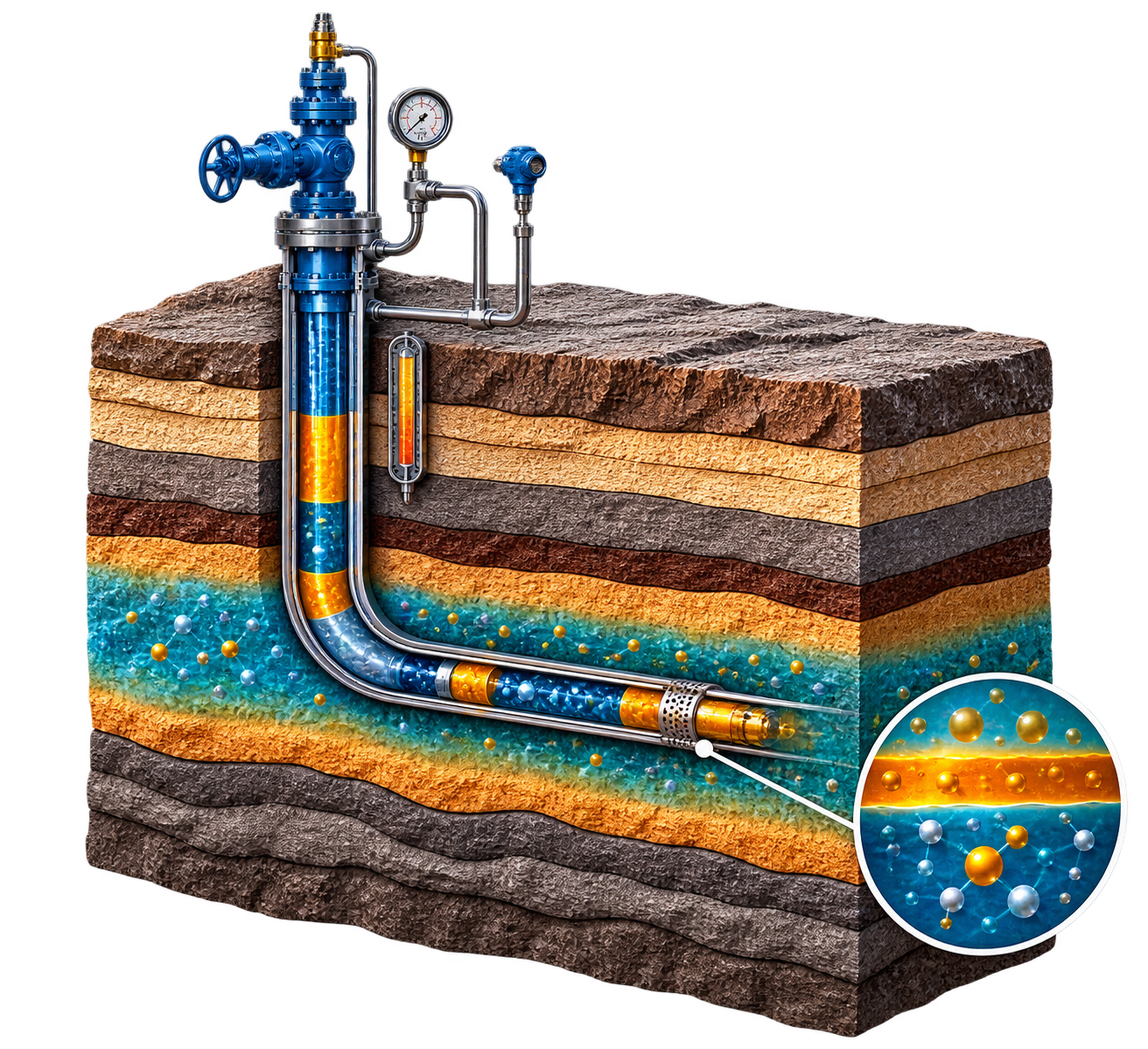
Local Energy Potential
Evaluate whether existing wells and fluids contain sufficient thermal, pressure or chemical energy to support useful power generation at or near the offshore facility.
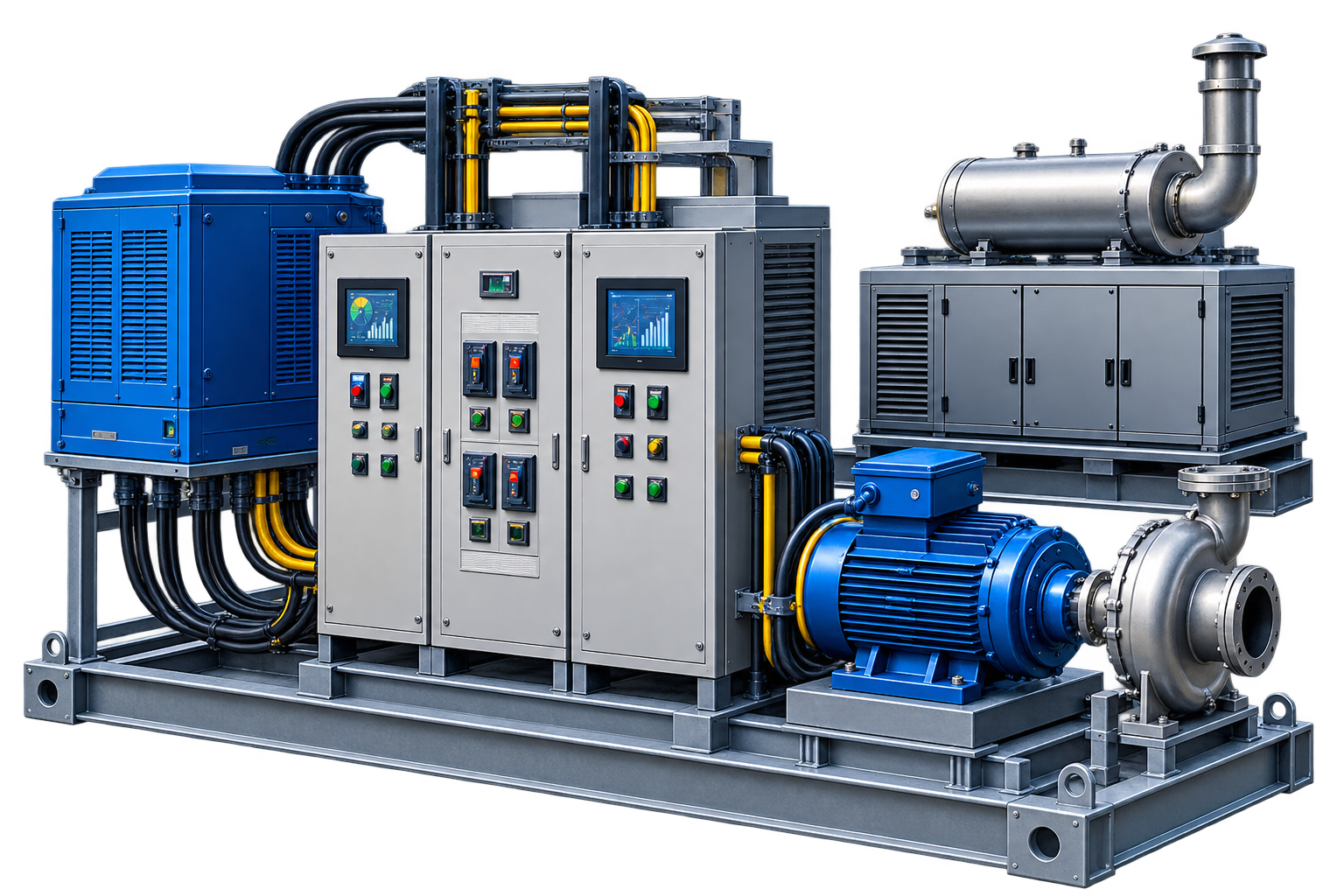
Potential External-Dependency Reduction
Determine whether locally recovered energy could technically offset a portion of conventional fuel consumption or other externally supplied operating requirements.
Could producing more useful energy at the offshore asset reduce part of its dependence on externally supplied fuel, transportation and associated operating activity?
The objective is not to assume that subsurface power will eliminate offshore logistics or emissions. The evaluation determines whether local energy recovery could materially reduce selected external requirements while fitting within the existing operating system.
Could energy already present beneath the offshore asset reduce part of the logistics and fuel burden required to operate it?
The Strategic Question
Could the systems creating today's offshore operating burden also contain part of the asset's next source of value?
Mature offshore assets should not be evaluated only by what they produce today. Existing wells, produced fluids, subsurface conditions, surface infrastructure, power requirements and water-handling systems may retain capabilities that remain valuable beyond the asset's original production model.
Astero evaluates these elements as an integrated system to determine whether a technically and commercially credible second-life energy pathway warrants further engineering and commercial evaluation.
The Strategic Question
What if existing offshore infrastructure could be repurposed before it becomes a decommissioning liability?
Offshore Rejuvenation
Re-Evaluating the Asset as One Integrated System
Astero evaluates the platform, wells, produced fluids, reservoir and supporting infrastructure as a single interconnected system. The objective is to determine whether assets originally developed for hydrocarbon production can be reconfigured for a productive second life before abandonment and decommissioning become the only remaining pathway.
By integrating surface capabilities with subsurface potential, Astero identifies opportunities to extend asset life, recover more value, reduce emissions and defer major abandonment and decommissioning expenditures.
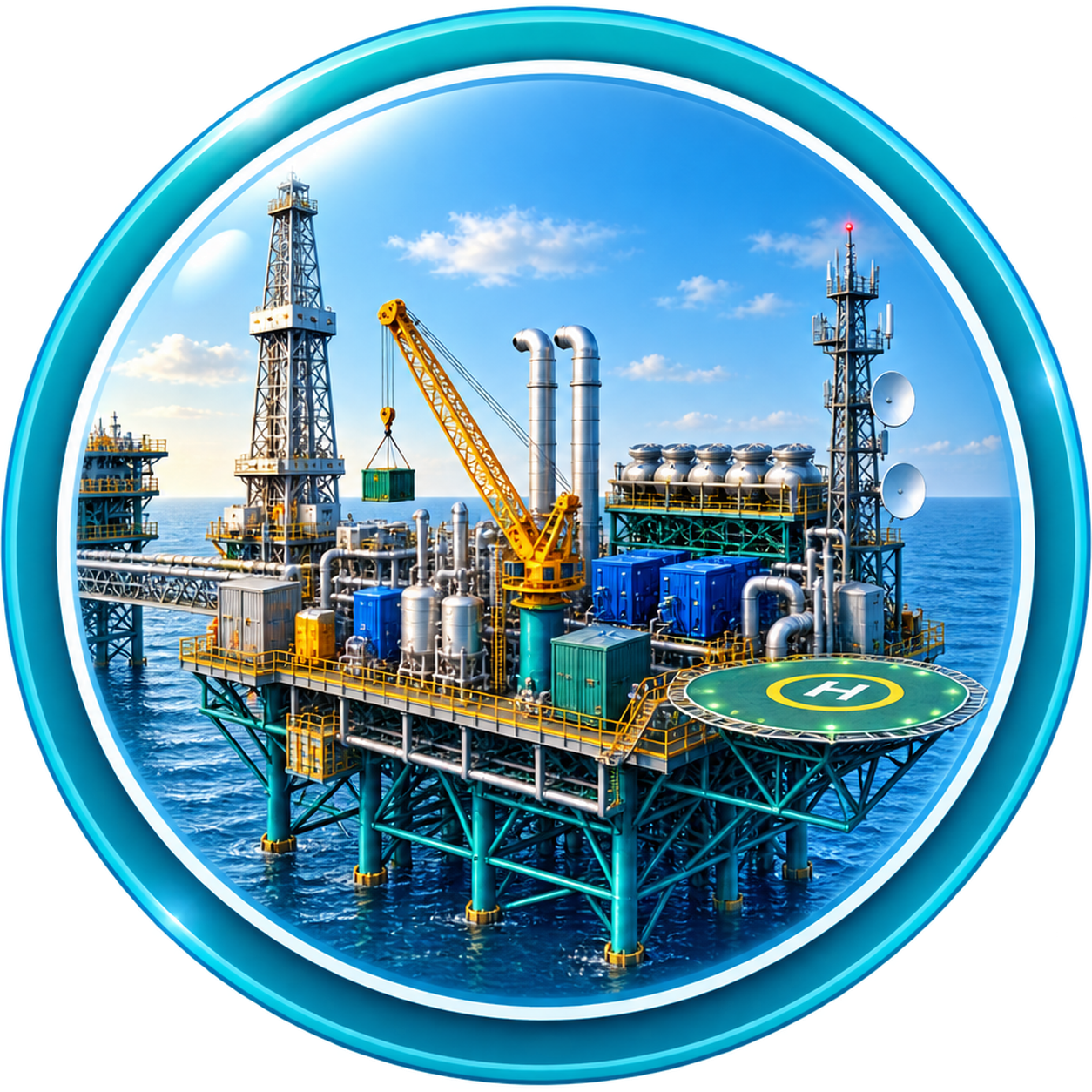
Surface Infrastructure
Could the infrastructure already in place support the asset’s next productive life?
Astero evaluates existing structures, equipment, utilities, power systems and tie-in opportunities to identify what may be retained, modified or repurposed before decommissioning decisions are made.
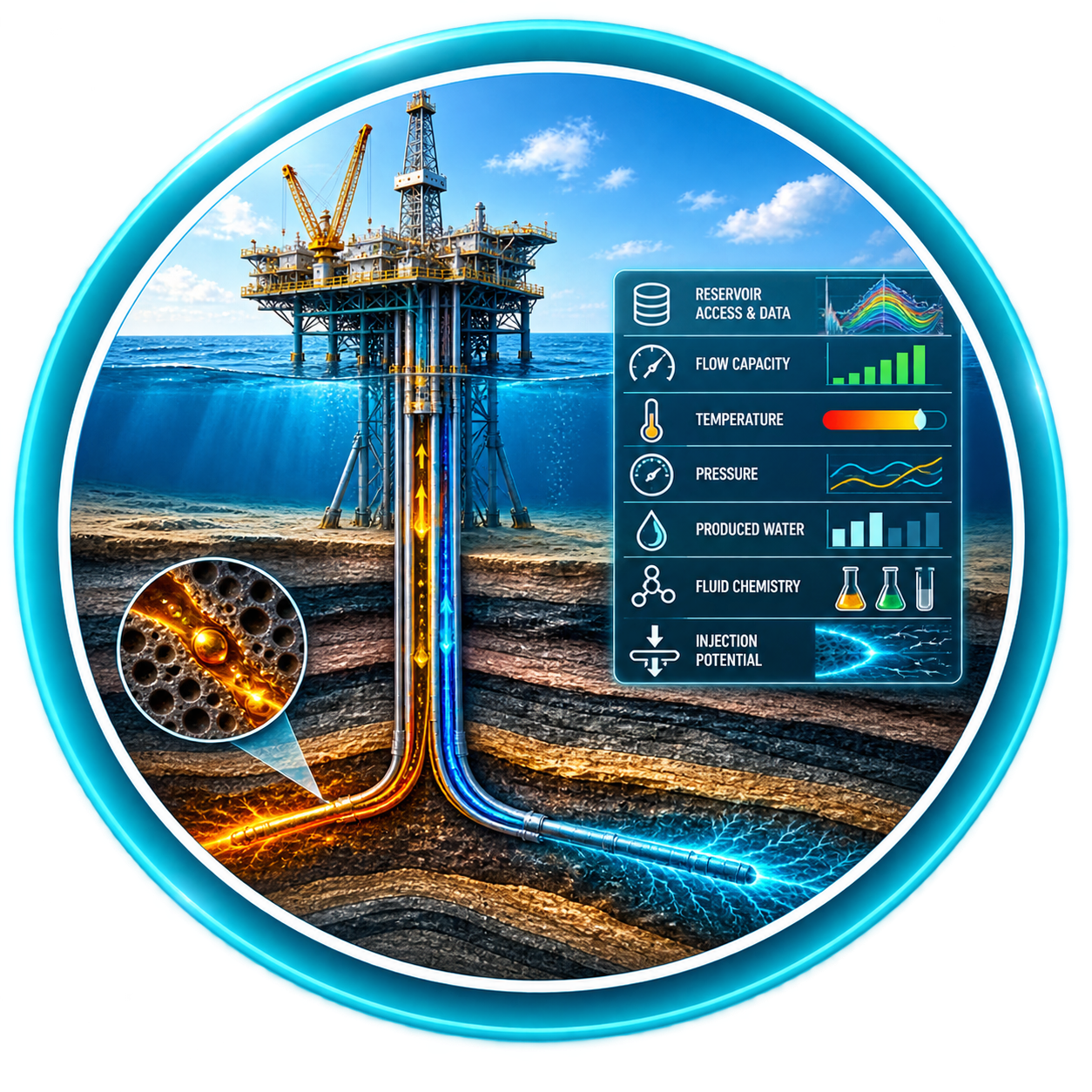
Wells and Fluid Systems
Could your existing wells provide the data, flow capacity and subsurface access needed for a new operating strategy?
Astero evaluates well integrity, reservoir access, temperature, pressure, produced-water volumes, fluid chemistry and injection potential to determine whether existing well systems can support a productive second life.
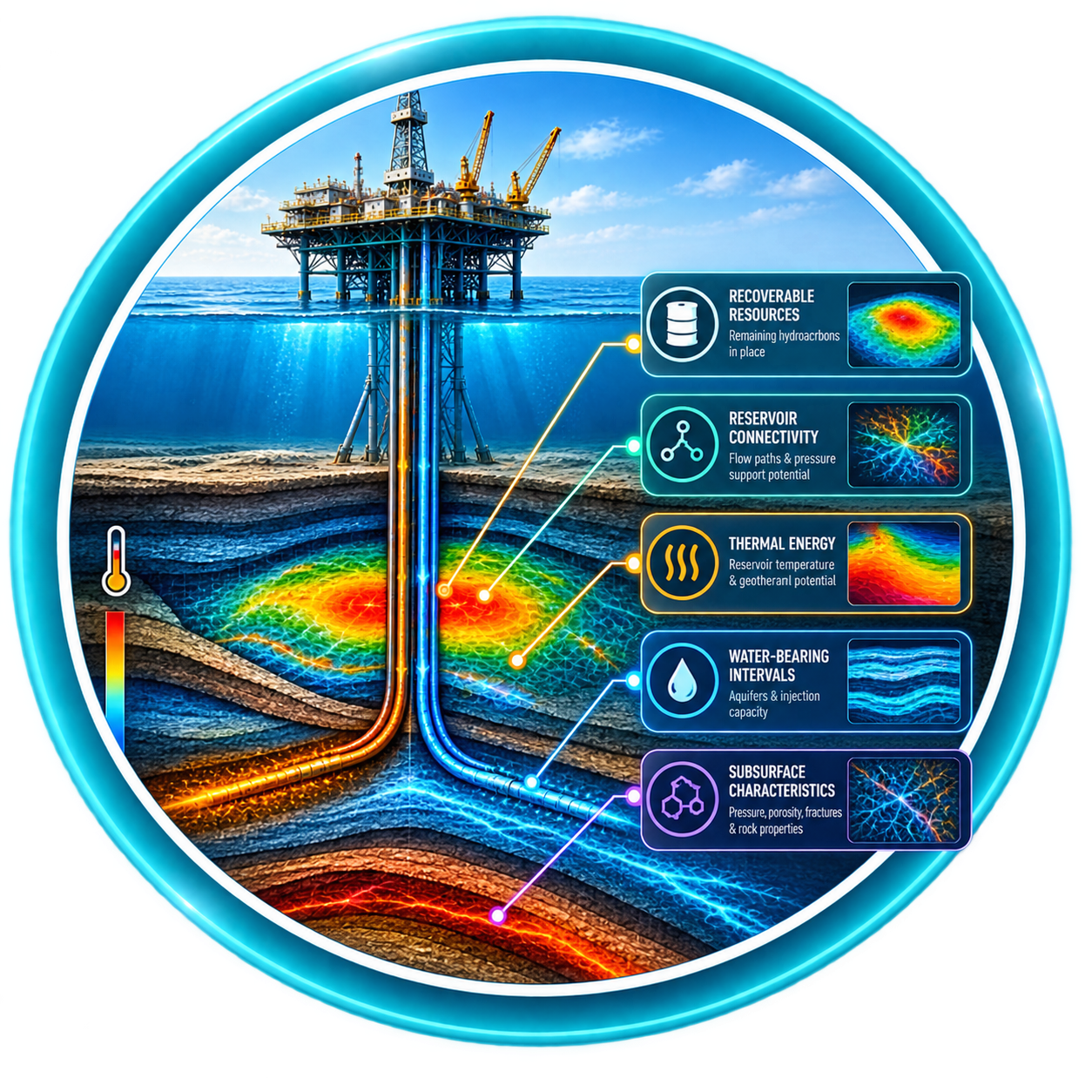
Subsurface Opportunity
What value may still remain below the seabed—and could it support the asset’s next operating strategy?
Astero evaluates remaining recoverable resources, reservoir connectivity, temperature, pressure, water-bearing intervals and injection potential to determine whether the subsurface can support renewed production or new energy pathways.
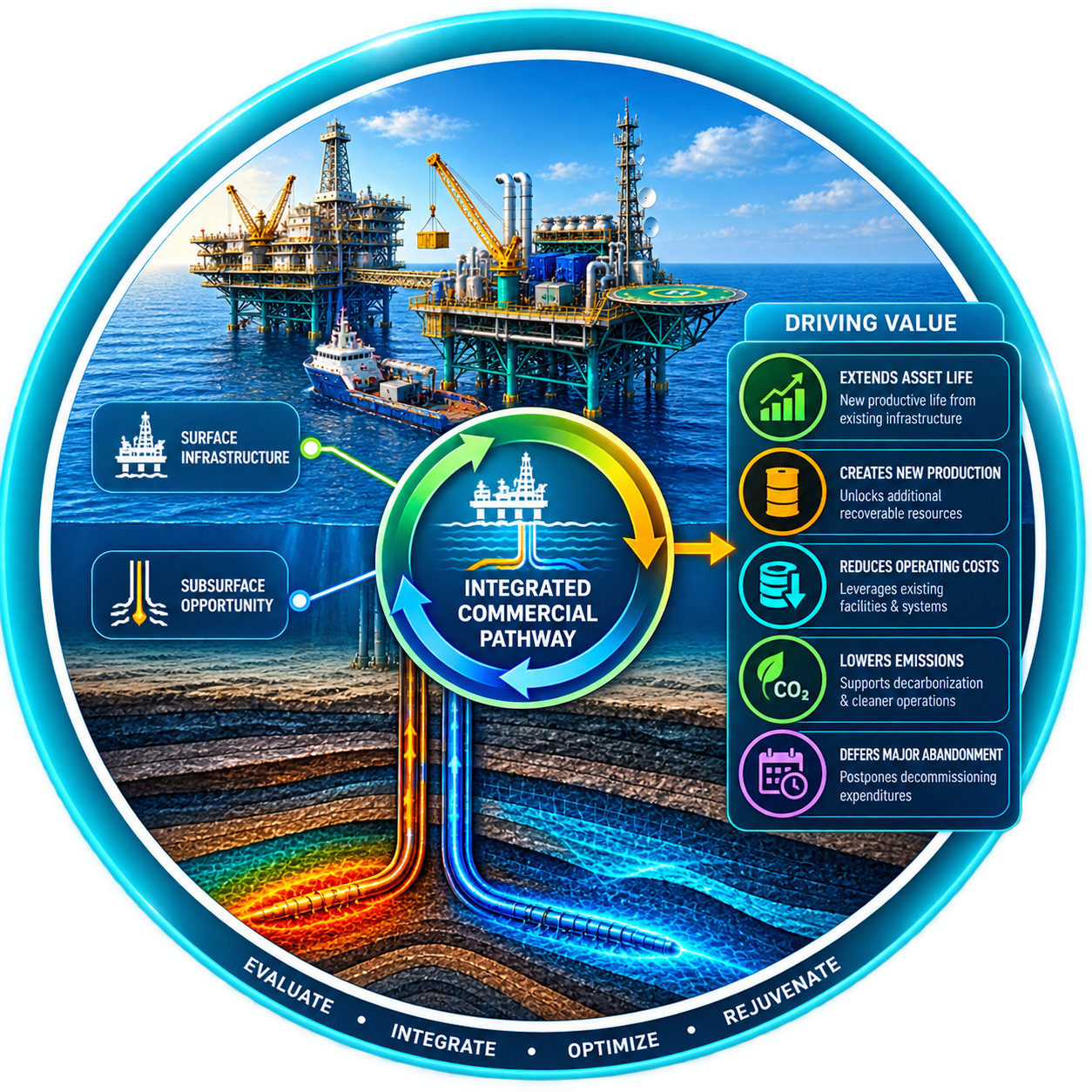
Integrated Commercial Pathway
Could your existing surface and subsurface assets be integrated into a technically and commercially credible second-life project?
Astero evaluates how infrastructure, wells, reservoir potential and operating systems can work together to extend asset life, create new productive value, reduce operating or emissions burdens, and potentially defer major decommissioning expenditures.
The Astero Solution: The Offshore Multi-Resource Hub
- Integrated Pressure Support (EOR): Our closed-loop system reinjects post energy production downstream processed brine downdip of updip hydrocarbon production, providing the Hydraulic Drive required to push remaining updip hydrocarbons toward production wellbores—maximizing the total recovery factor of the field.
- Infrastructure Synergy & P&A Deferral: We repurpose existing offshore jackets, transitioning multi-billion dollar P&A liabilities into Continuous Energy Hubs.
- Astero Energy changes offshore asset economics by converting existing platform infrastructure into a multi-resource energy hub that supports onsite power generation, pressure maintenance, and extended field productivity.
- OpEx Elimination & Logistic Relief: Astero provides the 24/7 firm power required to run offshore operations. This eliminates the massive costs associated with diesel logistics, subsea cabling, and gas-lift compression, drastically lowering the "Lifting Cost" per barrel.
CLOSING THE CARBON LOOP
THE CCS SYNERGISTIC HUB
Integrating industrial CO₂ management with Astero’s closed-loop energy architecture.
Closing the Carbon Loop
Energy Production and Carbon Management - Designed to Work Together
Conventional carbon capture and sequestration can require substantial supporting infrastructure for CO₂ handling, conditioning, compression, transportation and injection.
Astero approaches that challenge differently.
The Astero architecture begins with the recovery of useful thermal, pressure and chemical energy from subsurface fluids. After useful energy is recovered, the return-fluid system creates a downstream pathway in which conditioned industrial CO₂ can be introduced under controlled conditions before injection into a suitable geologic storage formation.
This creates the potential for an integrated industrial hub in which subsurface energy recovery and carbon management share infrastructure, power capability and subsurface access rather than operating as completely independent systems.
Astero does not treat sequestration as a separate end-of-pipe process. It is engineered as part of the broader energy-and-fluid-management architecture.
From Captured CO₂ To Subsurface Storage
One Controlled Carbon-Management Pathway
Astero integrates industrial CO₂ receipt, conditioning, metered infusion and injection into a closed-loop system designed for controlled, measurable and permanent geologic storage.
01 - Receive
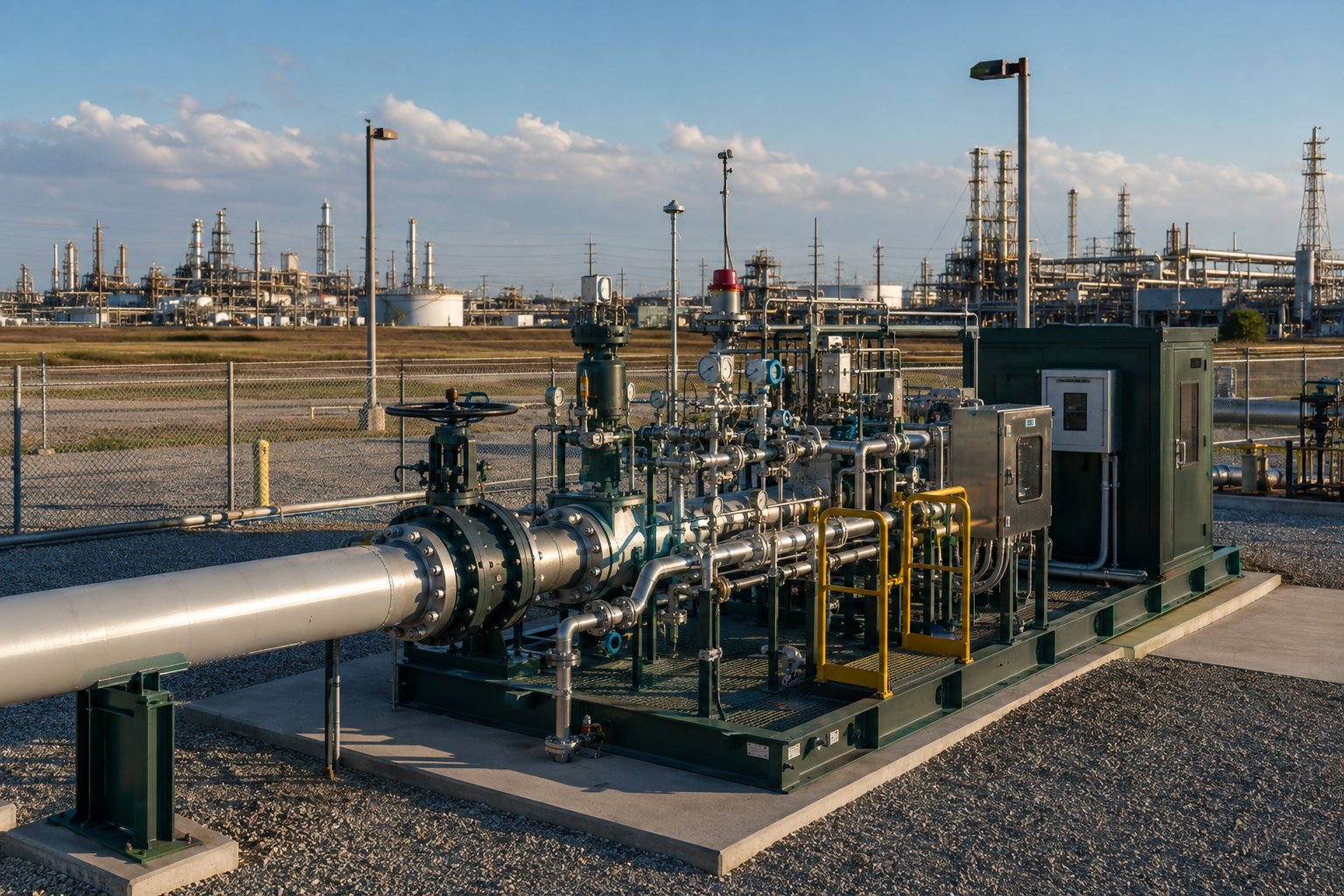
Captured CO₂ Delivery
Industrial CO₂ is delivered via dedicated pipeline and received at a secure custody-transfer interface.
02 - Condition
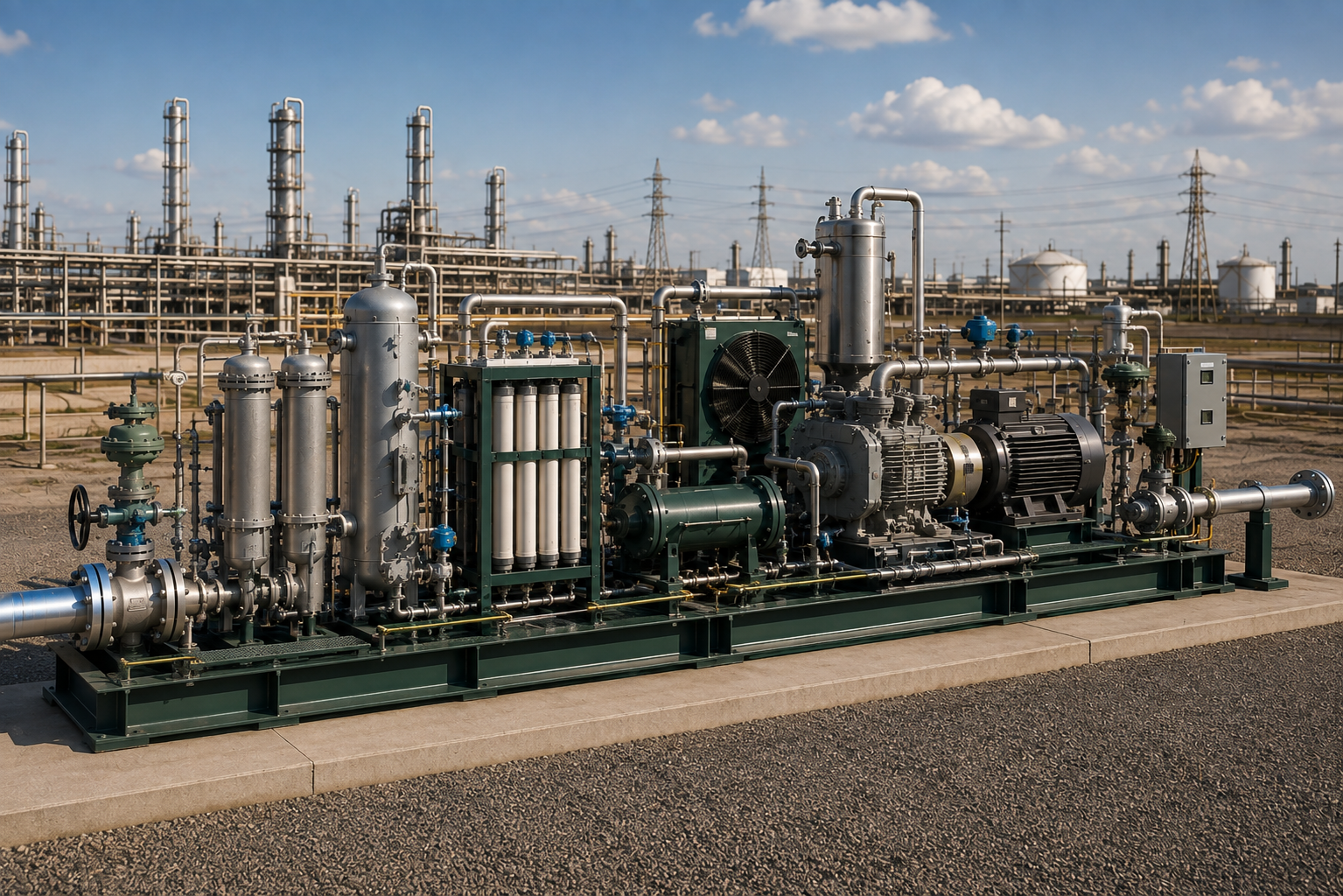
CO₂ Conditioning
CO₂ is dried, filtered, cooled and compressed to meet injection specifications and to protect downstream equipment.
03 - Control
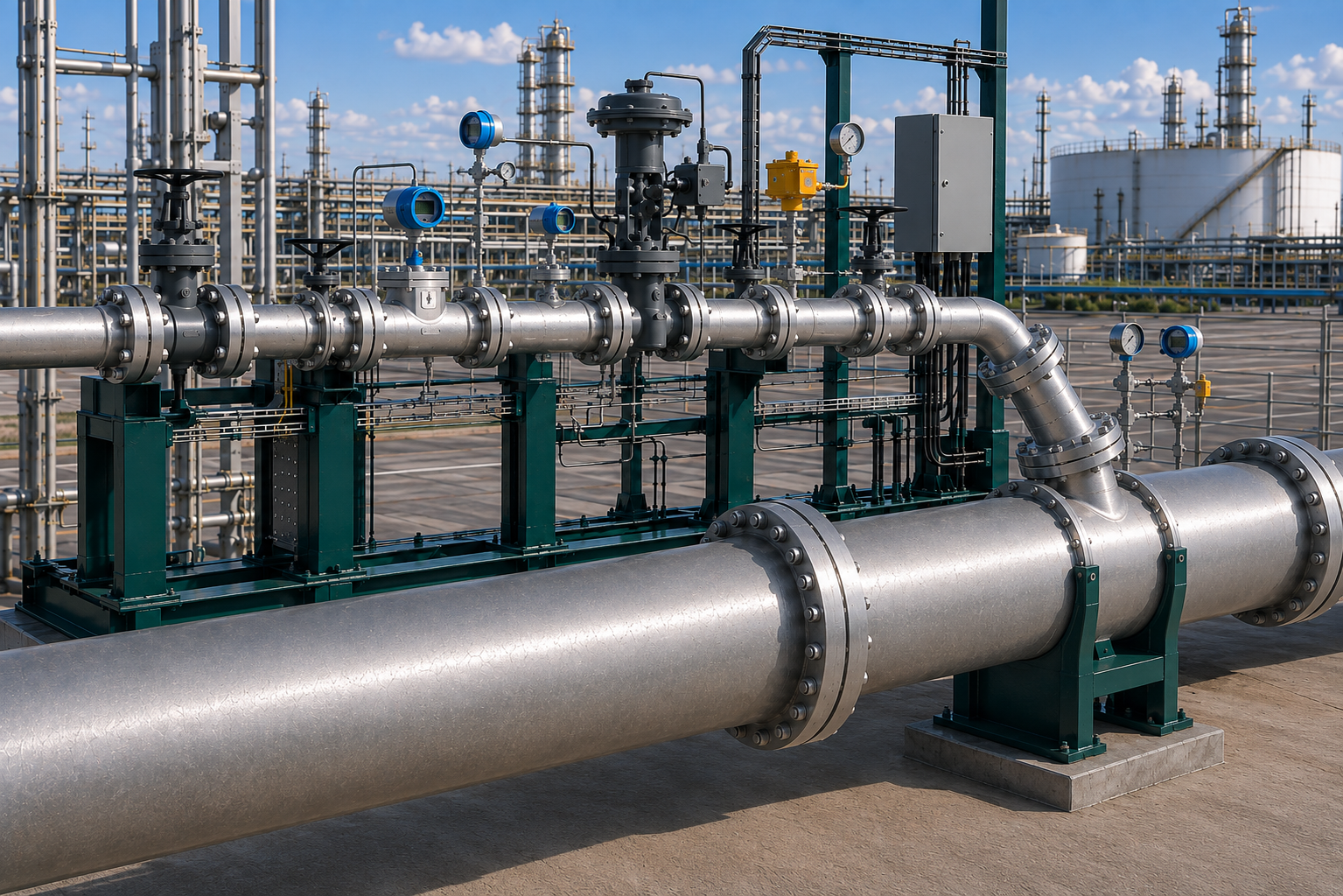
Metered CO₂ Infusion
Conditioned CO₂ is metered and controlled at the infusion manifold prior to entering the return-fluid line.
04 - Inject
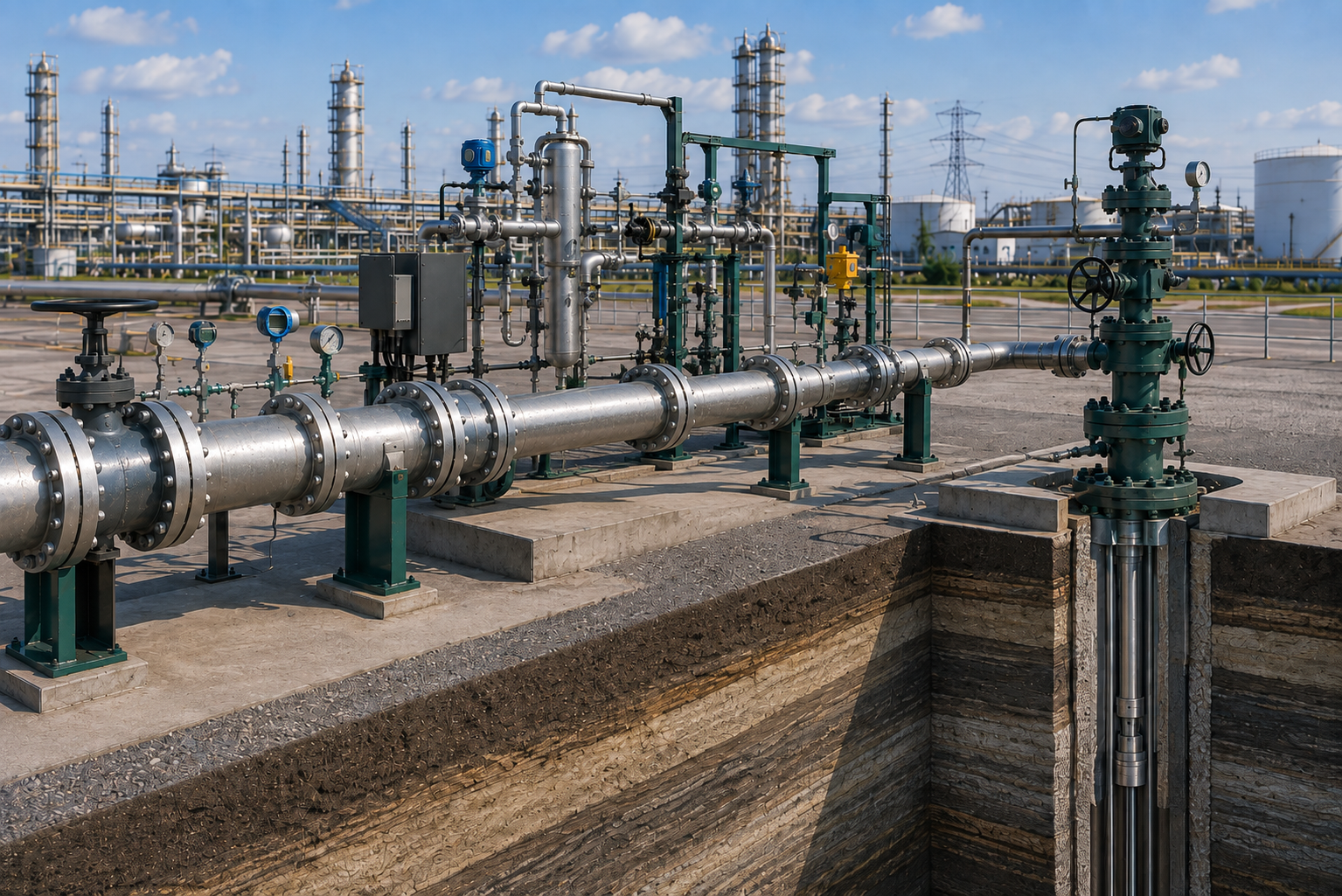
Integrated Injection
CO₂ is combined with the return-fluid stream and pumped downhole through the dedicated injection well.
05 - Store
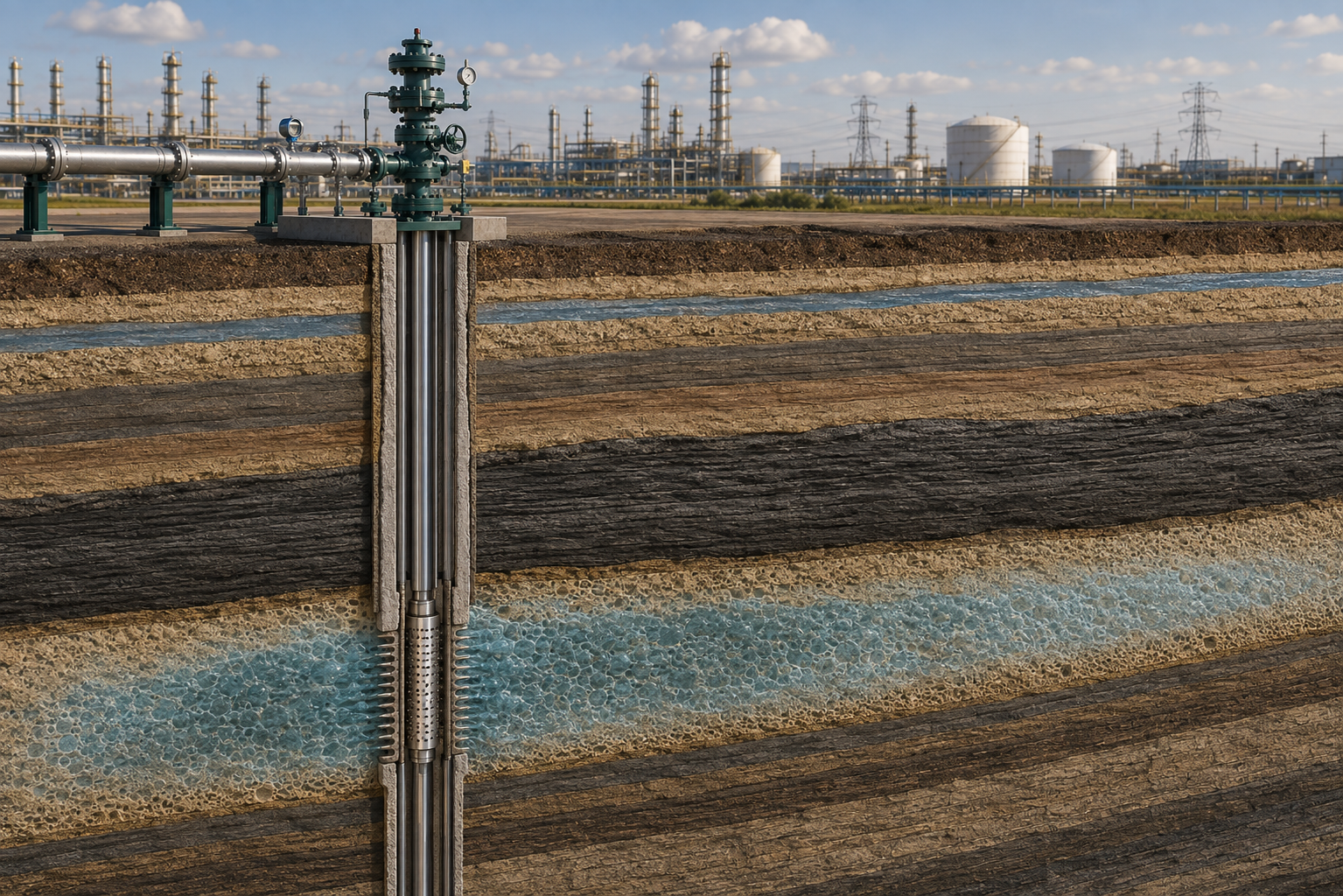
Geologic Sequestration
CO₂ is permanently stored in deep, porous formations beneath a natural confining layer.
The CCS Synergistic Hub: Mitigation Without the Energy Penalty
The primary barrier to large-scale Carbon Capture and Sequestration (CCS) is the “energy penalty”—the significant amount of electricity required to capture, compress, and inject CO₂ deep into the subsurface. Astero reduces this burden by using onsite low-emission power generated by its multi-resource platform to support capture, compression, and injection where project conditions support CCS integration.
- Net-Negative Operational Model: By using fit-for-purpose microgrid power modules based on thermal, kinetic, and low-carbon chemical energy resources, Astero can reduce the power-related emissions associated with the sequestration process. Where project conditions, sequestration design, and carbon accounting rules support qualification, this may enable a potentially net-negative operating profile.
- Integrated Sequestration Feedstock: We utilize our high-volume, high-pressure reinjection stream used for closed-loop energy production as the primary vehicle for permanent carbon disposal. CO₂ is dissolved into the cooled brine and reinjected in subsurface reservoirs for permanent geologic storage.
- Unlocking 45Q & Carbon Credit Revenue: Integrating CCS may allow qualified operators to pursue federal tax incentives, such as the 45Q tax credit, adding a potential carbon-management revenue stream alongside electricity, hydrocarbons, and molecular recovery.
- Pressure Support Synergy: The injection of CO₂-enriched brine provides additional reservoir pressure support, further enhancing the Hydraulic Drive required to maximize the recovery of remaining updip hydrocarbons providing both optimized resource recovery and permanent carbon storage.
- Net-Negative Operational Model: By using fit-for-purpose microgrid power modules based on thermal, kinetic, and low-carbon chemical energy resources, Astero can reduce the power-related emissions associated with the sequestration process. Where project conditions, sequestration design, and carbon accounting rules support qualification, this may enable a potentially net-negative operating profile.
The Integration Advantage
Carbon Management Supported By The Energy System
CO₂ sequestration requires energy. Astero creates the potential to recover useful subsurface energy at the same development where conditioning, compression, pumping and injection loads occur.
Local Energy Recovery
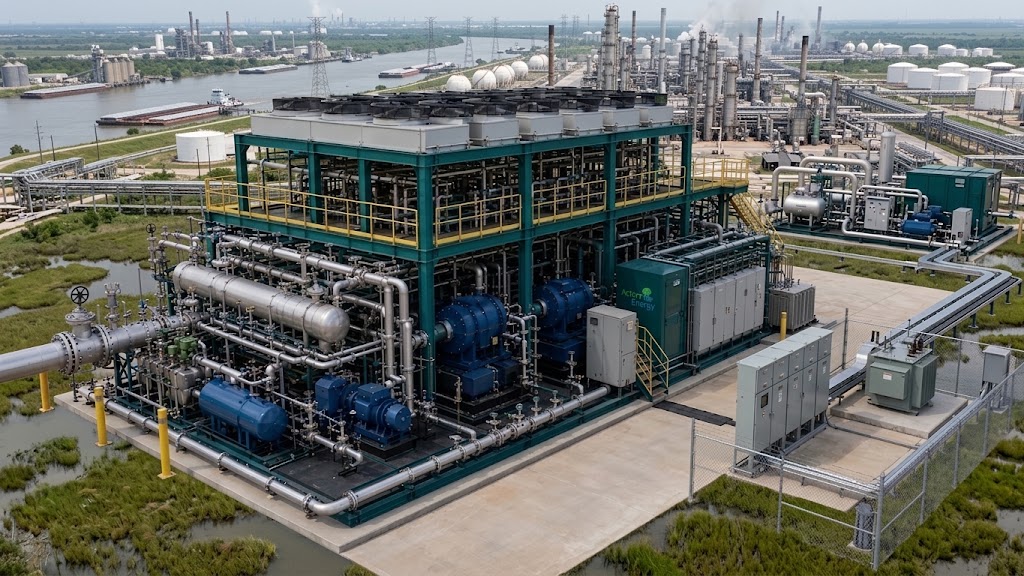
Potentially converts existing subsurface energy into useful power at the carbon management site.
Integrated Process Loads
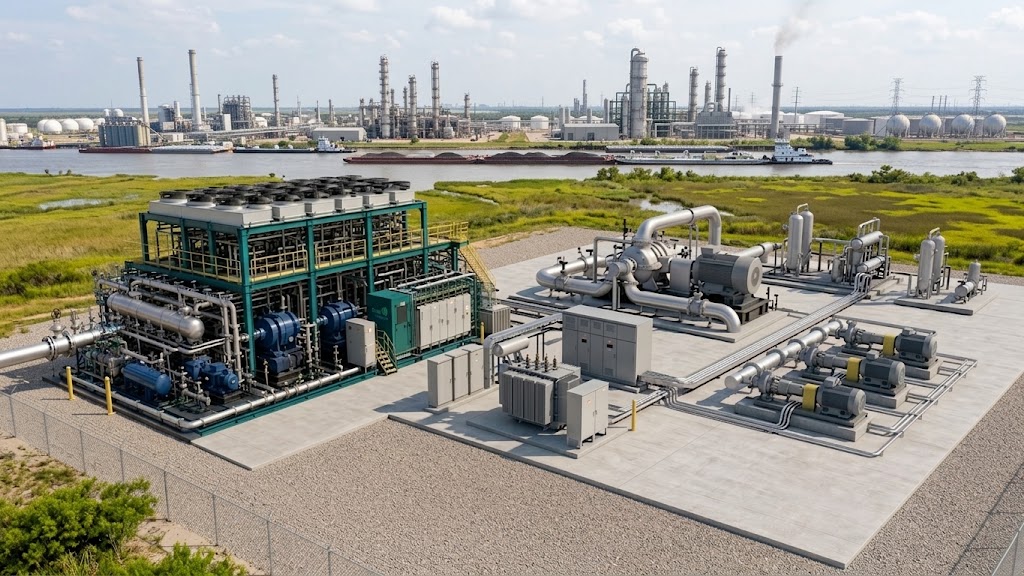
Creates the potential to support CO₂ conditioning, compression and pumping demand with locally generated energy.
Shared Development Architecture
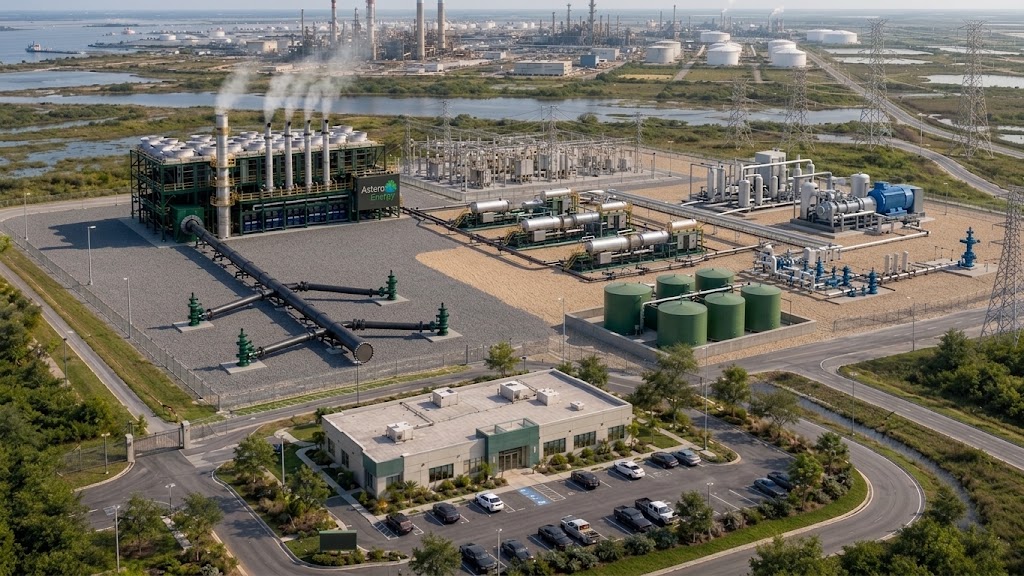
Coordinates power, fluid handling, CO₂ processing and subsurface injection within one development architecture.
For Industrial CO₂ Producers
Turn a Captured CO₂ Stream into a Manageable Infrastructure Opportunity
Refineries, chemical manufacturers, hydrogen producers, gas processing operations, ammonia and fertilizer facilities require reliable, long-term solutions for power generation and for managing captured CO₂.
Astero provides a technically grounded pathwat that connects a produced CO₂ stream to engineered subsurface storage - integrated with energy recovery and infrastructure coordination.
A Defined CO₂ Destination
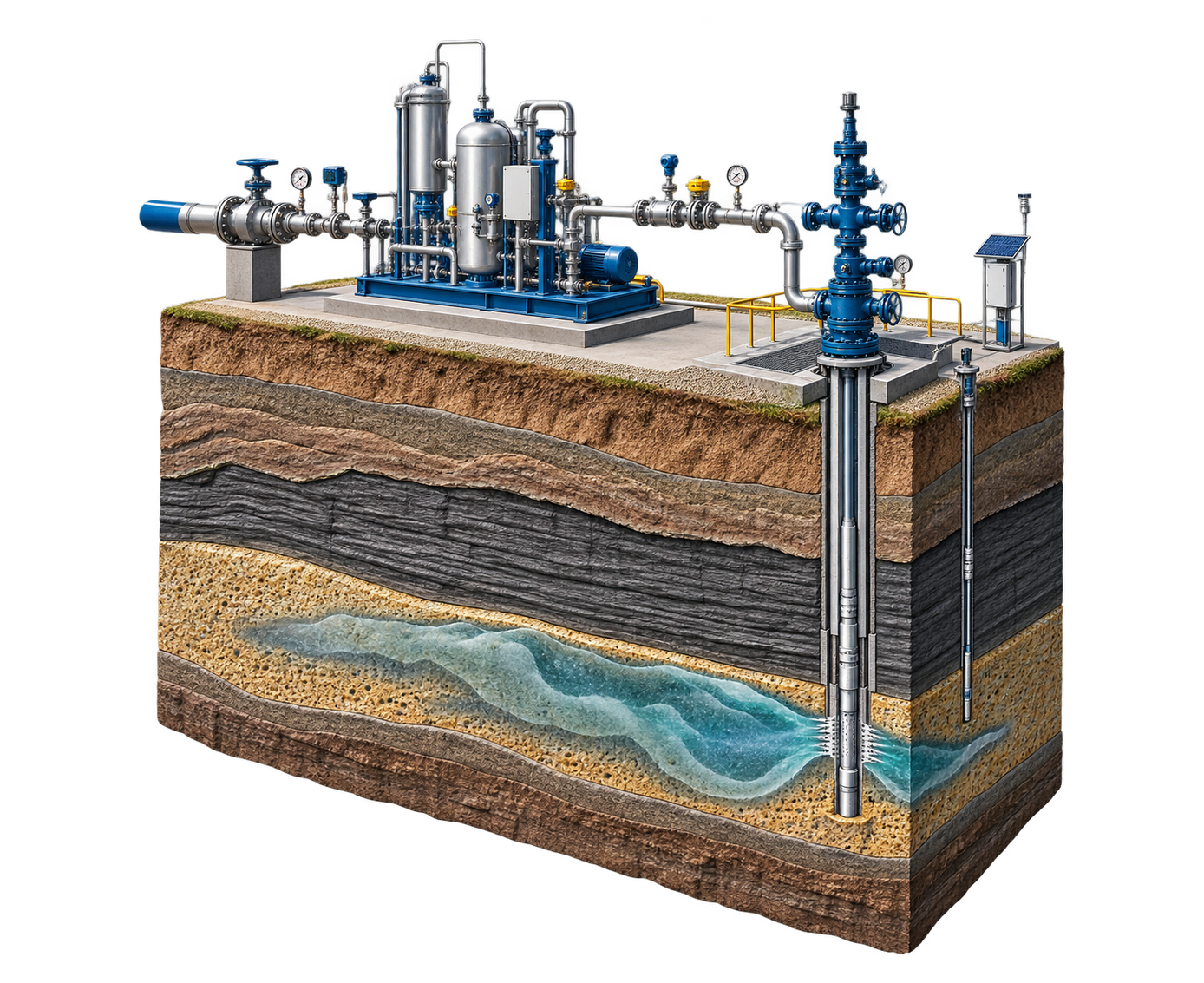
Evaluate a pathway from the industrial capture interface through conditioning, injection and qualified subsurface storage.
Integrated Energy Support
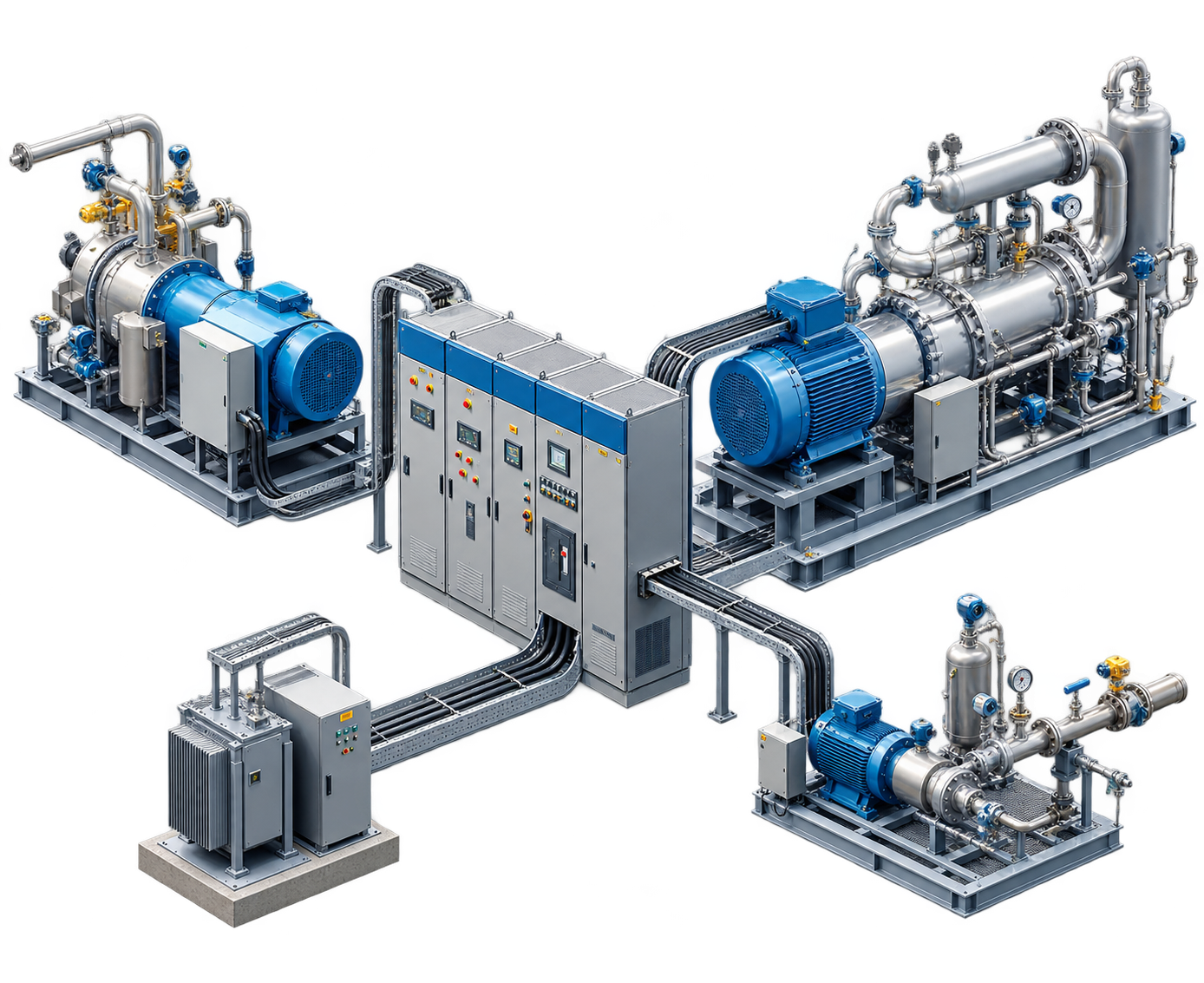
Assess whether locally recovered Astero energy can supply part of the electrical demand associated with CO₂ processing and sequestration.
Controlled Injection
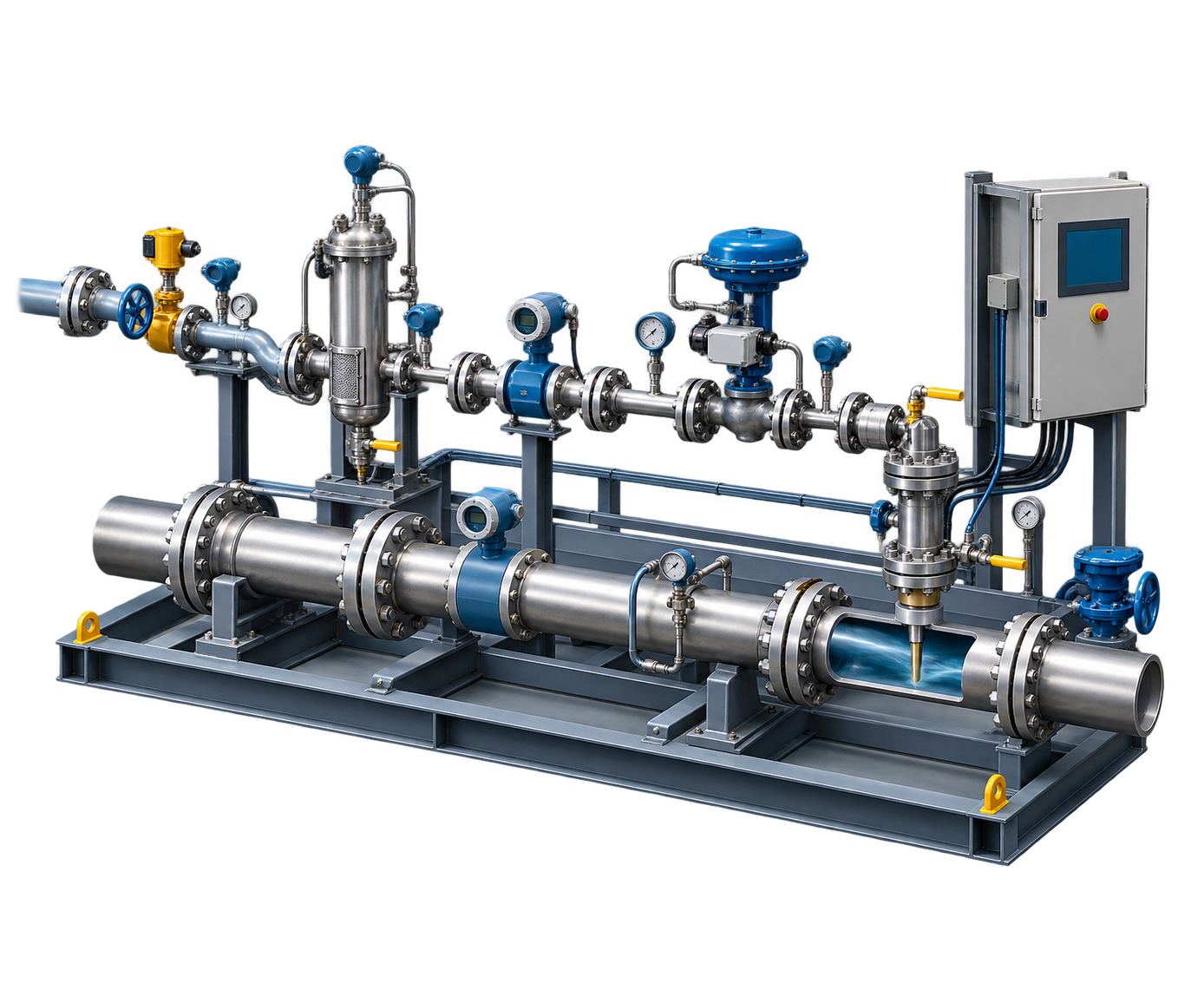
Use a dedicated CO₂ receipt, conditioning, metering and infusion architecture instead of an uncontrolled connection to the injection system.
Infrastructure Coordination
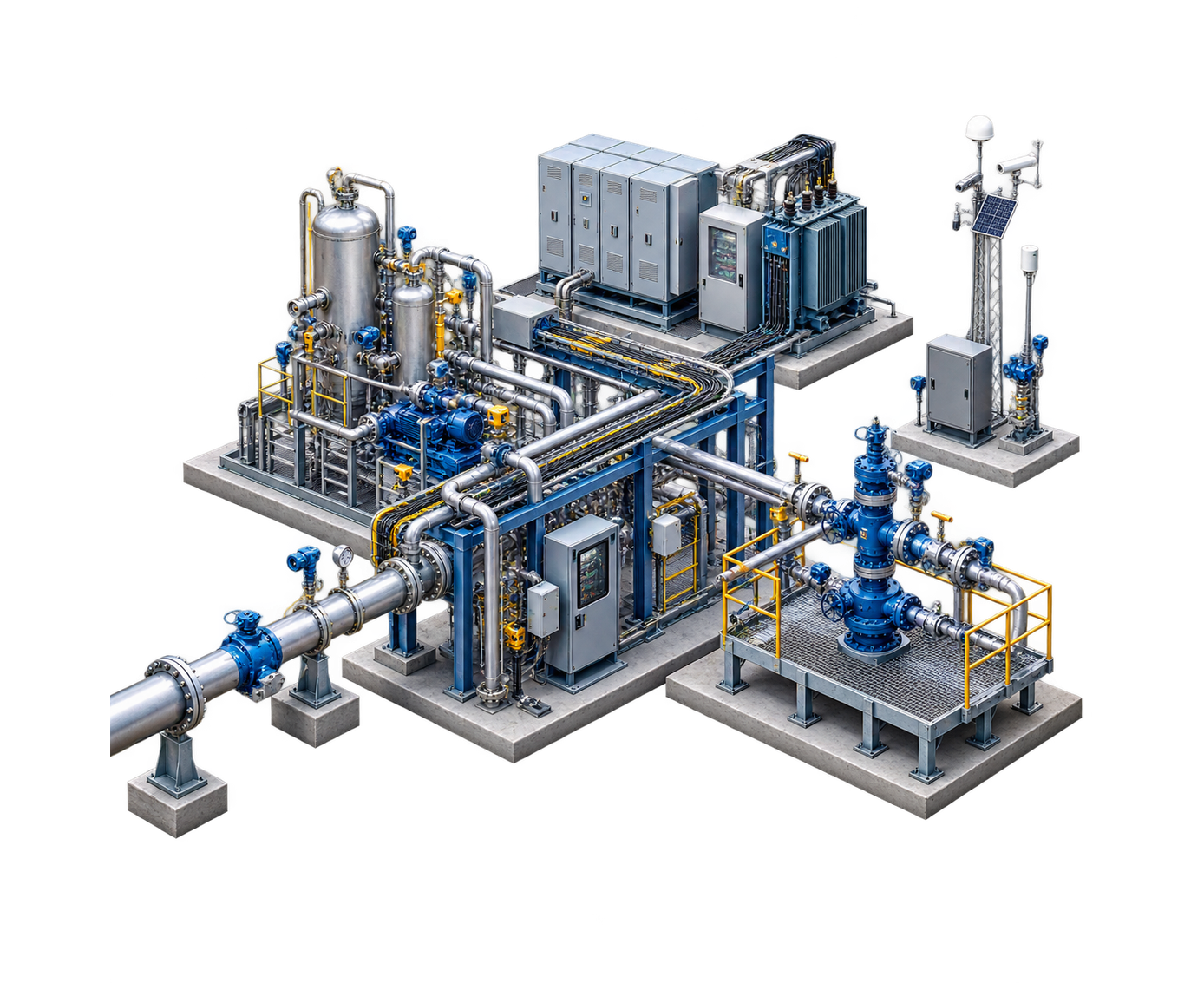
Evaluate pipelines, processing equipment, injection facilities, electrical systems and subsurface storage as one development rather than isolated projects.
Scalable Storage Hub Potential
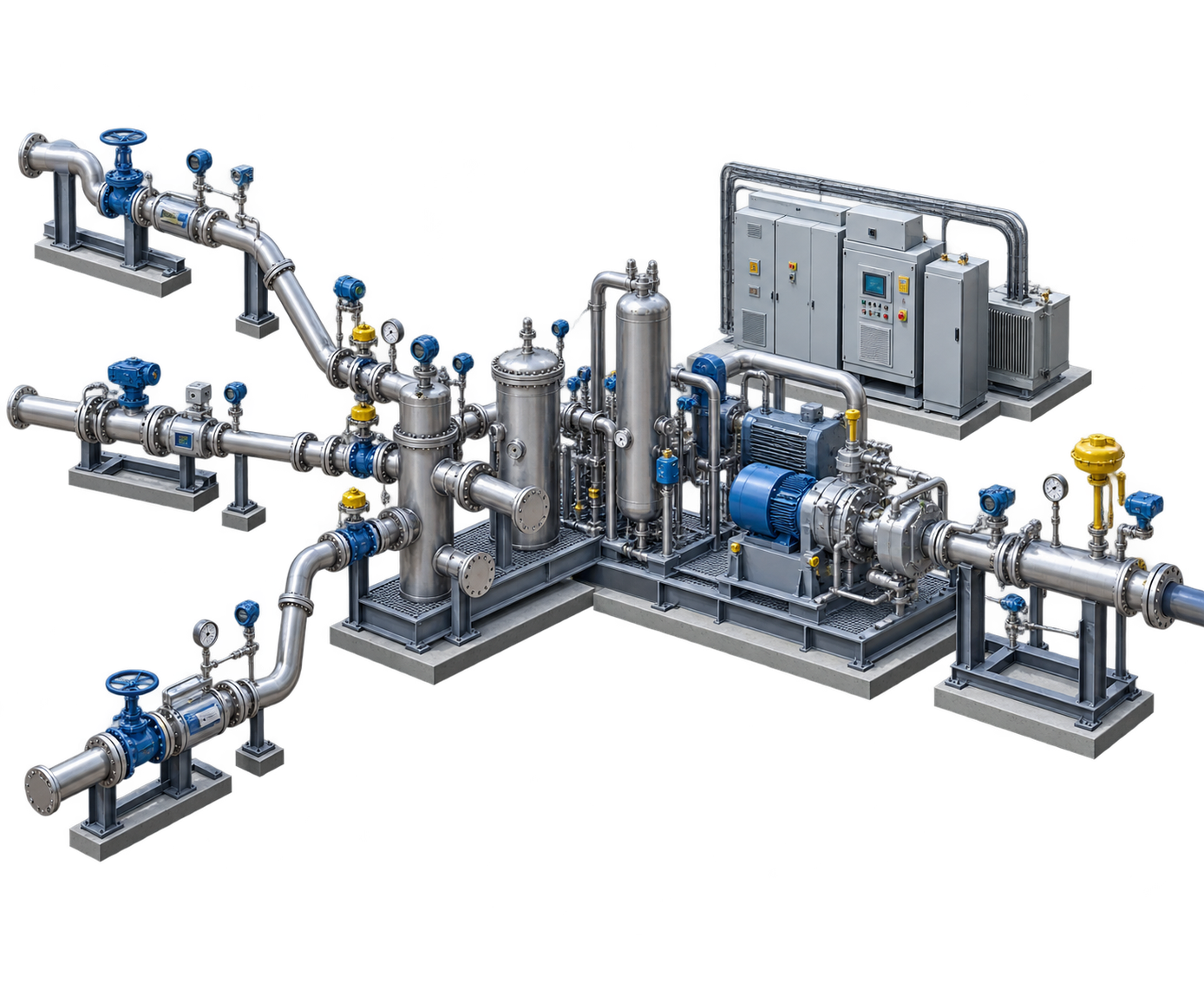
A suitable Astero development may create a platform for evaluating multiple captured-CO₂ sources feeding a common conditioning and sequestration infrastructure system.
Decarbonization Optionality
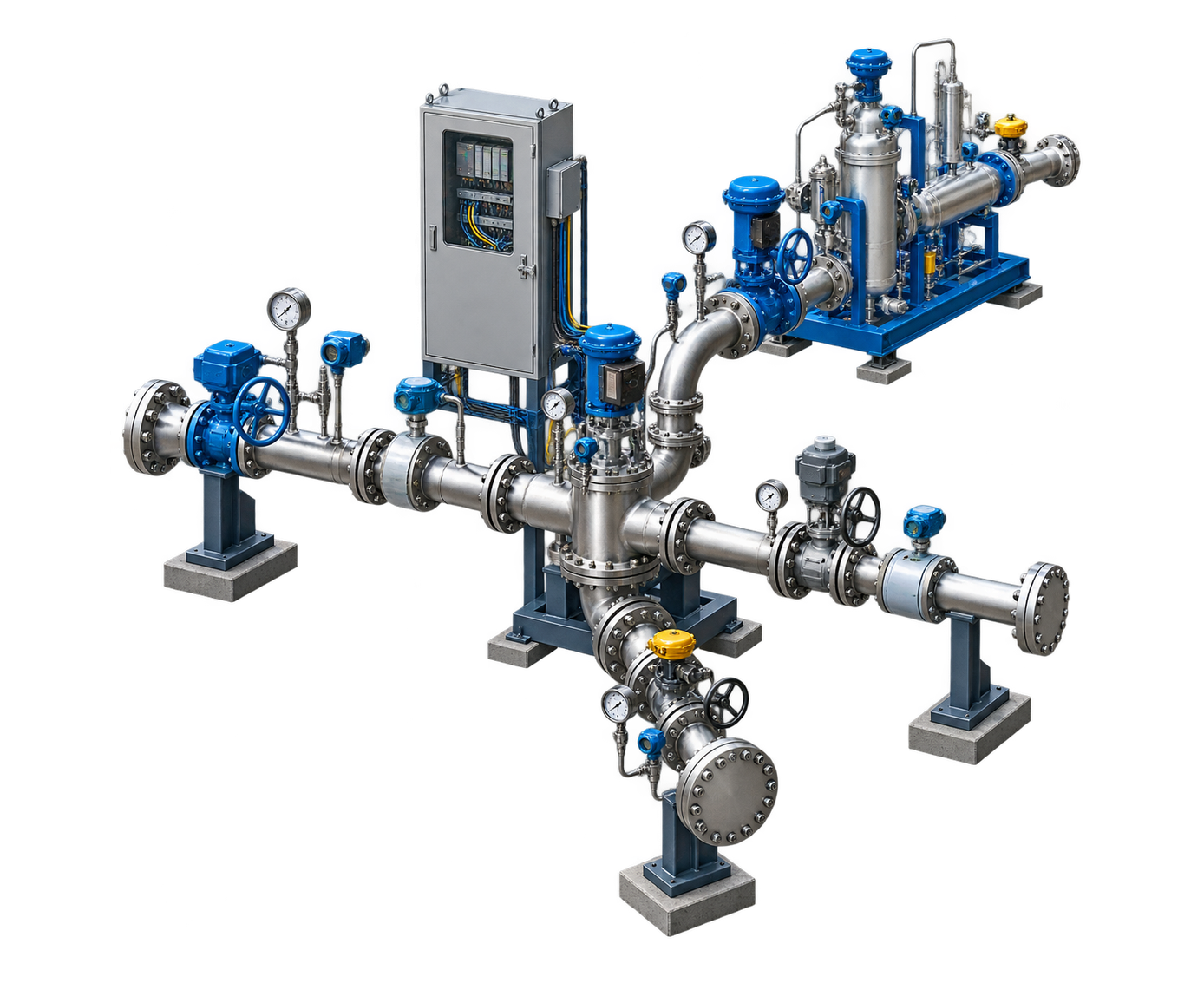
Provide industrial partners with another technical pathway to evaluate as they develop long-term carbon-management strategies.
Infrastructure Coordination
Evaluate pipelines, processing equipment, injection facilities, electrical systems and subsurface storage as one development rather than isolated projects.
Scalable Storage Hub Potential
A suitable Astero development may create a platform for evaluating multiple captured-CO₂ sources feeding a common conditioning and sequestration infrastructure system.
Decarbonization Optionality
Provide industrial partners with another technical pathway to evaluate as they develop long-term carbon-management strategies.
Subsurface Integrity
Storage Begins with the Geology
From Strategic Value to Engineering Reality
You’ve seen how Astero Energy transforms high-water-cut liabilities into high-margin revenue streams. You’ve seen how we solve the decommissioning crisis while providing low-emission power and integrated carbon management.
The question isn’t just why it works—it’s how we deliver it.
We invite you to explore the proprietary engineering architecture that powers Astero’s multi-resource recovery platform. From high-velocity wellbore completions to closed-loop reinjection and modular power conversion, Astero provides a resource-efficient pathway for converting subsurface fluids into continuous baseload power.
Preliminary Site Evaluation Information