SYSTEM ARCHITECTURE
Subsurface To Grid Engineering - The Process
Astero Energy converts geopressured and hydrothermal reservoirs into closed-loop, infrastructure-grade baseload power systems. The process begins in the reservoir, where pressure, heat, mass flow, dissolved gases, and recoverable molecular value are produced as one integrated carrier stream.
That stream is preserved through engineered wells, combined through the Neural Energy Delivery Network, converted through staged power blocks, and reinjected to sustain reservoir pressure and long-duration output.
Astero’s process is built around one governing principle: the reservoir is the energy engine.
Rather than treating subsurface fluids as waste or isolated commodities, Astero produces the downdip water leg as a multi-resource carrier stream. That stream transports thermal energy, pressure head, mass flow, dissolved gas, molecular value, and critical mineral pathways from the reservoir to surface infrastructure.
The result is a controlled engineering sequence that transforms subsurface reservoir quality into scalable, predictable, grid-ready baseload power.
From Reservoir Physics to Grid-Ready Power
The Foundation: The Permanent Multi-Modal Subsurface Engine
Astero transforms geopressured and hydrothermal reservoirs into long-duration, closed-loop utility systems.
The platform activates the downdip water leg and surrounding reservoir volume as a continuous energy source, converting a traditionally underutilized subsurface zone into a monetized infrastructure asset. Through pressure-managed production and reinjection, the field evolves from a finite extraction site into a repeatable baseload platform engineered for long-term megawatt growth.
Every joule begins in the reservoir. Astero treats the subsurface as a Unified Multi-Modal Engine containing:
- preserved geopressure head
- thermal enthalpy
- mass flow
- dissolved gas
- molecular energy
- critical mineral pathways
This broader thermodynamic lens is what allows the platform to scale from single-site microgrids to metropolitan baseload systems.
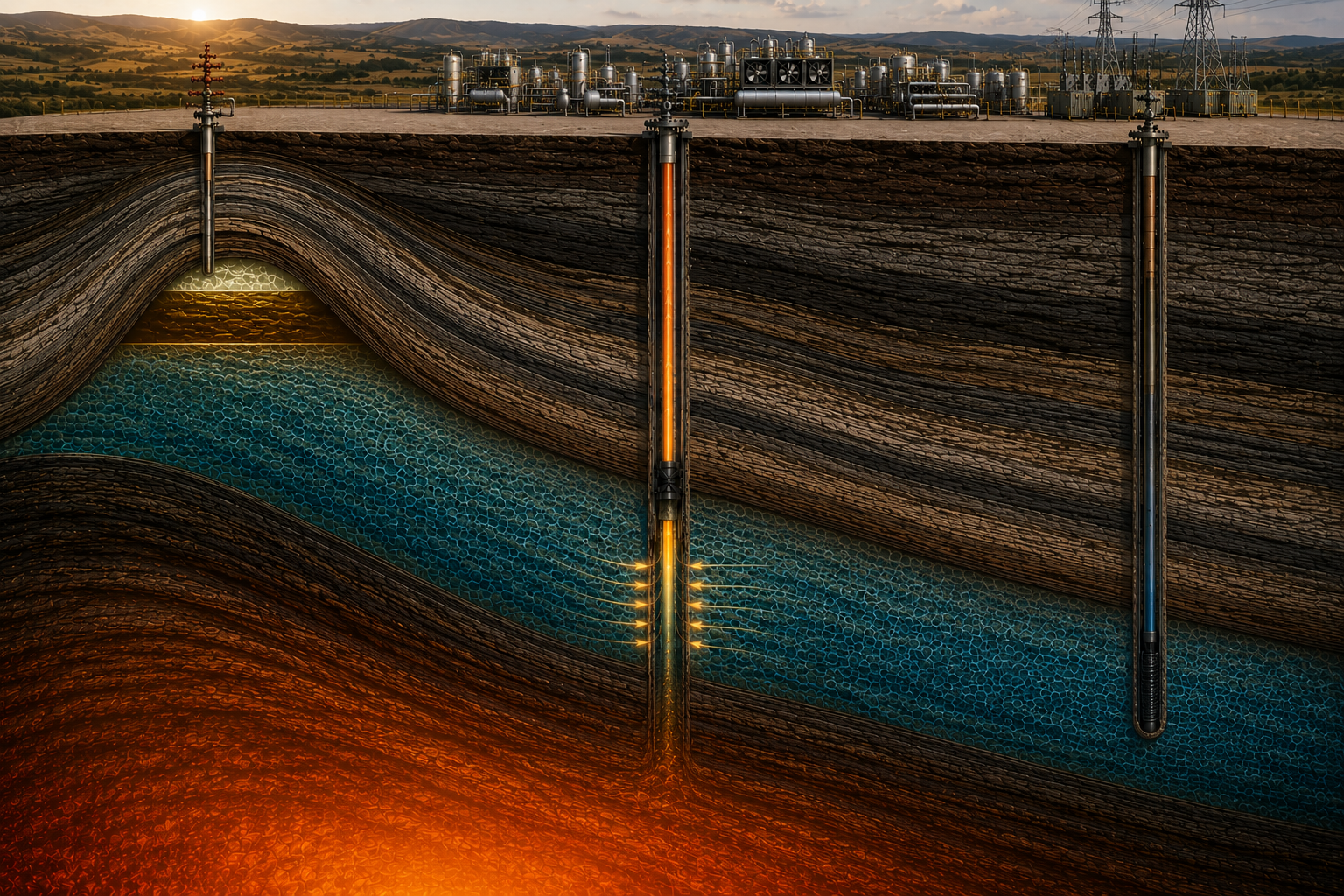
Kinetic Potential (Pressure)
The raw mechanical force of geopressured fluids provides the foundational energy required to drive surface turbines
Thermal Potential (Heat)
High-enthalpy hydrothermal fluids provide constant, 24/7 baseload heat for electricity generation
Chemical Potential (Molecules)
The fluid serves as a carrier for dissolved energy molecules (like Hydrogen) and critical minerals (like Lithium)
THE ARCHITECTURE OF HIGH-ENTHALPY EXTRACTION
Fluid Production
Astero’s engineered wells transform the downdip water leg into a continuous multi-resource carrier stream.
The produced fluid is not treated as a single-purpose resource. It carries thermal, kinetic, chemical, and molecular energy from the subsurface to surface infrastructure while maintaining reservoir integrity and long-term operational reliability.
Simultaneous Operations
High-enthalpy downdip fluids are produced alongside updip hydrocarbon systems while preserving structural integrity and hydraulic separation.
Volumetric Multiplier
Downdip wells activate the reservoir’s dominant fluid volume, delivering the high-rate mass flow required for energy generation.
Enthalpy Optimization
Thermally optimized well configurations preserve temperature, pressure, and flow continuity from the reservoir to surface systems.
Hydraulic Independence
Controlled reservoir architecture maintains hydraulic separation between the downdip energy loop and updip hydrocarbon zones.
Capacity Growth
Each new well adds financeable megawatt capacity, enabling repeatable field-scale expansion.
Astero wells are engineered for high-rate production using large-diameter casing, thermally optimized completion architecture, and conductive bonding systems designed to improve heat transfer from the formation into the produced carrier stream.
Engineering Specification: Wells
FROM WELL OUTPUT TO POWER-GRADE TRANSPORT
Fluid Gathering and Combination — The Neural Energy Delivery Network
The Neural Energy Delivery Network is the hydraulic intelligence layer between reservoir physics and surface power generation.
Multiple preserved well streams are transitioned into a single controlled transport architecture without sacrificing pressure, temperature, flow momentum, dissolved gas value, or chemical recovery potential. The network converts distributed well output into centralized plant economics.
The Industrial Bridge Between Reservoir and Power Plant
The Neural Energy Delivery Network serves as the industrial bridge between subsurface resource extraction and surface electricity generation.
Each engineered well behaves as a modular power unit. Each additional well contributes thermal energy, pressure head, mass flow, dissolved gas, mineral value, and kinetic momentum into the same pressure-managed transport system.
The result is a repeatable “Power by the Well” architecture where plant output becomes a function of well count, reservoir quality, network expansion, and modular power block growth.
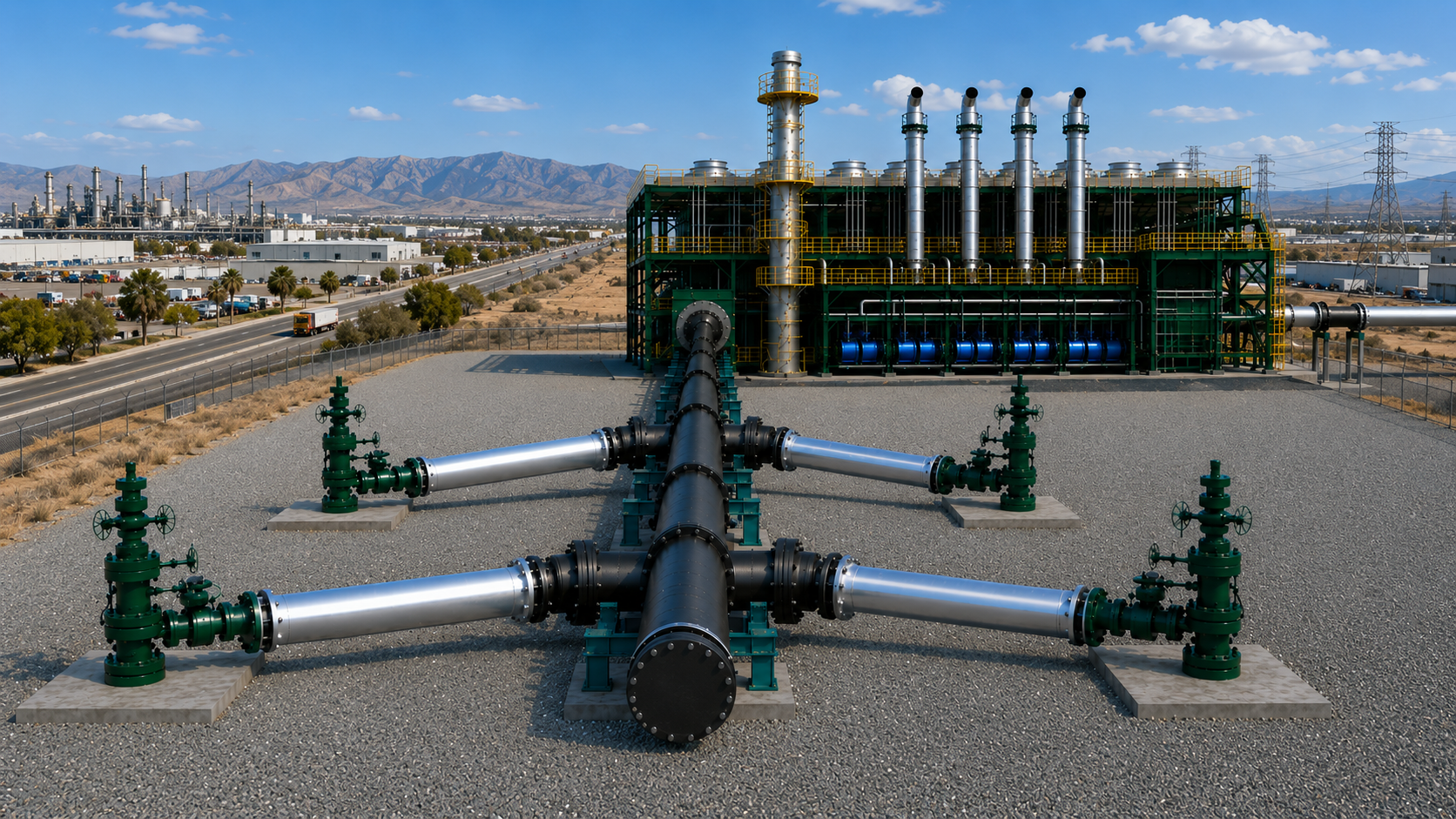
Progressive Multi-Well Flow Unification
Distributed well streams are progressively combined into larger arterial flow paths.
Using staged, swept-back connections designed to reduce turbulence and pressure loss, incoming well streams merge in the direction of downstream transport. This vascular-style engineered flow tree preserves one-way momentum, reduces dead-leg stagnation, avoids erosional hot spots, and enables larger cumulative downstream diameters as fluid volume increases.
Pressure Preservation and Maximum Flow Potential
Pressure preservation is one of the most critical requirements for maximum energy recovery.
Astero’s gathering architecture converts cumulative geopressure and flow into hydraulic, thermal, and chemical power. The system uses strict one-direction hydraulic logic so every branch transition supports total pressure head instead of dissipating it.
Pressure continuity supports hydro turbine performance, ORC thermal conversion, gas breakout optimization, multiphase separation efficiency, and long-duration hydraulic yield.
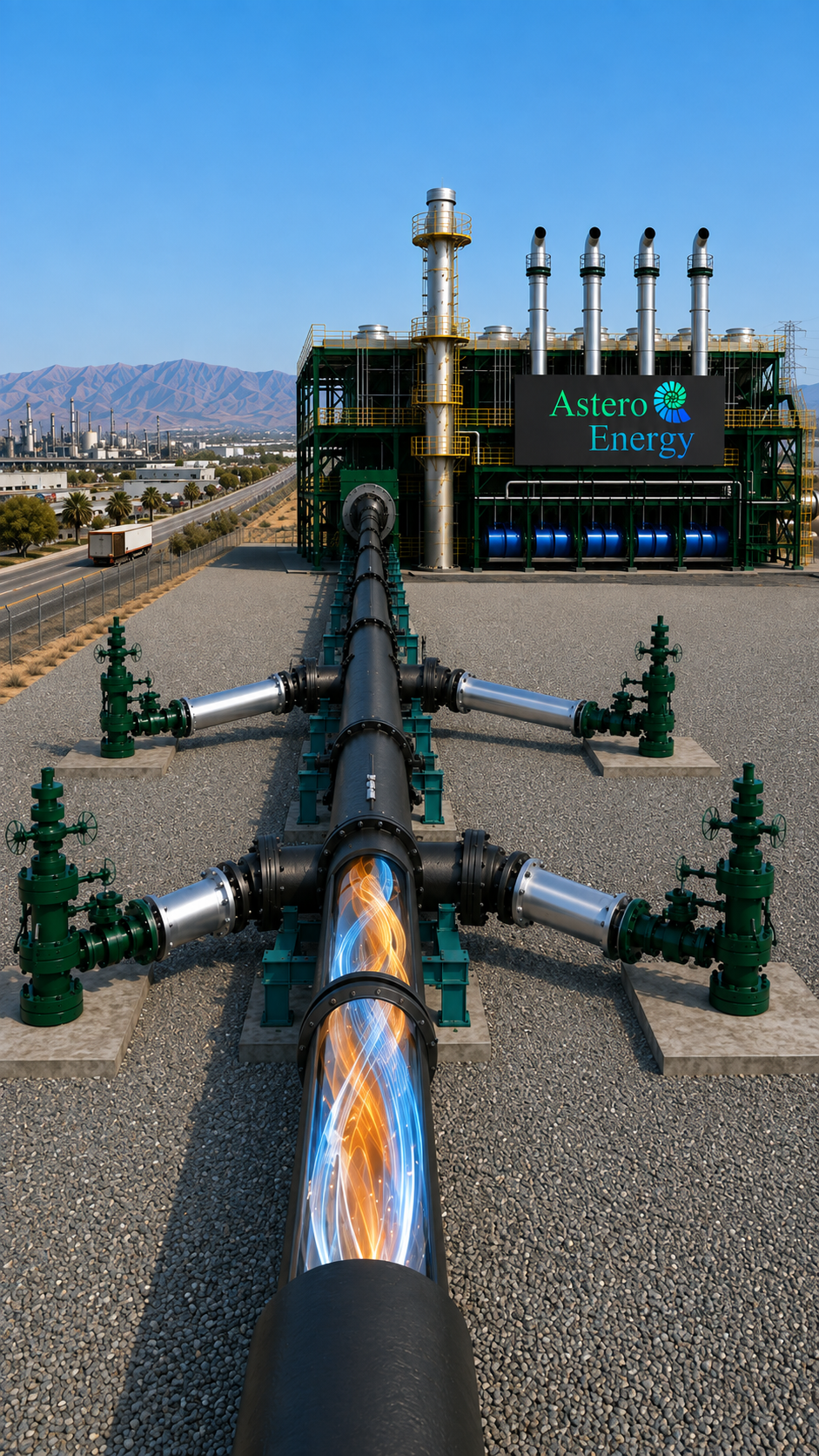
The Singular High-Enthalpy Feedstock Stream
At the final manifold, distributed field streams are unified into one large-diameter, heavily insulated, geopressured mainline.
This singular feedstock stream represents the field’s full energy value: cumulative volumetric throughput, preserved thermal heat, pressure head, dissolved gas energy, high-velocity transport momentum, and recoverable energy-producing components.
The mainline converts a distributed well field into a centralized power plant economy.
Evaluate Your Field’s Flow Potential
Astero’s process begins with determining whether your reservoir, wells, produced fluid, pressure profile, and surface infrastructure can support a scalable high-enthalpy feedstock stream.
Why This Defines Scalability
Astero’s scalability is created by the combined repeatability of well architecture and the Neural Energy Delivery Network.
Each new well increases the recoverable field energy stream. Each new modular network segment preserves cumulative flow, pressure head, and thermodynamic continuity. Desired power output is no longer constrained by fixed plant size; it becomes a direct engineering function of well count, reservoir quality, network expansion, and modular power block growth.
Because the system scales at the well level, any power requirement may be designed by increasing the number of energy-producing wells and expanding the network to deliver larger unified feedstock streams into modular power blocks.
MULTI-MODAL BASELOAD POWER CONVERSION
The Power Block – Staged Energy Conversion
Once the preserved field-wide carrier stream reaches the power island, Astero monetizes the stream through staged energy conversion.
Energy is harvested in the order of thermodynamic value: first thermal, then hydraulic, then chemical and molecular pathways, followed by secondary heat and resource recovery. This disciplined sequence maximizes power yield from the same produced stream before reinjection.
Thermal Conversion
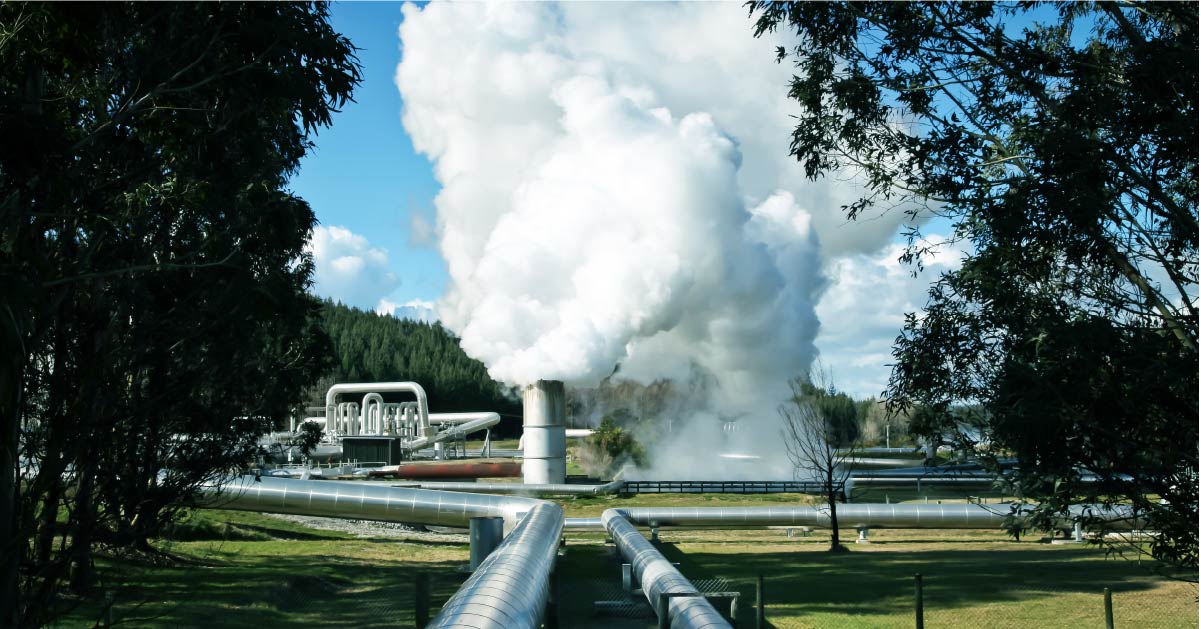
The unified high-enthalpy carrier stream first enters modular ORC heat exchange equipment, where preserved reservoir heat is transferred into a closed-loop working fluid.
Because thermal loss begins as soon as fluid exits the reservoir, ORC conversion is positioned early in the power block to maximize temperature differential and reduce stranded enthalpy.
Hydraulic Power From Preserved Flow Momentum
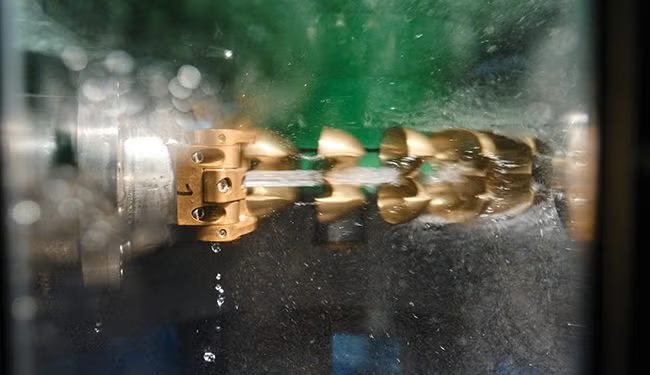
After thermal extraction, the carrier stream retains mass flow, velocity momentum, and residual pressure head.
Astero routes this conditioned stream into a hydraulic turbine stage, converting remaining pressure and flow energy into additional baseload power rather than allowing it to dissipate downstream.
Stacked Electrical Yield Per Produced Barrel
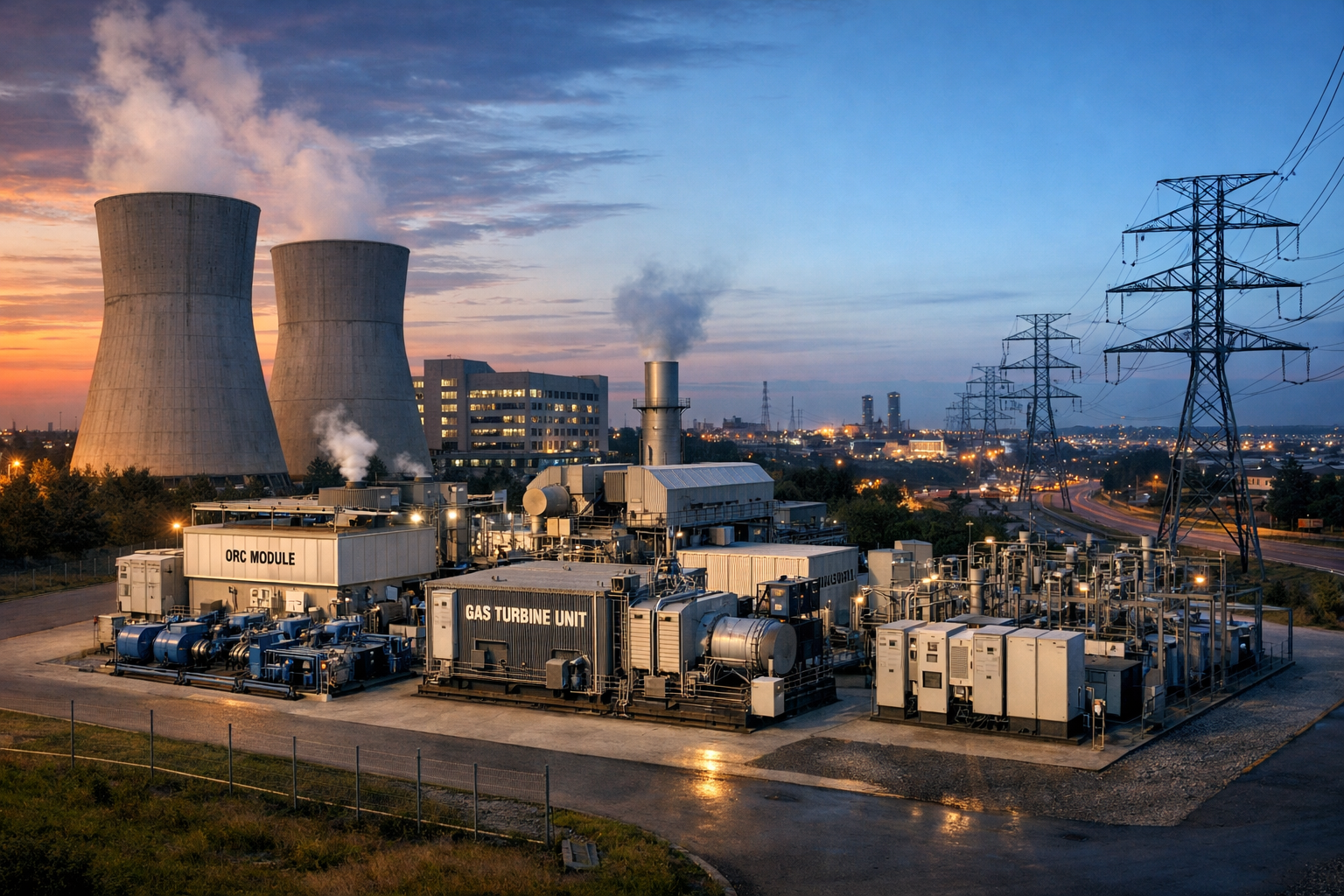
A single produced stream generates multiple power outputs before downstream gas separation, mineral recovery, or reinjection.
This stacked yield architecture increases revenue density, reduces surface CAPEX per MW, improves plant utilization, and lowers lifecycle cost per delivered MWh.
Chemical Power Conversion
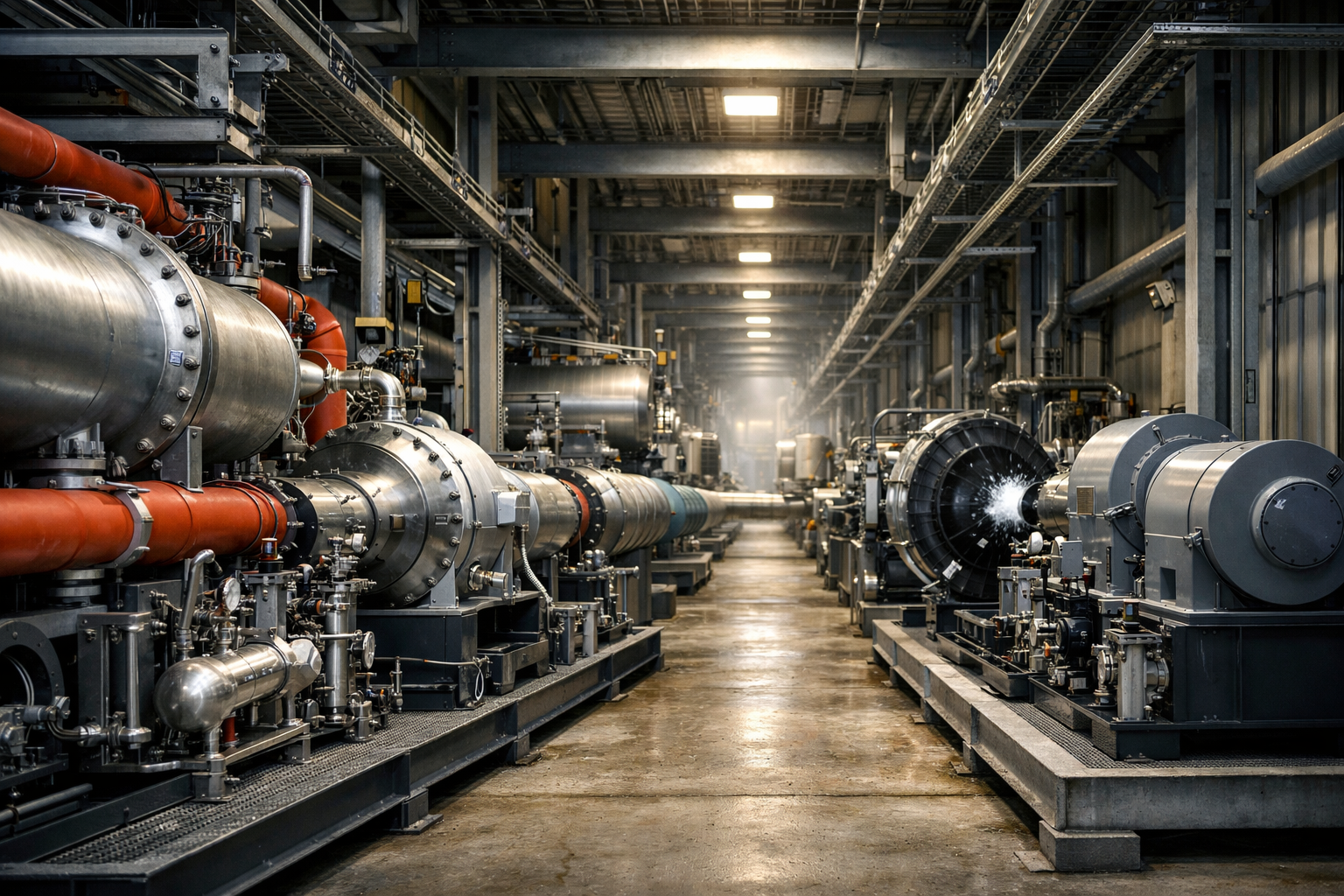
Astero’s architecture includes three co-equal primary power domains: thermal, kinetic, and chemical.
Where reservoir composition supports it, dissolved gas, hydrogen-rich fractions, and molecular chemical energy may support independent or simultaneous chemical power generation. This reduces dependency on any single reservoir characteristic and allows each power island to match the highest-value recoverable energy domain available.
Lower-Risk Multi-Domain Architecture
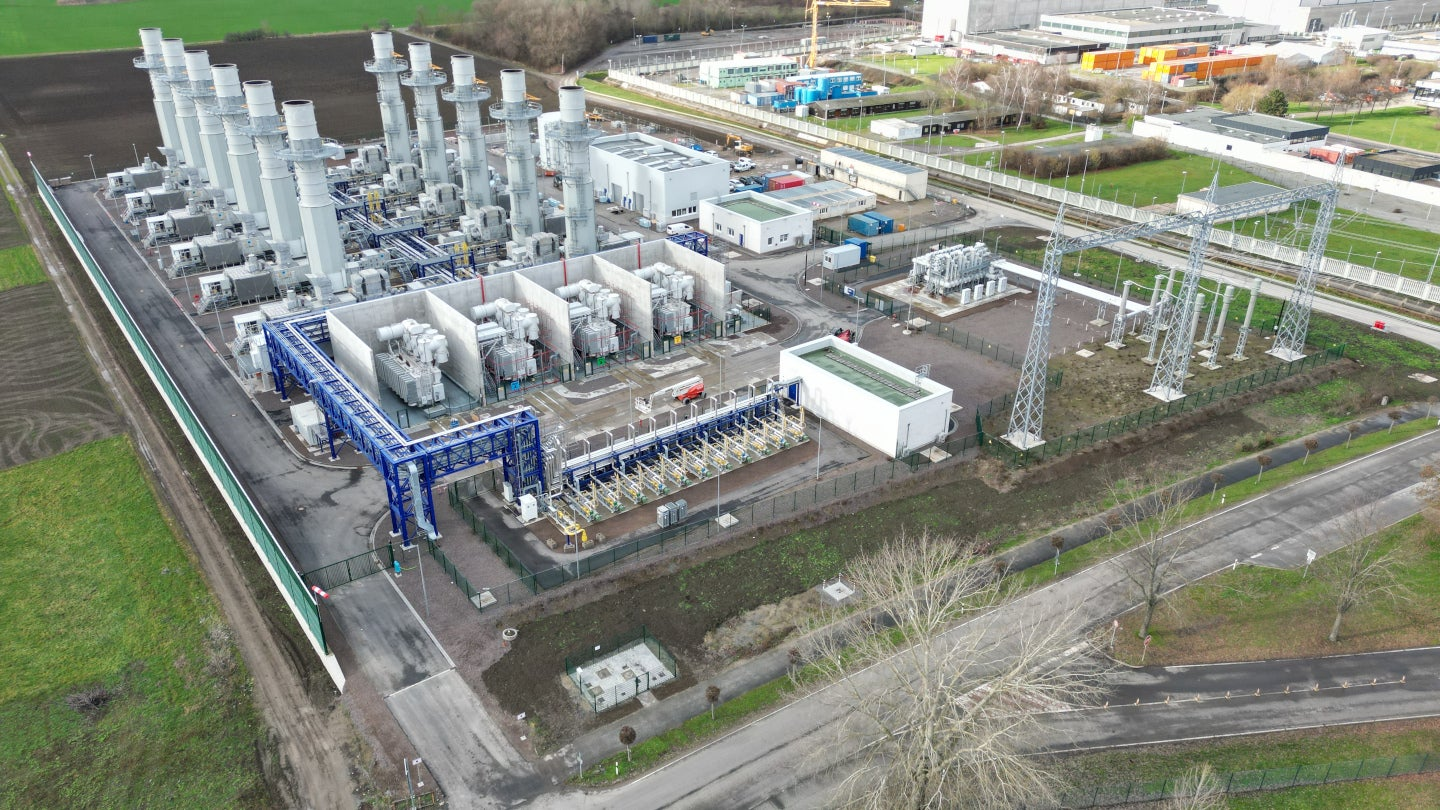
Astero’s modular power island reduces project risk by avoiding reliance on a single conversion pathway.
If reservoir temperature is strongest, thermal-first ORC architecture can dominate. If pressure head and mass flow are strongest, hydraulic conversion modules can scale. Where dissolved gas or molecular energy creates higher value, chemical power bays can operate independently or simultaneously.
This flexibility lowers resource underperformance risk, stranded CAPEX risk, technology concentration risk, and PPA delivery risk.
CASCADE EVERY REMAINING VALUE LAYER
Secondary Heat + Resource Recovery
After primary thermal, hydraulic, and chemical power domains are monetized, the conditioned carrier stream may still contain recoverable heat, dissolved minerals, salinity value, and beneficial water reuse pathways.
Astero’s architecture is designed to capture these remaining value layers before reinjection.
Secondary Heat Recovery
Residual thermal gradients can be monetized through secondary ORC loops, absorption chilling, district thermal export, industrial heat integration, and data center heat reuse.
This cascading strategy helps ensure remaining recoverable thermal value contributes to power, cooling, industrial process heat, or thermal offtake.
Critical Mineral Recovery
Depending on reservoir chemistry, the produced carrier stream may support selective recovery of lithium, strontium, zinc, rare earth elements, industrial salinity streams, or beneficial water reuse.
This transforms the produced fluid stream into a stacked energy and resource infrastructure platform.
Added Commercial Value
Secondary recovery pathways improve project resilience by adding optional revenue layers beyond electricity alone.
The result is greater commodity diversification, improved water circularity value, and stronger total infrastructure monetization.
THE PRESSURE ENGINE
Hydraulic Reinjection + Closed-Loop Reservoir Drive
After staged energy and resource monetization, the conditioned carrier fluid is reinjected to sustain the reservoir system.
This reinjection architecture supports pressure continuity, thermal sweep efficiency, long-term productivity, and repeatable baseload output. Rather than treating the reservoir as a depleting extraction site, Astero operates it as a pressure-managed subsurface utility.
Pressure Maintenance
The same fluid cycles through production, power generation, processing, and reinjection.
Reinjection supports reservoir pressure, reduces decline risk, and helps preserve predictable field performance over long operating periods.
Reservoir Hydraulic Drive
The reinjection loop creates downdip hydraulic drive that supports ongoing production and stabilizes reservoir behavior.
This allows the system to maintain flow continuity while supporting long-duration utility-scale baseload generation.
Long-Duration Asset Value
Closed-loop reinjection extends the economic life of the field by maintaining the subsurface system as an active infrastructure asset.
This improves reservoir longevity, reduces decline risk, and supports stronger long-term project finance characteristics.
The Astero Advantage
For Customers
- 24/7 Baseload Reliability
- Grid Security + Black Start Resilience
- Scalable MW Growth
- Field-to-Campus, Utility & Metropolitan Deployment
For Investors
- Lower Decline Risk
- Stronger IRR
- Longer Asset Life
- Permanent Infrastructure Multiples
Weather-Shielded Baseload Infrastructure
Because the energy engine is protected within the subsurface, Astero provides weather-shielded, black-start-capable baseload infrastructure that materially strengthens long-term grid reliability, resilience, security, and affordability.
FROM RESERVOIR INTELLIGENCE TO INFRASTRUCTURE
The Permanent Energy Utility
Astero transforms geopressured and hydrothermal reservoirs from finite extraction assets into long-duration, pressure-managed utility platforms.
By sequentially harvesting thermal, kinetic, chemical, secondary heat, and resource recovery value while sustaining the reservoir through reinjection, Astero converts the subsurface into an infrastructure-grade baseload energy system.
This architecture allows customers, utilities, data centers, industrial campuses, military bases, municipalities, and metropolitan systems to access scalable baseload power from a continuously managed subsurface utility.
From Feasibility to Utility-Scale Deployment
Astero partners with reservoir owners, utilities, hyperscale data centers, industrial campuses, EPC developers, municipalities, and infrastructure capital providers to transform geopressured and hydrothermal reservoirs into closed-loop baseload utility platforms.
Engagements begin with technical diligence, field feasibility, and infrastructure advisory, then scale into pilot microgrids, modular campus deployments, and utility-scale baseload systems engineered for repeatable megawatt expansion.
Choose Your Deployment Path
Astero supports customers, developers, microgrid buyers, and infrastructure capital partners across the full path from feasibility through utility-scale deployment.
Consulting | Advisory | Feasibility
Infrastructure | Microgrids
Capital | Collaborations
Preliminary Site Evaluation Information